


How much can a divided Washington shape the U.S. economy and financial markets? This edition of Macro Trends explores the implications of the 2026 midterm elections, examining fiscal pressures, trade policy, defense spending and AI investment. Through key economic and market indicators, the charts assess where political shifts could influence policy—and where economic fundamentals may matter more.

Why is China’s export strength failing to translate into stronger domestic demand? This edition of Macro Trends examines the structural forces holding back Chinese consumers, from rising youth unemployment and precautionary savings to a weakening property market and demographic pressures. Through analysis of credit growth, inflation expectations, monetary conditions and shifting export trends, the charts explore why policy easing has struggled to revive spending and what it could take to restore household confidence.
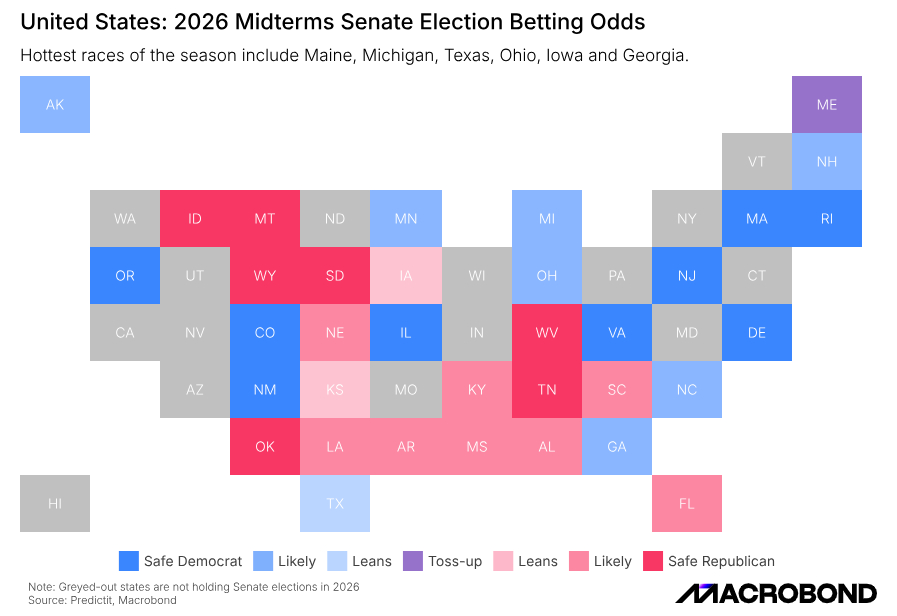
Why are American voters pessimistic despite resilient economic growth? This edition of Macro Trends examines the disconnect between economic performance and voter sentiment ahead of the 2026 U.S. midterm elections. From rising living costs and consumer confidence to prediction-market odds and state-level economic data, the analysis explores what could shape the November 3 outcome.
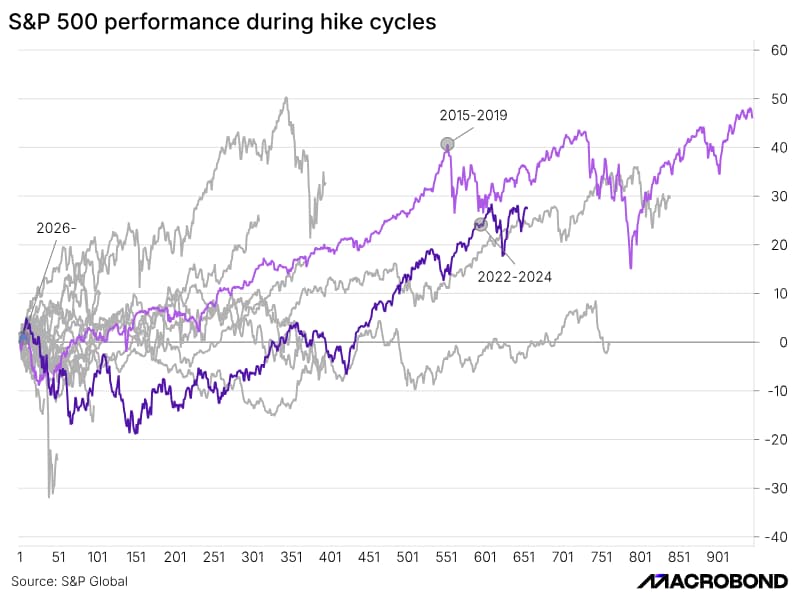
What can past Fed rate hike cycles tell us about markets? This Macro Trends release examines historical patterns in equity returns, sector performance, unemployment and the yield curve to explore how markets respond to monetary tightening.
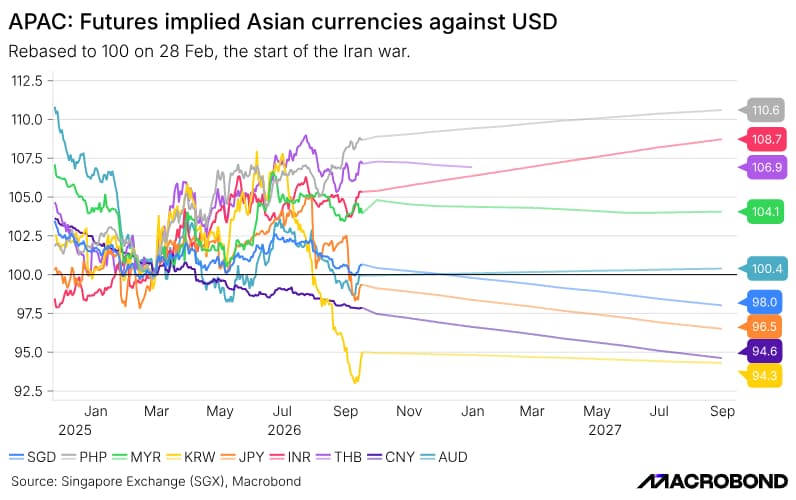
How did the February 2026 Strait of Hormuz closure affect APAC economies? Explore rising energy costs, producer prices and currency pressure across 10 markets—and why an AI export boom masked the impact.
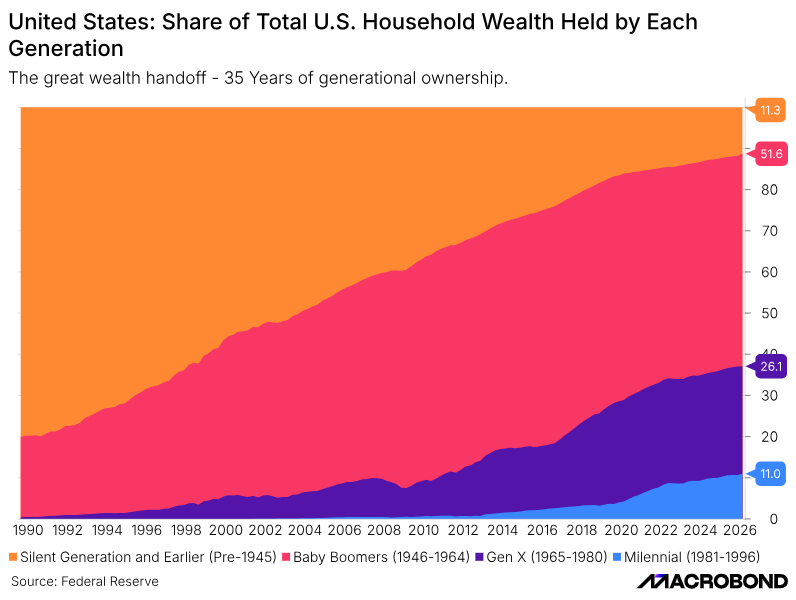
This edition of Macro Trends examines the roots of the K-shaped U.S. economy, where strong headline growth and market performance can mask sharply different experiences across households. The analysis traces today’s divide through decades of data on productivity and real wages, the rising cost of necessities, consumer confidence, wealth concentration and asset ownership. It explores why gains from economic and equity market growth have accrued unevenly across income, wealth and generational groups—and how these structural differences help explain the widening gap between market performance and household sentiment.
