A bi-weekly look at the trends driving economies and investments worldwide.


Insights
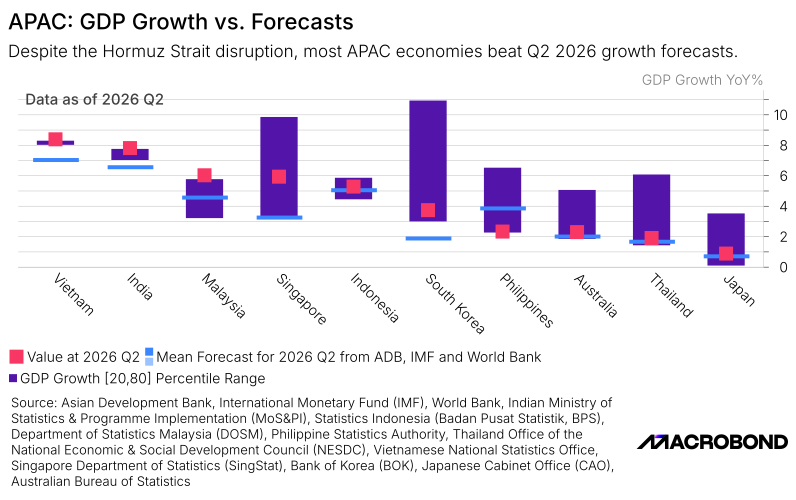
Despite APAC's heavy reliance on Middle East oil, GDP growth in 2026 Q2 — the first full quarter following the Iran conflict and Hormuz closure — came in above forecast for most economies in the region, with only Japan and the Philippines falling short. On the surface, this near-universal outperformance suggests the region weathered the energy shock with little disruption to growth — exactly the kind of headline result that could lead observers to conclude the Hormuz shock's impact on APAC was muted.
Insights
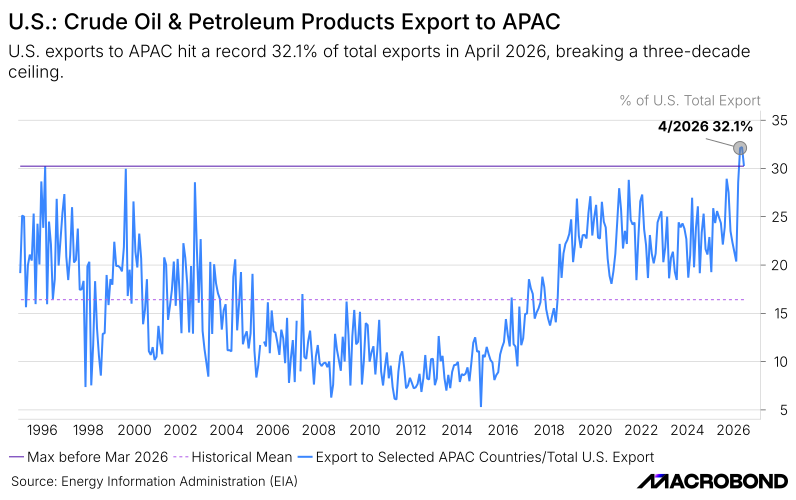
The share of U.S. crude oil and petroleum product exports going to APAC surged to a record 32.1% in April 2026, breaking above its prior three-decade ceiling of roughly 30% for the first time. This spike aligns with the Hormuz closure, suggesting U.S. suppliers rapidly redirected exports toward the region to fill the supply gap left by disrupted Middle East shipments.
Insights
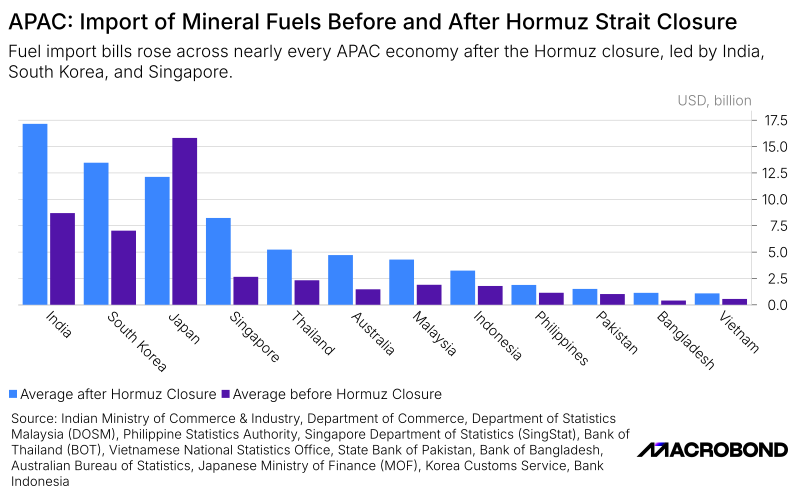
Mineral fuel import bills rose across every APAC economy shown after the Hormuz closure, with the increase driven primarily by higher energy prices rather than a shift away from Middle East supply. The scale of the increase varies widely by country — Japan, India, and South Korea absorbed the largest absolute cost increases given their scale of energy demand, while smaller economies like Bangladesh and Vietnam saw comparatively modest dollar increases, though likely a larger proportional burden relative to their economies.
Insights
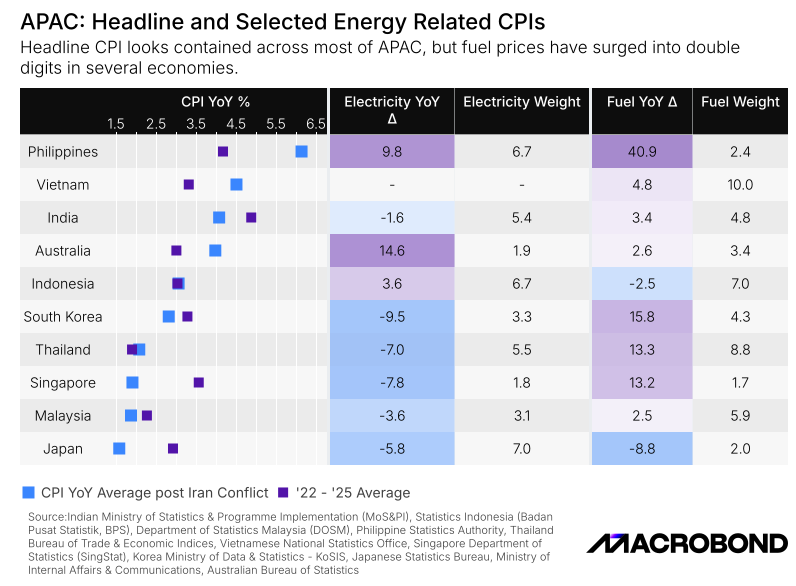
Headline CPI post-Iran conflict appears largely contained, ticking up meaningfully only in the Philippines, Vietnam, and Australia, reinforcing the impression that the Hormuz shock left little mark on regional inflation. But this masks the underlying pressure: fuel CPI has surged into double digits in several economies — Philippines (40.9%), South Korea (15.8%), Thailand (13.3%), and Singapore (13.2%) — and it's only the small weight these energy items carry in the overall CPI basket that keeps the headline number from reflecting the true scale of the shock.
Insights
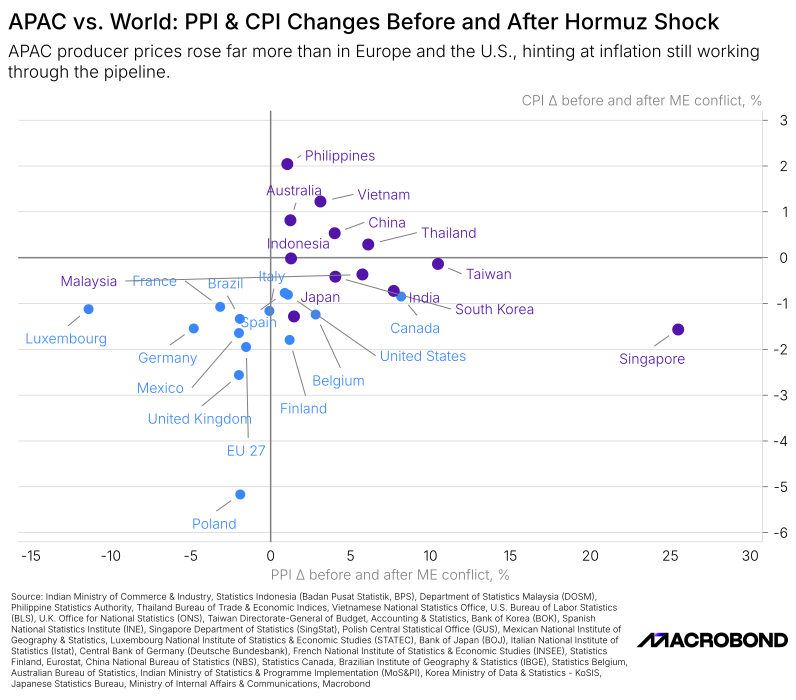
Nearly every APAC economy sits to the right of most European countries and the U.S. on the PPI axis, with Singapore, Taiwan, Thailand, and India showing PPI increases of 5-25% — a gap better explained by APAC's direct dependence on Middle East-sourced oil than by Europe's reliance on pipeline gas or the U.S.'s new net-exporter position. Combined with fuel subsidy regimes across the region that shield consumer prices without necessarily protecting producer input costs, this widening PPI-CPI gap suggests cost pressure is still building up the supply chain, with potential downstream effects on corporate margins and eventual pass-through to headline inflation.
Insights
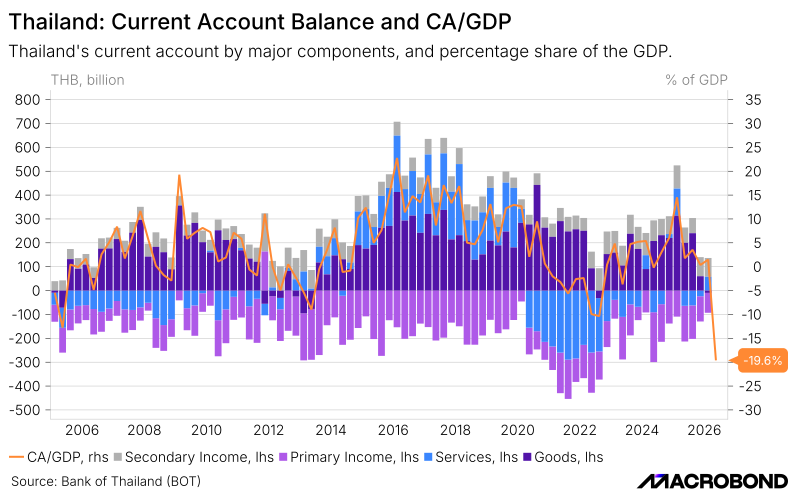
The interactive variable is available for this chart. Open the chart in Macrobond or Amplify to check out each country’s current account balance and how it weighs against each country’s GDP. Current account balances reveal a sharp regional divergence rather than a uniform APAC story: energy-import-dependent economies like Thailand, the Philippines, and Indonesia have seen their CA/GDP deteriorate toward multi-year lows, while South Korea, Singapore, and China are running near record surpluses, consistent with tech/AI-driven export strength offsetting or outweighing energy costs.
Insights
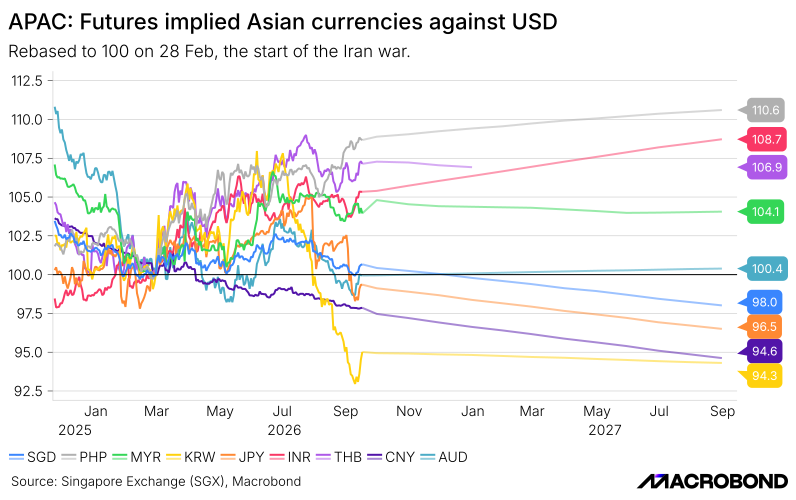
Currency markets confirm the same two-speed split seen elsewhere: since the Iran war began, the Peso, Bhat, Rupee and Ringgit have weakened the most and are priced to keep depreciating through 2027, while the Won, Yuan and Yen are set to strengthen on their export-driven current account gains. The Sing and Australian Dollar sit in between, holding near their post-shock levels with only modest further drift, suggesting markets see this divergence as a sustained repricing rather than a temporary reaction to the initial shock.
Insights
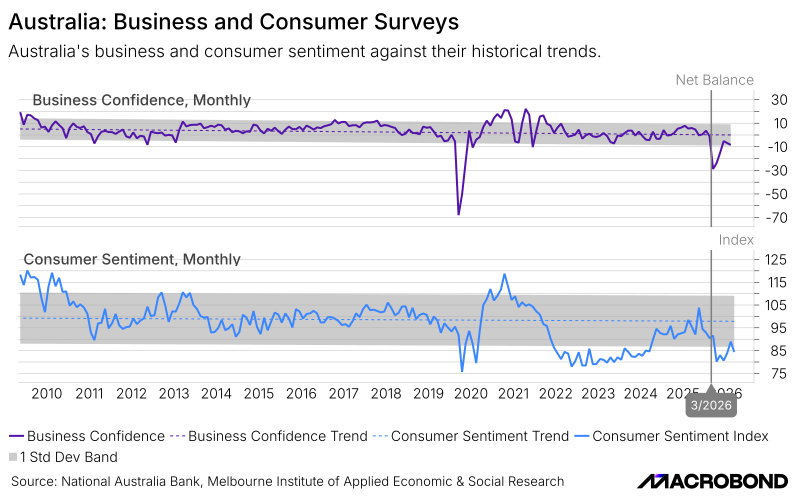
The interactive variable is available for this chart. Open the chart in Macrobond or Amplify to check out each country’s business and consumer sentiment. The same shock is landing very differently on producers versus households: despite elevated PPI, business confidence in Singapore, Malaysia, Indonesia, and Japan is holding at or above its historical trend, while consumer sentiment in most of these same economies — plus Australia and China, where it has broken below the historical band — sits meaningfully below trend.