A bi-weekly look at the trends driving economies and investments worldwide.


Brexit Remains Under Economic Scrutiny: More than a decade after the referendum, Britain's decision to leave the European Union continues to shape political and economic debate. While supporters emphasize greater control over laws, borders, and trade policy, critics argue that Brexit has increased trade barriers and weighed on economic growth and investment.
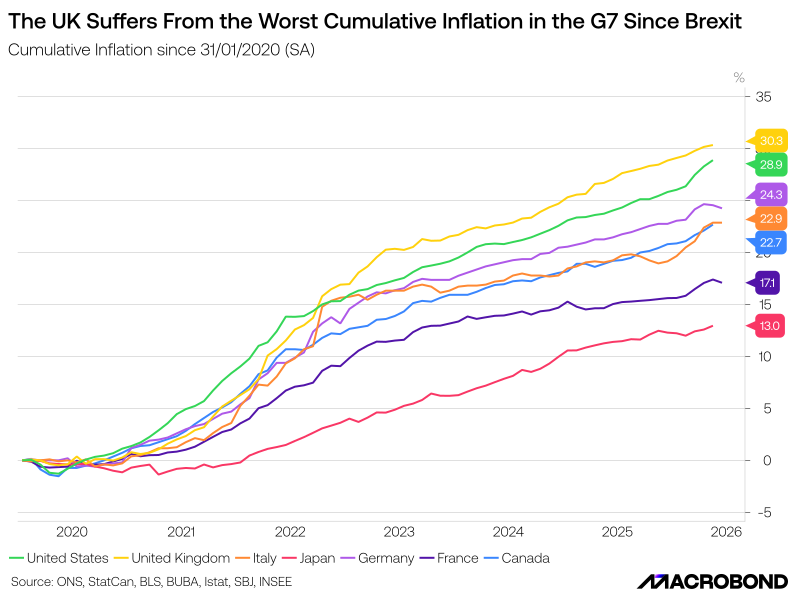
Inflation and Financing Pressures Outpaced G7 Peers: The UK has experienced the highest cumulative inflation in the G7 since 2020, alongside the largest increase in 10-year government bond yields. Although global energy shocks and tighter monetary policy affected all advanced economies, Brexit-related labor and trade constraints contributed to more persistent inflation and higher borrowing costs.
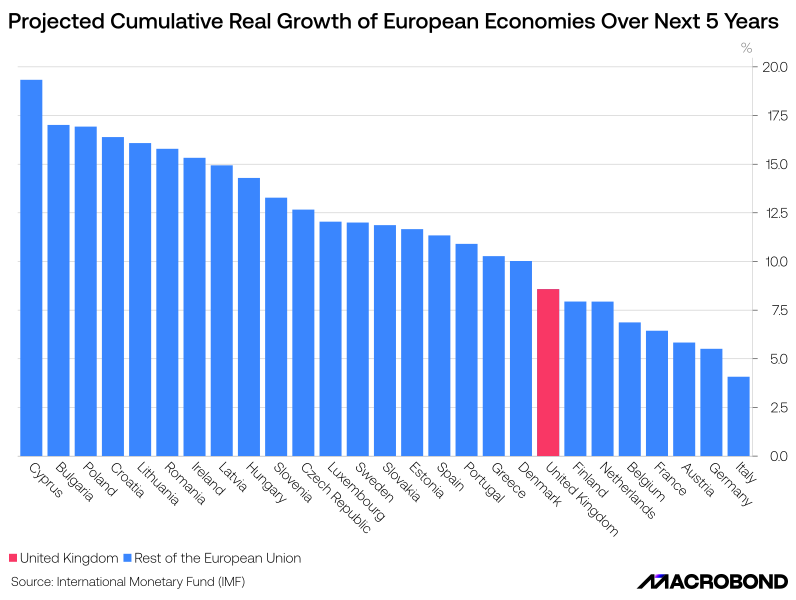
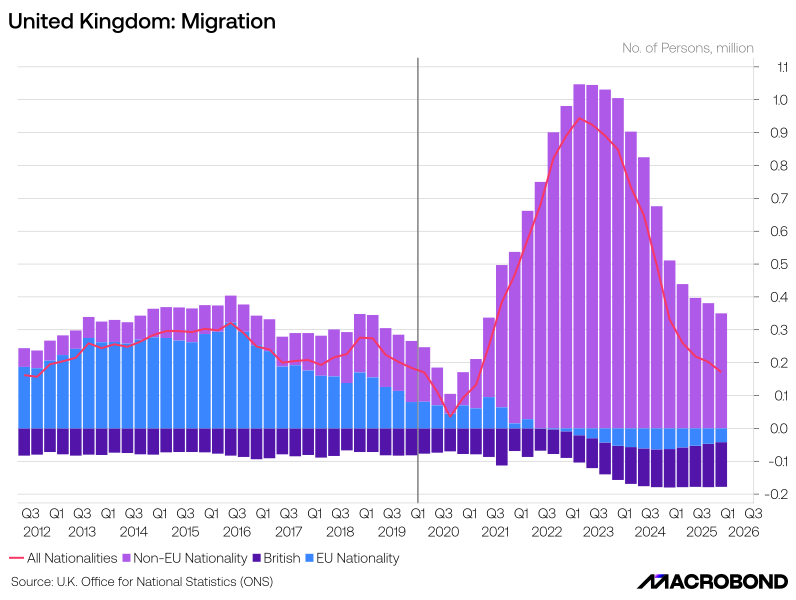
Migration and Growth Outlook Reveal a More Nuanced Picture: Brexit fundamentally altered the UK's migration mix, with declining EU inflows offset by record non-EU migration under the new immigration system. Despite weaker performance across several economic indicators, medium-term IMF forecasts suggest the UK is still positioned to outperform several large Western European economies, highlighting resilience beneath the post-Brexit adjustment.
Insights
Perhaps the most striking area where Brexit's impact can be observed is the performance of UK industrial output. Before Brexit, British industry was on a clear upward trajectory, with production expanding steadily year after year. Following Brexit, however, this trend reversed, and industrial output entered a period of decline.
Some analysts argue that this drop was mainly caused by the Covid-19 pandemic, which disrupted factories, supply chains and trade around the world. Others point out that the economy recovered from the pandemic relatively quickly and that industrial output continued to weaken afterwards. They argue that Brexit played a role by making trade with the EU more difficult and increasing costs for businesses.
While economists continue to debate the exact causes, the data show a clear change in direction. The growth trend seen before Brexit has been replaced by a period of stagnation and decline, raising questions about the long-term competitiveness of UK industry.

Insights
The UK's inflation experience has diverged from that of its G7 peers since Brexit. Cumulative consumer price inflation has reached 30.3% since January 2020, the highest in the group. While all advanced economies faced common shocks from the pandemic and the energy crisis, UK inflation has been more persistent.
Several factors have contributed to this divergence. Global supply disruptions and higher energy prices affected all economies, but the UK also faced new trade barriers with its largest trading partner and a reduction in labor mobility following the end of free movement. Together with strong domestic wage growth and persistent services inflation, these factors have kept inflation higher for longer than elsewhere in the G7.
Insights
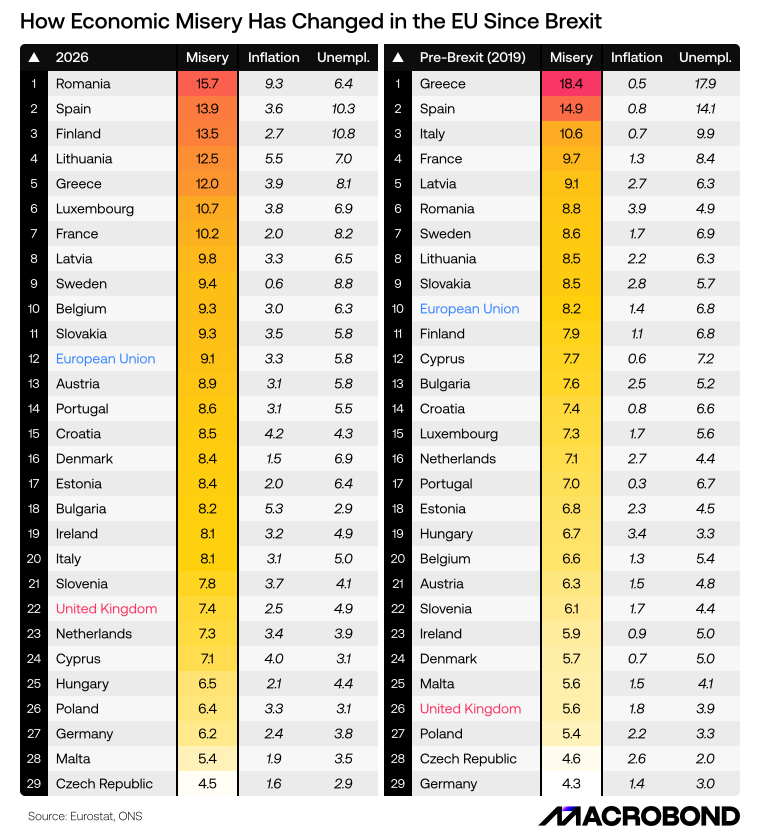
Despite recording the highest cumulative inflation among G7 economies since Brexit, the UK's economic performance appears more nuanced when viewed through a broader lens. One useful measure is the Misery Index, which combines inflation and unemployment rates to capture the pressure faced by households.
In the year preceding Brexit, the UK ranked among the best-performing advanced economies, with inflation below 2% and unemployment under 4%, placing it near the bottom of the Misery Index ranking. By 2026, however, the country has moved higher up the table - a negative shift reflecting increased economic strain. Nevertheless, the UK's Misery Index remains below the EU average, suggesting that while economic conditions have deteriorated compared with the pre-Brexit period, they are still more favorable than in many European economies.
Insights
Another key impact of Brexit has been the end of free movement, which has reshaped migration composition far more than it reduced overall inflows. Net migration of EU nationals averaged about 252,000 a quarter in the four years before the referendum, slowed to roughly 184,000 a quarter between the referendum and the UK's formal exit in January 2020, and has since fallen to ~32,000 per quarter. The UK is now losing EU nationals.
Non-EU net migration moved in the opposite direction. It averaged around 73,000 a quarter before the referendum, rose to about 132,000 a quarter between the referendum and the UK's formal exit, and has averaged roughly 569,000 a quarter since. This included a single-quarter peak of over 1,047,000 in Q1 2023, driven by the new points-based immigration system, a post-COVID surge in study and health and care worker visas, and one-off humanitarian routes.
Insights
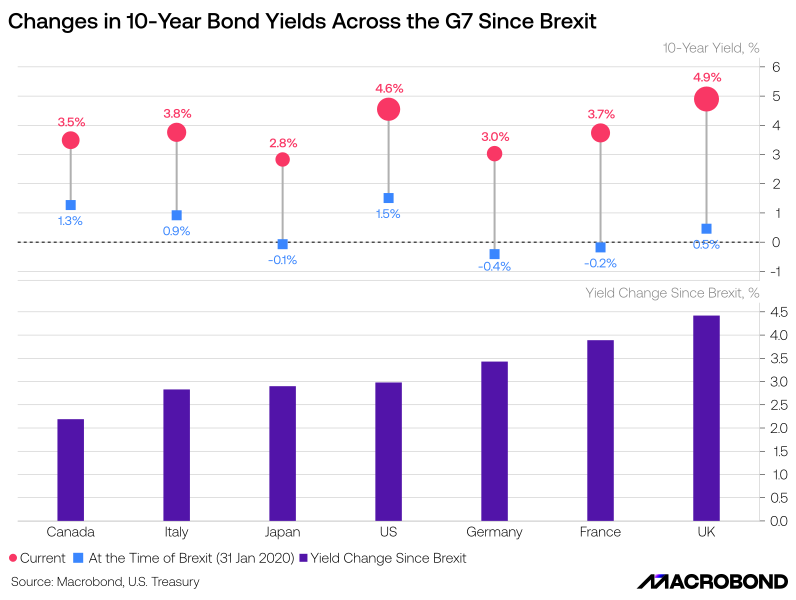
From a broader market perspective, the rise in UK government bond yields is not unique. Since Brexit - or more accurately, since the Covid-19 pandemic - borrowing costs have increased across the world as central banks raised interest rates to bring inflation under control.
What makes the UK stand out is not simply that it currently has the highest 10-year government bond yield among G7 economies, approaching 5%. It is also the scale of the increase. Since Brexit, UK bond yields have risen more sharply than those of any other G7 nation, reflecting a combination of higher inflation, tighter monetary policy and concerns over the country's economic outlook. While global factors explain much of the rise, the UK has experienced a sharper adjustment than its peers, underscoring the economic pressures that have emerged since leaving the European Union.
Insights
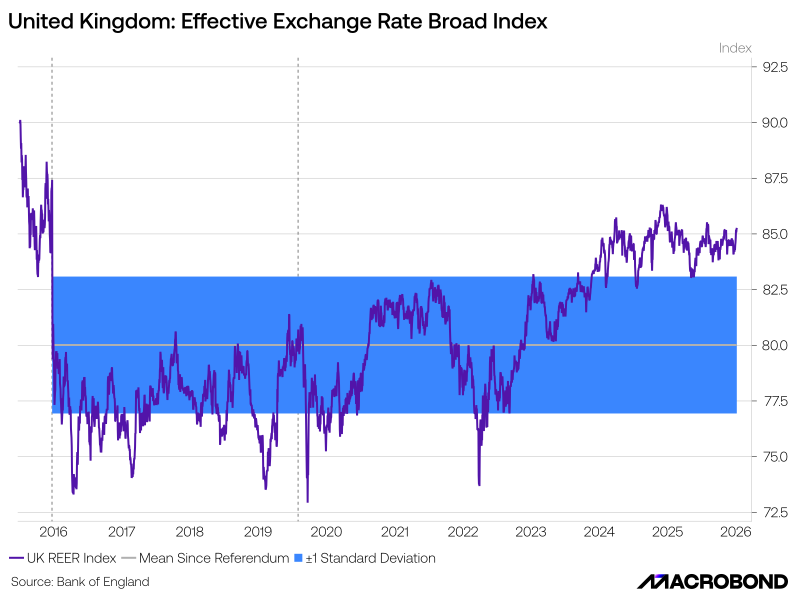
On top of increased borrowing costs, the Pound sterling has also suffered. Its broad trade-weighted index fell 14.0% between May and October 2016, the sharpest sustained depreciation of the currency outside a financial crisis. It then settled into a shallow range through most of the following decade, hovering in the mid-to-high 70s from 2017 through 2022, roughly 10–12% below its pre-referendum level throughout.
The recovery only really arrived from 2023 onward. By mid-2026 the index stands at 84.5, within 2% of where it was the month before the vote — effectively a full round trip, achieved a decade after the shock, and driven by relative interest-rate, a weak dollar, and growth dynamics in recent years.
Insights
Looking ahead, the IMF's medium-term growth forecasts suggest that the UK's position is not as weak as it may first appear. Although the country sits in the lower half of many European growth rankings, the overall picture is more balanced.
For a large, mature economy such as the UK, projected growth of more than 8% over the next five years is a respectable result. Comparing the UK directly with the fast-growing economies of Central and Eastern Europe can be misleading, as those countries are starting from a different stage of economic development and often have greater scope for rapid expansion.
A more meaningful comparison may be with other large Western European economies, such as France and Germany. On that basis, the UK's outlook appears relatively strong, with both countries projected to grow more slowly over the same period.
While Brexit may have weighed on the UK's economic performance in some areas, medium-term forecasts suggest that the country remains capable of delivering solid growth and continues to compare favorably with several of its largest European peers.