

A bi-weekly look at the trends driving economies and investments worldwide.



Powell’s Tenure in Context: Powell began as Fed Chair in a post-GFC economy still shaped by low rates, subdued inflation and gradual policy normalization, but his tenure quickly became defined by repeated shocks rather than steady-cycle management.
Policy Regime Shift: COVID pushed the Fed into emergency easing and balance-sheet expansion, before the inflation surge forced one of the sharpest tightening cycles in modern Fed history — turning policy from labor-market support to inflation-credibility repair.
Market Legacy: Powell leaves behind a Treasury market with higher long rates, heavier two-way positioning, a balance sheet still shaped by QE, and a policy debate centred on whether the economy can return to neutral without reviving inflation or breaking growth.
Insights
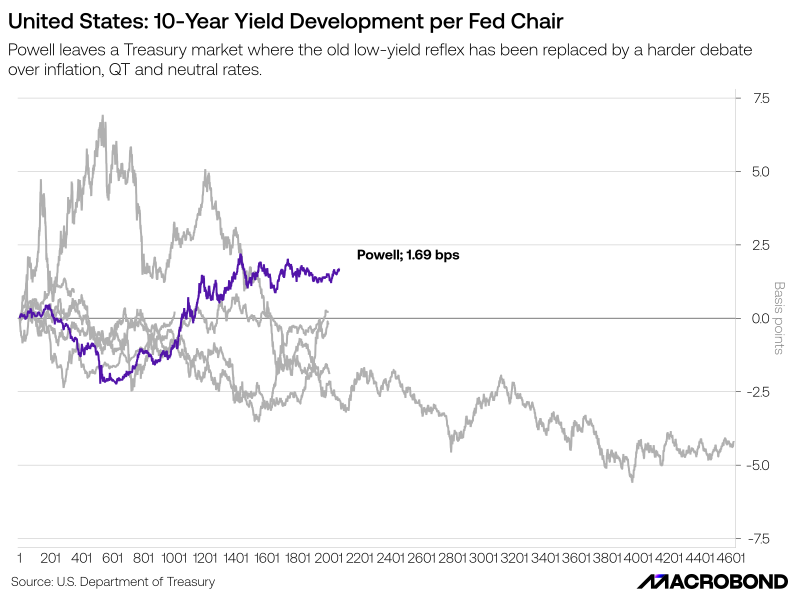
Powell’s tenure marked a regime break for long rates. The 10-year Treasury moved from a market still anchored by low neutral-rate assumptions to one forced to price inflation risk, QT and a less certain destination for policy.
The path was anything but linear: COVID briefly pulled yields into crisis territory, but the subsequent inflation shock reversed the bond-market playbook that had dominated much of the post-GFC period.
The legacy is a Treasury market less willing to assume that every slow down ends ina return to lower yields.
Insights
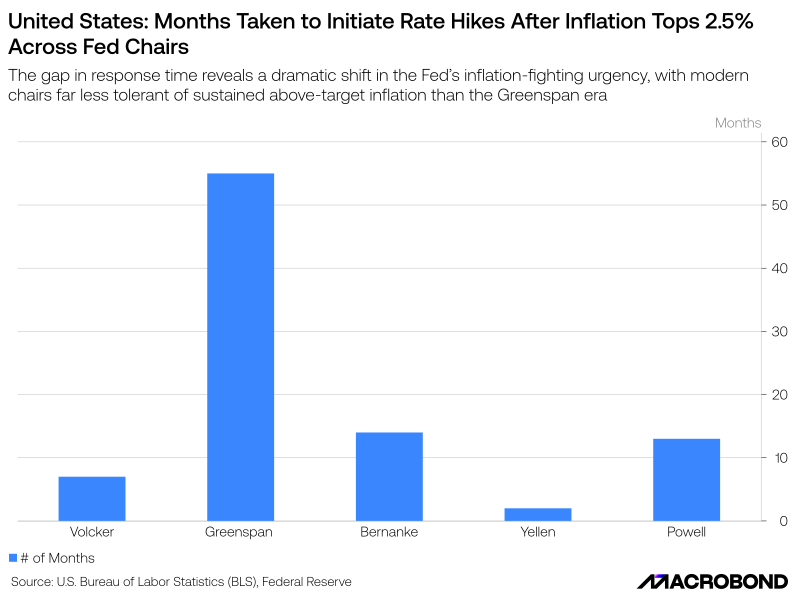
Greenspan’s extremely long lag between inflation hitting 2.5% and rate hikes signals an older policy framework that prioritized growth stability and gradualism, tolerating prolonged moderate inflation. By contrast, Bernanke, Yellen, and Powell demonstrate a post‑2008 crisis consensus: the modern Fed prioritizes pre‑emptive inflation control, acting far more swiftly to tighten policy once price pressures emerge. Notably, Powell’s response speed mirrors Bernanke’s, showing that even amid post‑pandemic inflation shocks, he adheres to the modern norm of rapid intervention, a stark departure from Greenspan’s highly patient approach..
Insights
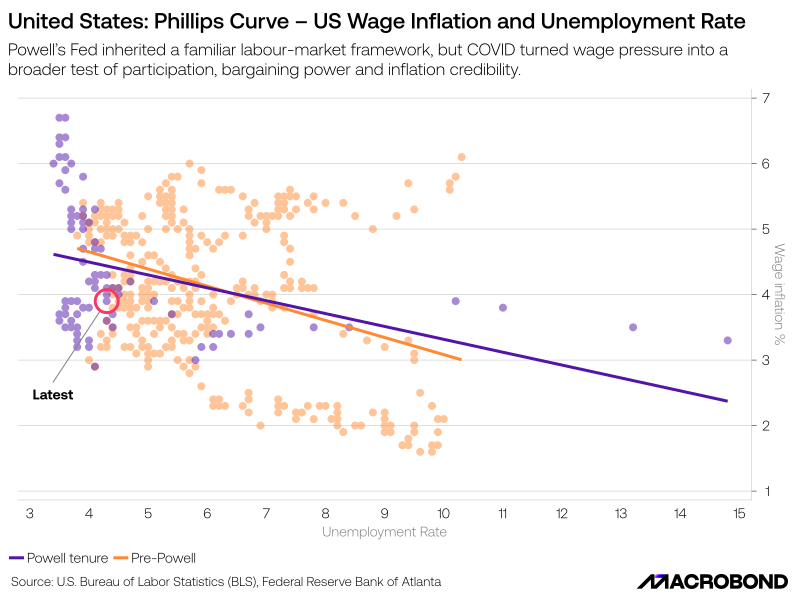
Powell’s tenure was defined by a labor-market cycle that did not behave like the pre-pandemic template: demand was protected, labor supply was disrupted, and wage pressure became harder to read through the unemployment rate alone.
The pre-Powell period still carried the older Phillips-curve logic, but the Powell era exposed a more complex regime where participation, sectoral shortages and bargaining power mattered as much as headline joblessness.
Insights
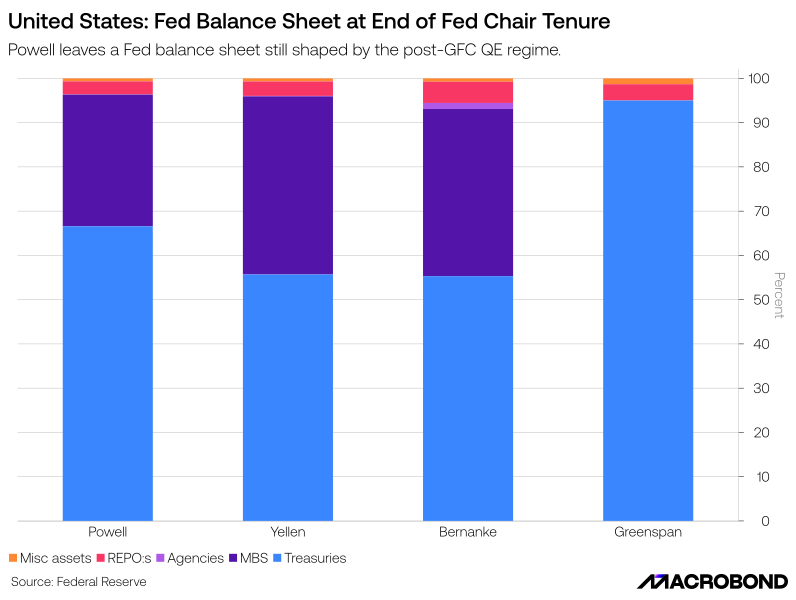
Powell’s end-tenure balance-sheet legacy is that the Fed remains firmly in the post-QE regime: no longer just an operating tool for rates, but a macro-financial stabilisation instrument that can shape Treasury, mortgage and liquidity conditions. The contrast with Greenspan is the starting point: before the GFC, the Fed’s footprint was still largely Treasury-based, with little direct involvement in mortgage-credit markets.
Bernanke created the structural break by turning large-scale asset purchases into a core crisis tool, adding agency MBS and agency debt to stabilize housing finance, lower mortgage rates and repair monetary transmission. That mortgage exposure matters because QE was not only about suppressing risk-free yields; it also became a direct channel into household borrowing costs, housing conditions and private-credit transmission.
Powell did not invent that regime, but he stress-tested it. He re-expanded Treasury and agency MBS purchases during COVID as a market-functioning backstop, then pivoted to QT once inflation credibility became the dominant constraint —leaving the Fed trying to shrink a balance sheet that is still far removed fromthe pre-QE model.
Insights
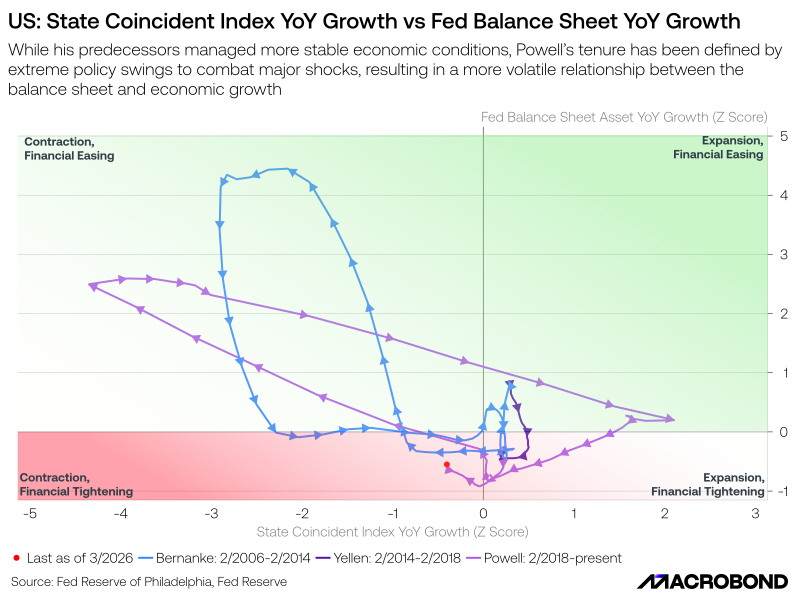
The chart highlights the transition from the relatively stable "Great Moderation" era under Bernanke and Yellen to the high-volatility environment of the Powell era. While earlier chairs maintained tighter clusters around the center of the graph, Powell’s tenure is defined by massive loops into extreme quadrants—specifically rapid balance sheet expansion during contractions and aggressive tightening as the economy attempted to stabilize. The most recent data point from March 2026 shows the economy sitting in a "Contraction and Financial Tightening" phase, illustrating the lasting impact of these policy swings compared to the more predictable historical norms.
Insights
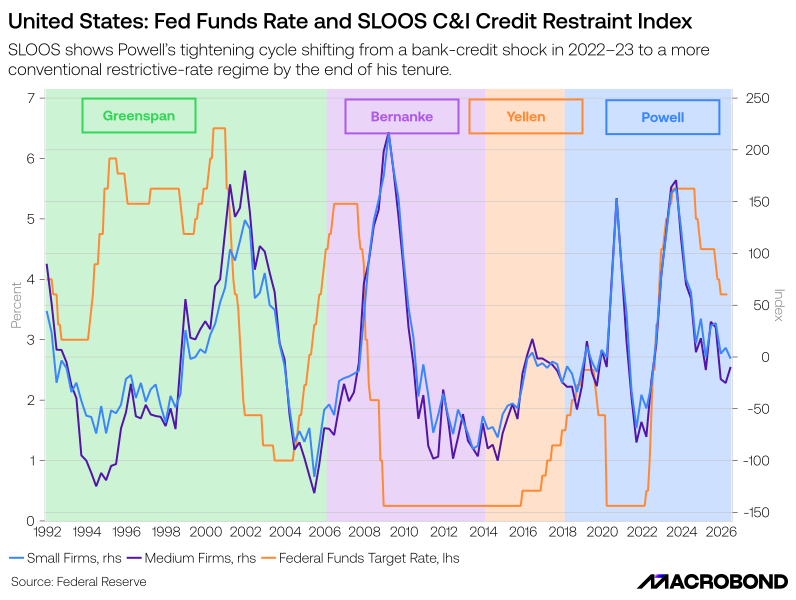
SLOOS tends to matter most around credit turning points, as it is the Fed’s clearest read on whether banks are amplifying or cushioning monetary-policy transmission through lending standards, loan terms and credit demand.
Under Powell, that channel became most visible in 2022–23, when rapid rate hikes and regional-bank stress coincided with tighter C&I standards, tighter terms and weaker demand across firm sizes.
By the end of his tenure, the signal had largely normalized: the latest SLOOS shows modestly tighter C&I standards, broadly unchanged demand and some easing in loan spreads, while the funds rate remains restrictive at 3.50%–3.75%.
Insights
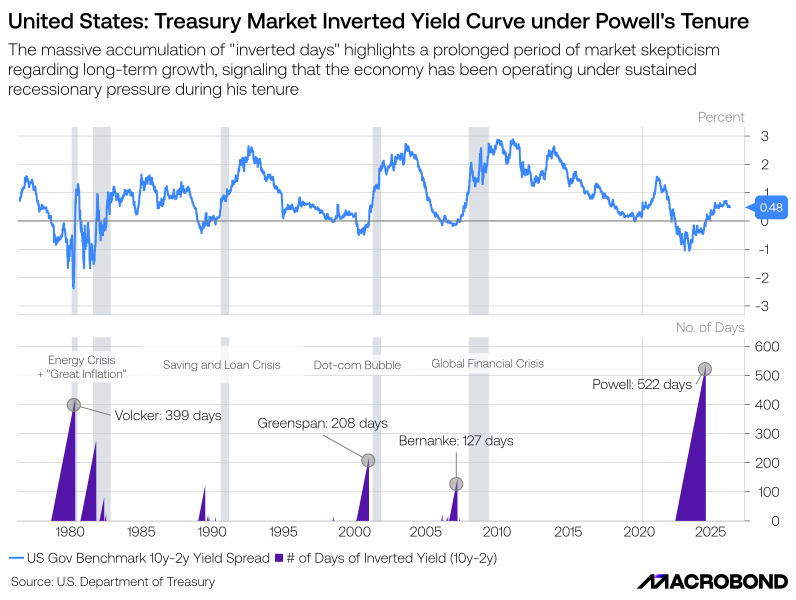
The chart of inverted yields illustrates how the 10-year minus 2-year Treasury yield spread serves as a primary indicator for economic cycles, with "inversion peaks" (where short-term rates exceed long-term rates) historically preceding major downturns. Specifically, the deep inversions of the early 1980s signalled the Fed's aggressive fight against inflation, the 1990 inversion preceded a shock-driven mild recession, the 2001 peak aligned with the Dot-com bubble burst, and the 2008 peak acted as a harbinger for the Global Financial Crisis. However, the unprecedented 522-day inversion peaking around 2024 stands out as an anomaly; while such a prolonged inversion typically guarantees a "hard landing"—a sharp economic contraction with high unemployment—the U.S. has instead trended toward a "soft landing." This unexpected resilience can be attributed to a unique post-pandemic labor market with excess demand, consumers being insulated by previously locked-in low interest rates, and significant fiscal buffers that allowed inflation to cool without triggering a full-scale recession.
Insights
Looking at Treasury positioning, one can trace how markets reacted to Powell’s Fed to some degree: he started with a market still conditioned by the post-GFC low-rate era, but already moving through gradual policy normalization.
During his tenure, that backdrop was overturned by COVID, the inflation shock, rapid rate hikes, QT, fiscal-supply concerns and repeated repricing of the timing of cuts — all of which made Treasuries a much more contested macro market, especially in the 5-year and 10-year sectors where policy persistence, inflation risk and term premium meet.
Powell’s legacy is therefore a Treasury market with far heavier two-way positioning than at the start of his chairmanship; not a settled duration view, but a market still actively debating inflation persistence, Fed credibility and the path back toward neutral, with the belly of the curve carrying much of that debate.


