

A bi-weekly look at the trends driving economies and investments worldwide.



The Iran crisis is a real global oil shock. Brent has broken above its 95% statistical bounds for the first time since 2022, moving faster in the early days than even 2008. But the U.S. is far better positioned to absorb that shock than in past cycles. Domestic crude production has more than doubled since 2010, and the US has flipped from the world's largest petroleum importer to a structural net exporter of both oil and gas. That is why U.S. pump prices, while up sharply in percent terms, still sit comfortably within the normal 15-year historical band rather than spiking to fresh highs. The buffer is not perfect. The Strategic Petroleum Reserve sits well below pre-2022 levels and has started drawing down again, and the low-tax US retail fuel structure means American consumers feel global crude moves more directly than Europeans do. But the structural picture is fundamentallydifferent than in 2008 or 2022. The same global Brent shock now lands on a much stronger domestic energy balance sheet, and that is the difference between an economy-wide hit and a manageable inflation pass-through.
Insights
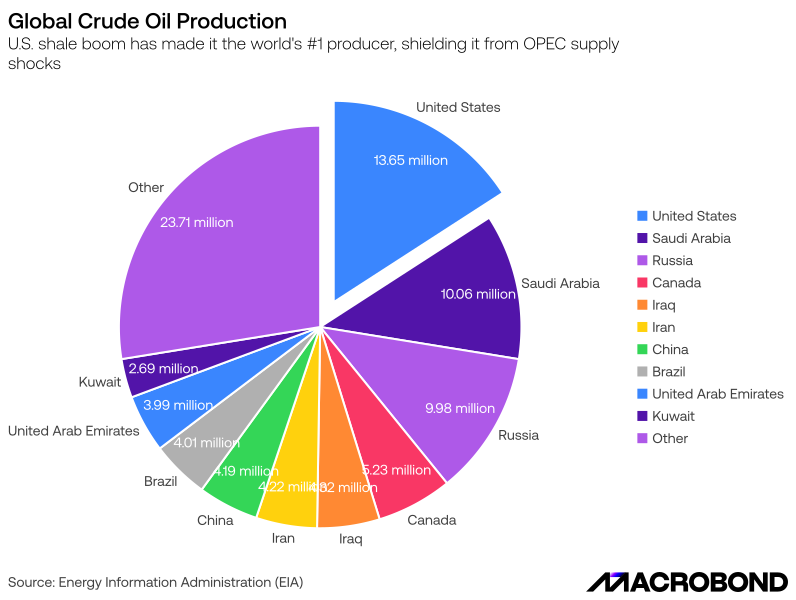
In 2010, the U.S. was the world's third largest crude oil producer at 5.4 million barrels per day, trailing Russia (9.6 mb/d) and Saudi Arabia (8.4 mb/d). The country was still a large net petroleum importer, leaving consumers and the broader economy directly exposed to OPEC supply decisions and Middle East volatility. That dependence is the baseline against which the U.S. shale-driven transformation of the past 15 years should be measured.

Insights
The U.S. has materially reduced its exposure to global crude oil shocks over the past two decades by ramping domestic output - production has climbed from ~5.1 mb/din 2008 to 13.65 mb/d in Dec 2025, a ~2.7× increase driven by the shale revolution that turned the country from a large net importer into a net exporter of crude.
Insights
As recently as 2005, the U.S. was importing roughly 12.5 million barrels of petroleum per day. The shale boom flipped that within a decade and a half. The U.S. became a net natural gas exporter in 2017, then a net petroleum exporter in late 2019, and by 2025 was running a petroleum surplus of 2.8 mb/d. Domestic production has more than doubled over the period, leaving the U.S. as both the world's largest oil producer and a structural net exporter for the first time in over fifty years.

Insights
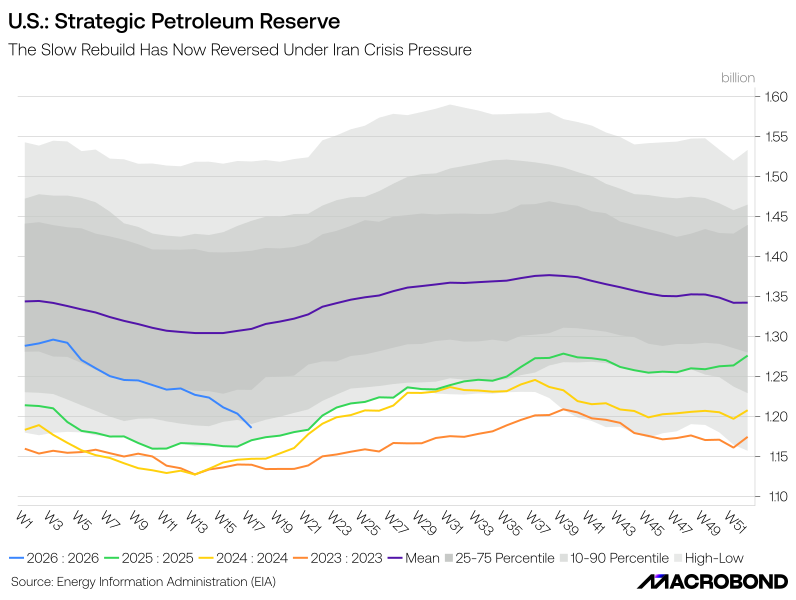
The SPR was drawn down by more than 250 million barrels through 2022, bottoming at 347 million barrels in mid-2023. That was the lowest level since the early 1980s. The rebuild since then has been slow, recovering less than 70 million barrels over almost three years to reach 415 million by March 2026. With the Iran crisis pushing crude higher, the reserve has been drawn down again in recent weeks to 405 million barrels. The U.S. is entering this oil shock with its strategic buffer at less than 60% of its 2009 peak of 727 million barrels and still well below historical norms.
Insights
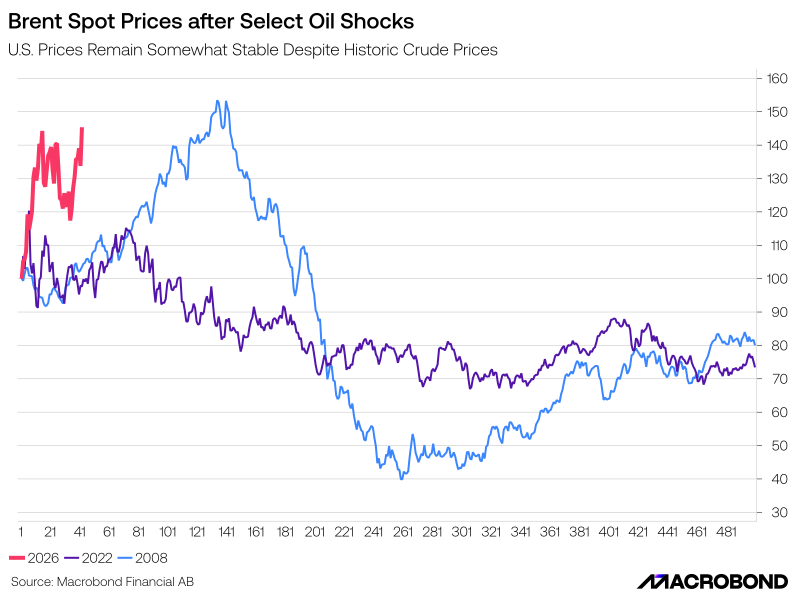
Brent is moving harder and faster than in either 2008 or 2022 in the early days of this shock, but the U.S. is meaningfully more insulated than in past cycles. Domestic crude output has more than doubled since 2008, and the country is now a net petroleum exporter rather than a major importer, so a higher global oil price flows back to the U.S. as windfall revenue for producers and exports rather than as a pure macro tax. The pass-through to consumers and headline inflation is still real, but the structural shock-absorption capacity is far larger today than it was in either prior episode. The argument is therefore fair: the U.S. is not immune to a Brent spike, but the same shock that devastated growth in 2008 lands on a fundamentally different domestic energy balance sheet today.
Insights
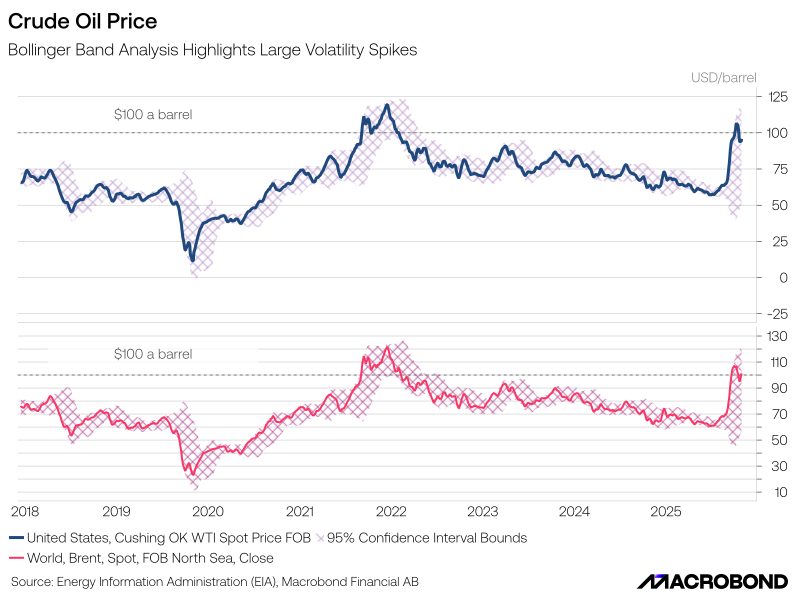
Bollinger Bands plot a 95% statistical envelope around the price's moving average, so a clean break above the upper band means the current move is roughly two standard deviations beyond recent norms and historically rare. Both WTI and Brent have done exactly that for the first time since the 2022 Russia-Ukraine shock, signalling a statistically extreme move rather than routine volatility. Crude has not spent material time above $100 in three years, so the question for the U.S. macro picture is whether prices stay parked in this band or fade back inside it as they did across the back half of 2022. The longer they sit above the bands, the more the consumer pass-through and inflation expectations risks flagged elsewhere in this report shift from tail risk toward base case.
Insights
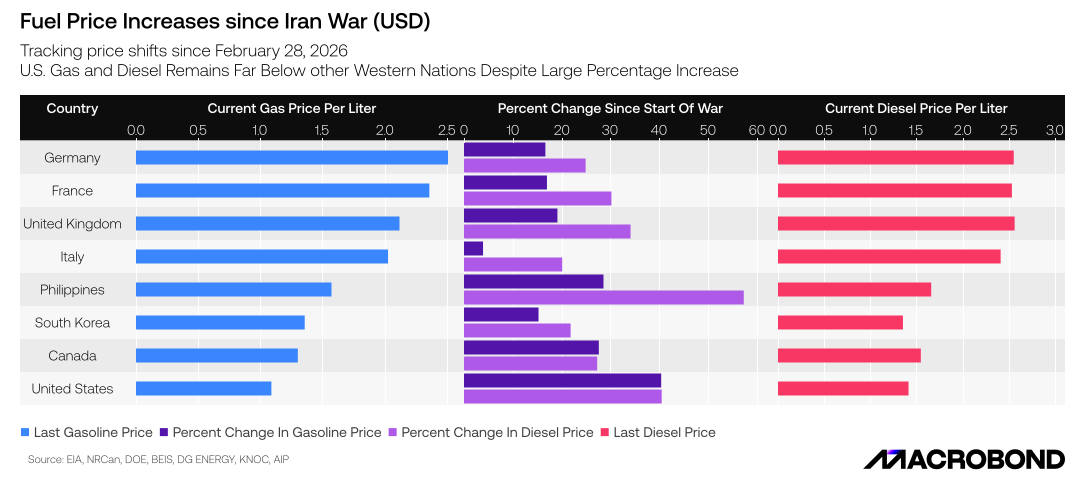
U.S. drivers still pay roughly half what their European peers do at the pump, with gasoline near $1.00 per liter against $2.00 or more in Germany, France, the UK, and Italy. The percent change tells a more nuanced story, though: with much less tax baked into the retail price, every dollar move in crude shows up more directly at the U.S. pump, which is why U.S. gasoline and diesel are up roughly 35% and 45% since the war began, while European pumps moved closer to 15-20%. The U.S. baseline advantage in absolute fuel cost is real, but the headline sensitivity to global oil shocks is actually higher in percent terms, and that is the channel through which the Iran-driven price move is feeding back into U.S. inflation expectations.
Insights
Consumer pump prices in the current $4.00 to $4.25 band still sit comfortably within the typical 15-year distribution rather than spiking to fresh highs, even with WTInear $99 against the backdrop of the Iran crisis. The U.S. is no longer simply a price-taker on global crude, and that resilience is showing up at the pump, in the inflation data, and in the relative calm of domestic energy markets compared with prior crisis episodes.


