A bi-weekly look at the trends driving economies and investments worldwide.


China’s Macro Reset: As policymakers set a more modest 4.5–5% growth target, Beijing is balancing near-term stabilisation with structural adjustment - expanding fiscal issuance and supporting housing stabilisation while gradually shifting the growth model toward consumption.
Strategic Industrial Push: Intensifying technology competition and supply-chain realignment are accelerating investment in domestic innovation - from AI and semiconductors to defence and aerospace - supported by rising R&D spending and industrial policy, even as defence-budget growth moderates to around 7%.
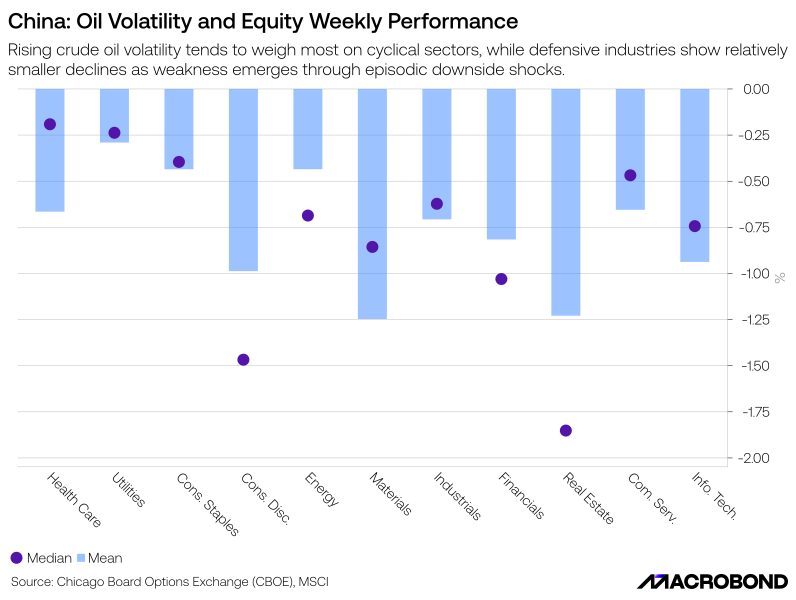
Energy and Market Implications: Expanding electricity generation and renewable capacity highlight the growing energy demands of digital infrastructure and advanced manufacturing, while external shocks - particularly oil volatility - continue to shape cyclical dynamics in Chinese equity markets.
Insights
China has been gradually reducing its holdings of U.S. Treasuries as part of a broader effort to limit reliance on dollar-denominated assets accumulated during decades of large trade surpluses. At the same time, policymakers have increasingly encouraged the use of the renminbi in cross-border trade and finance, aiming to reduce structural dependence on the U.S. dollar over time.
In addition, the shift aligns with Beijing’s longer-term push to expand the use of the renminbi in cross-border trade and finance, including through bilateral settlement arrangements, commodity trade invoicing in RMB, and the continued development of offshore renminbi liquidity pools.

Insights
Guidance from this year’s Congress points to expanded central government issuance alongside larger local government special-bond quotas aimed at supporting investment and stabilising activity. This partly reflects the property downturn, which has eroded land-sale revenues - historically a key source of local government funding - prompting policymakers to rely more on bond issuance to support fiscal capacity and infrastructure spending.
However, even as bond supply rises, foreign participation has remained subdued, suggesting continued investor caution toward China’s growth outlook.

Insights
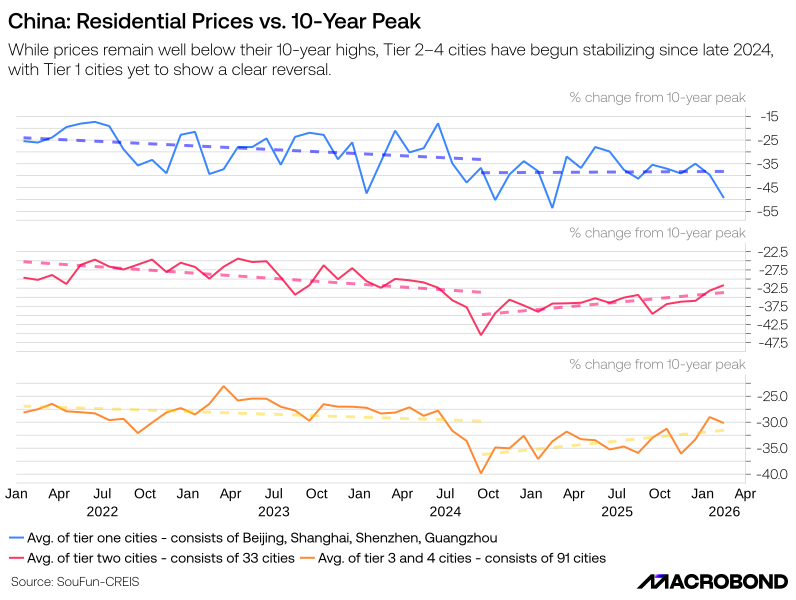
As noted previously, China’s real estate market remains closely tied to local government finances, particularly through land-sale revenues that have historically supported regional budgets. Within this context, the latest policy guidance reiterates the need to stabilise the housing market while calling to "accelerate the development of a new model for real estate” in 2026.
The shift signals a move away from the earlier focus on clearing legacy risks and ensuring project completion, toward a new phase centred on improving housing quality and promoting a more sustainable housing framework.
Insights
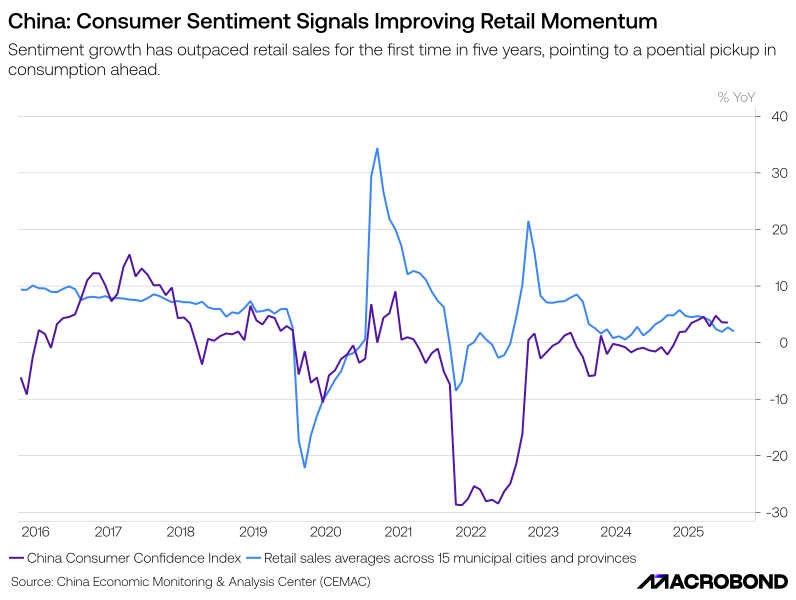
At this year’s Two Sessions, policymakers highlighted boosting consumption as a key priority for China’s economic strategy. Authorities emphasized that stronger spending will depend on rebuilding consumer confidence, with policy support aimed at stimulating domestic demand as part ofthe broader shift toward a consumption-driven growth model.
Insights
U.S. imports have declined as technology supply chains gradually diversify away from China and strategic competition in advanced technologies intensifies. At this year’s National People’s Congress, policymakers reiterated the importance of technological self-reliance - particularly in semiconductors, AI, and communications infrastructure - underscoring Beijing’s push to strengthen domestic capabilities amid ongoing trade and technology tensions with the United States.

Insights
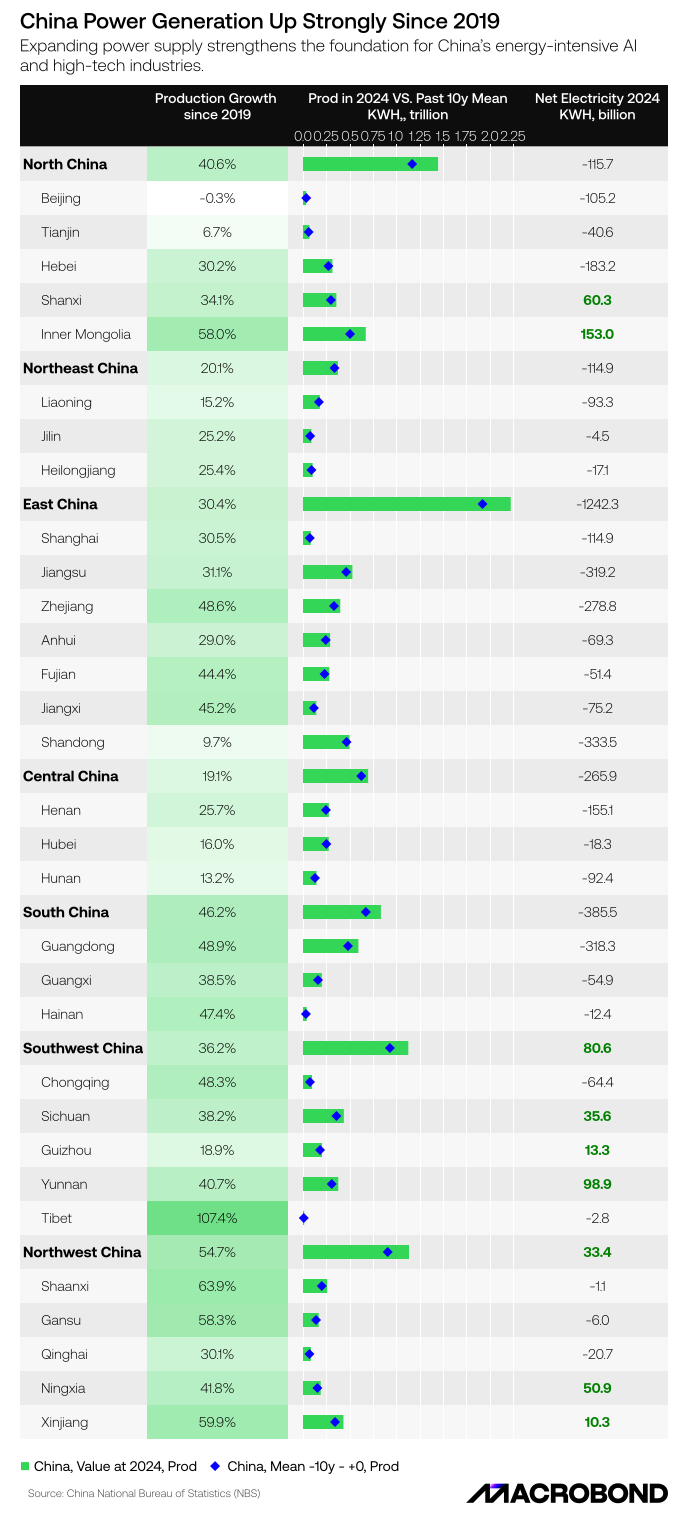
China's new five-year policy blueprint seek "decisive breakthroughs in key core technologies" such as AI, robotics and quantum technology will drive massive computing demand, placing increasing pressure on power generation and grid infrastructure.
Insights
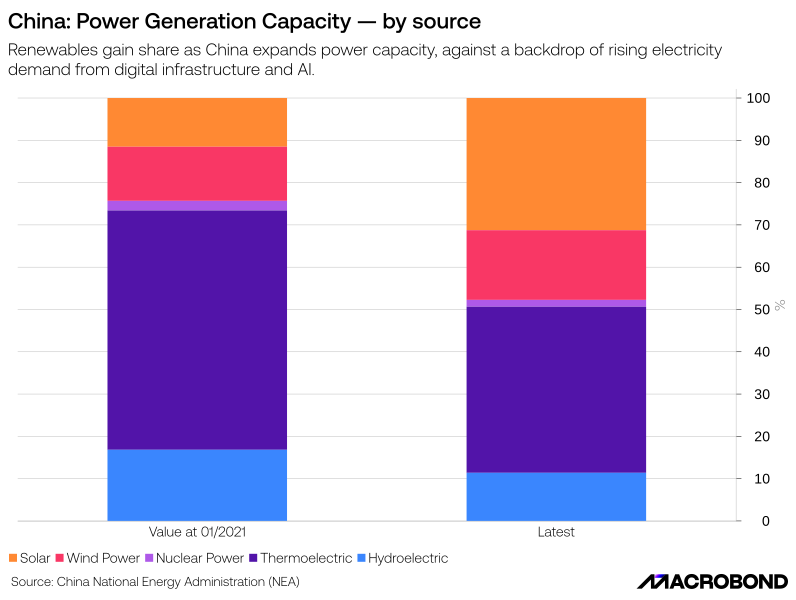
Rapid growth in solar and wind capacity is reshaping China’s electricity mix. As demand rises from digital infrastructure and computing clusters, discussions at this year’s Congress highlight the need to better align power supply with the expansion of AI and data-center capacity.
Insights
The government work report highlighted artificial intelligence as a key driver of productivity and industrial upgrading, with policymakers outlining plans to accelerate adoption across manufacturing and digital infrastructure. Against the backdrop of intensifying technology competition with the West, companies are ramping up R&D spending as Beijing seeks to scale domestic innovation and strengthen leadership in emerging technologies.

Insights
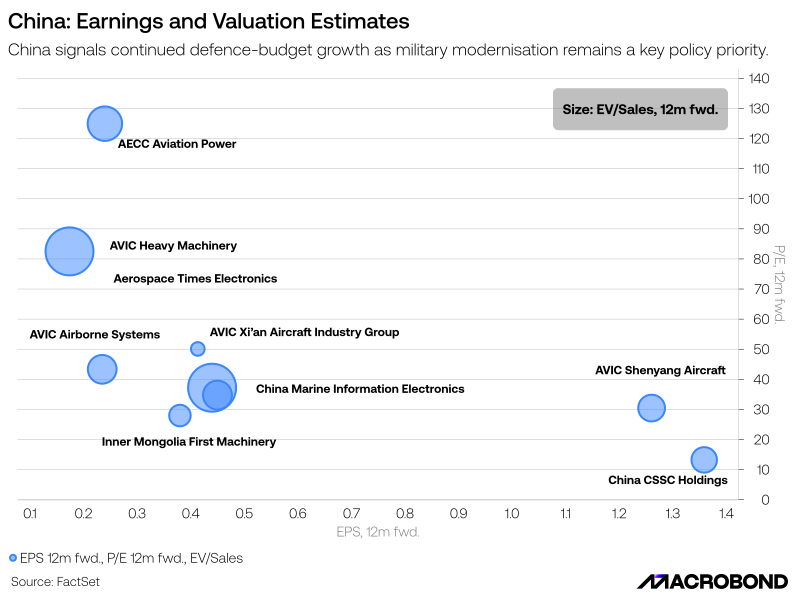
This year’s Congress announced another increase in China’s defence budget, extending a long-standing trend of steady military spending growth. The rise, however, is somewhat smaller than in recent years, reflecting a balance between economic pressures and ongoing military modernisation. Within this context, industries tied to aerospace platforms, engines, and defence electronics may be better positioned to benefit from continued procurement and equipment upgrades.
Insights
Against the backdrop of rising volatility in crude oil markets, Chinese equities have tended to trade with a defensive bias. As higher energy costs raise uncertainty around growth and external demand, cyclical sectors typically see the largest drawdowns, while defensives decline less—though the weakness appears largely episodic rather than indicative of persistent market deterioration.