
Macrobond has exceeded expectations — powerful for advanced users, yet intuitive enough for everyone. It’s now integral to our research production.
When you’re responsible for shaping regulation, programs, and budgets, you need accuracy and expediency. Built with government economists in mind, Macrobond helps fill in budget and resourcing gaps without cutting corners, ensuring that high-quality data and insights make it into important policy decisions.
Forecast long-term trends with confidence using integrated time-series databases and statistical models designed for macroeconomic analysis.
Review historical conditions with precision through point-in-time data access, ensuring your work reflects what decision-makers knew at the moment.
Make multi-agency collaboration easier by keeping data, models, and documentation in a central location that’s transparent and easy to audit.
Overcome resourcing challenges with automatic live-data syncing, pre-built analytics, and an intuitive platform that reduces manual effort.
Your influence and reputation are defined by the quality of your insights and analyses. That’s why private institutions, from think tanks to member-funded organizations, use Macrobond when they need to produce timely, relevant research for clients, policymakers, and the media.
Get around funding limitations and lean teams by accelerating the way you search for, clean, and refresh source data.
Put your work in front of the right people at the right time with simple export to portals, websites, and social platforms in ready-to-share formats.
Stay on top of market fluctuations using point-in-time data and dynamic charting that automatically updates your work wherever it’s linked, in real-time.
Work efficiently as a network or a team of one, from a single source of truth that helps you coordinate more easily while preserving historical charts for future reference.
A faster path from question to insight.
Reimagining research for speed, scale, and collaboration.
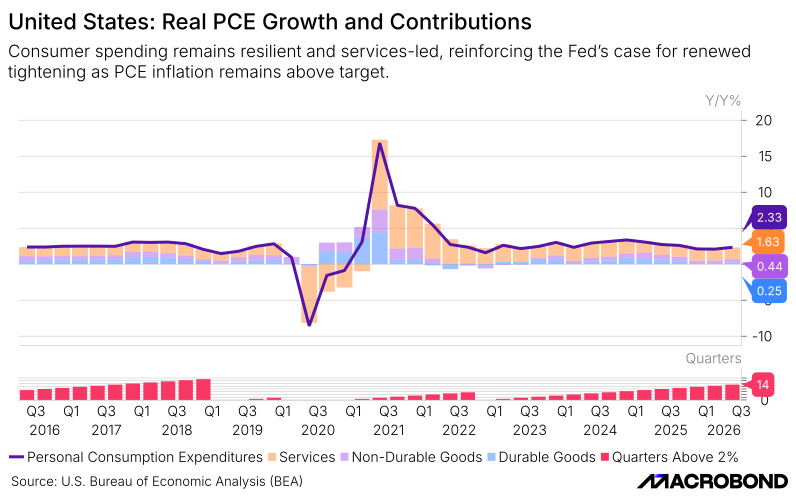
Fresh from the markets - our latest batch of financial insights released weekly.
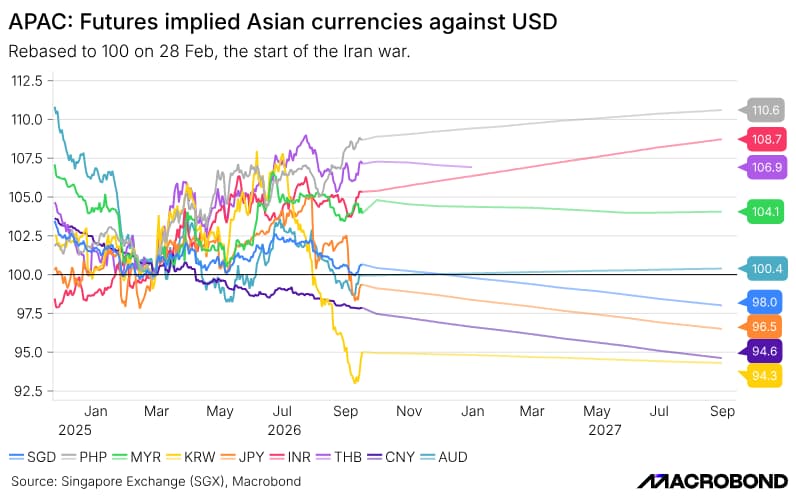
How did the February 2026 Strait of Hormuz closure affect APAC economies? Explore rising energy costs, producer prices and currency pressure across 10 markets—and why an AI export boom masked the impact.
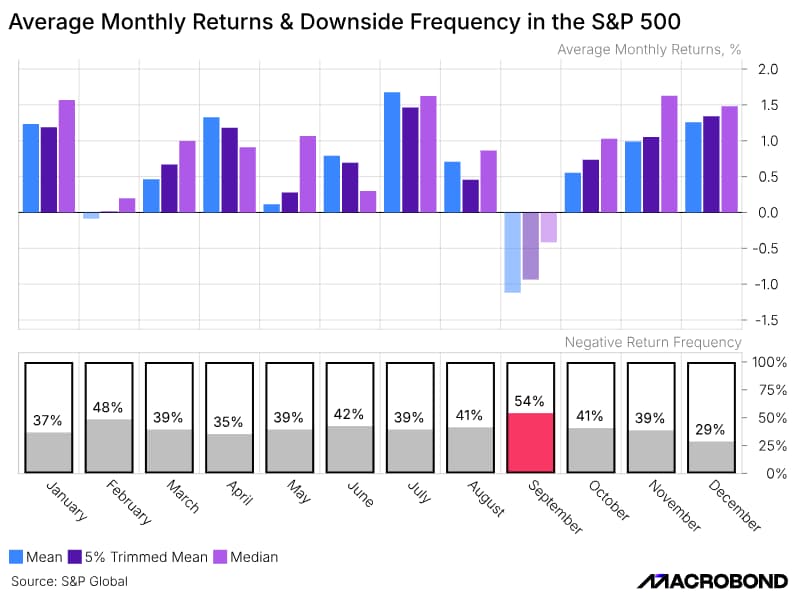
This edition of Macro Moves puts one of the market’s most persistent seasonal patterns to the test: the September effect. Drawing on nearly a century of S&P 500 history, the analysis examines whether September really is an unusually weak month for equities—or whether its reputation is simply the product of chance.
Using more than 20 measures of performance and risk, alongside different historical samples and evidence from equity markets around the world, the edition tests how consistently the effect holds up. It also explores the theories behind September’s weakness, whether the pattern creates an investment opportunity, and the surprising area where September stands out: its relationship with full-year market returns.