A bi-weekly look at the trends driving economies and investments worldwide.


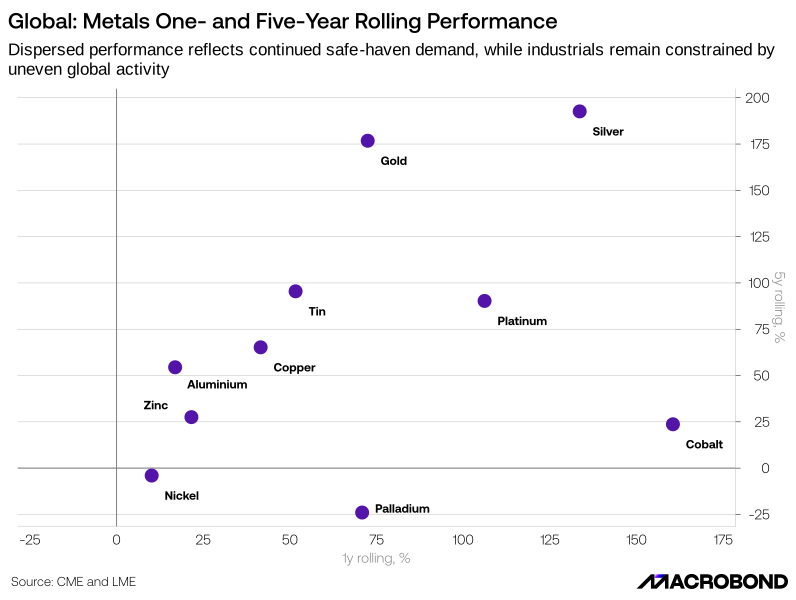
Precious metals remain the clearest expression of ownership demand: Gold and silver still lead performance. Volatility has repriced, yet price action appears absorbed rather than disorderly — even as broader precious metals drift toward more asymmetric risk.
Industrial metals look firmer, but the cycle is still fragmented: Copper and aluminium remain supported, consistent with upstream reflation. Energy still shows the cleaner inflation pass-through, while base metals may be the earlier gauge.
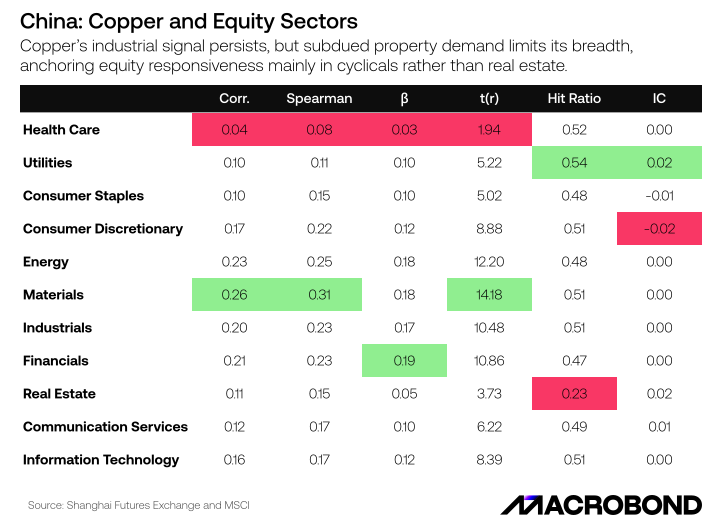
China continues to cap the breadth of the signal: Copper’s impulse is still transmitted through cyclicals — materials, energy, industrials — while real estate stays disconnected, keeping the construction channel structurally suppressed.
Insights
Gold’s leadership could reflect ongoing reserve diversification and hedging demand, while silver appears to be following with higher beta — benefiting both from the same “store of value” impulse and from its growing industrial role. In that sense, precious metals as a group seem to corroborate a regime where ownership demand remains firm even when price action becomes more volatile, even if the move is not uniform across all precious metals.
Insights
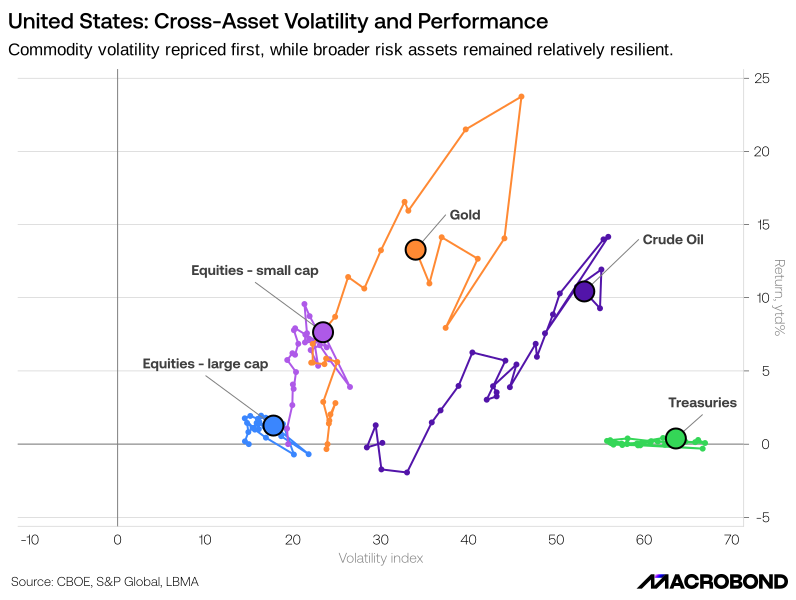
Despite the strong price momentum in gold, we have seen increased volatility in recent weeks, partly because shifts in short-term positioning can respond quickly to incoming economic signals, as well as the occasional overlap of speculative flows and hedging activity. However, the overall market backdrop seems to suggest that investors are taking this in stride: small-cap equities have outperformed large caps on a year-to-date basis, and Treasuries have shown very little movement in either price or volatility, pointing to a risk environment that is not uniformly unsettled.
Crude oil, on the other hand, did see a notable spike in volatility — a response that appears concentrated after the U.S. intervention in Venezuela and associated supply-side repricing, as well as broader questions about inventory dynamic sand evolving OPEC+ production guidance.
Insights
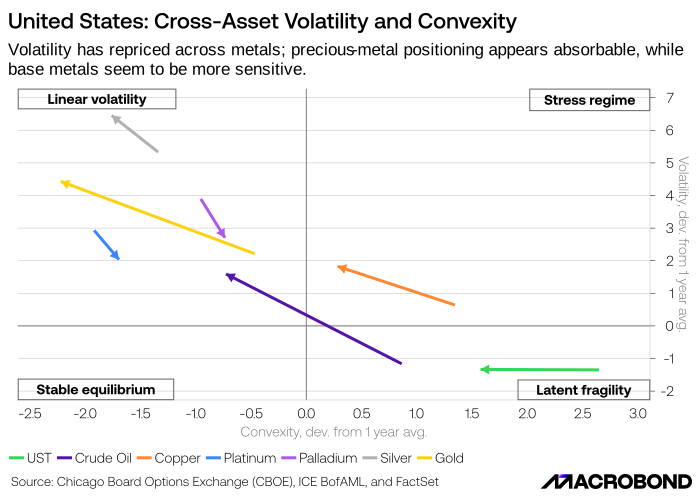
The recent volatility in gold has been accompanied by a clear shift in pricing: risk premia have moved deeper into negative territory, suggesting investors maybe increasingly willing to pay for immediacy of exposure rather than price discipline. This dynamic is not just seen in gold — silver has taken an even more pronounced turn, consistent with its higher beta to precious-metals momentum, a tighter physical narrative linked to industrial demand, and greater sensitivity to positioning and flow-driven swings.

Insights
However, despite the volatile backdrop, positioning suggests that gold and silver remain in a relatively controlled volatility environment — in the sense that volatility has repriced without a comparable increase in tail-risk pricing, drawdowns have remained absorbable, and the options market is not yet signalling a clear “stress” regime. Even so, the wider precious complex appears to be gradually drifting toward more asymmetric pricing, which may point to a slow build-up in fragility.
Insights
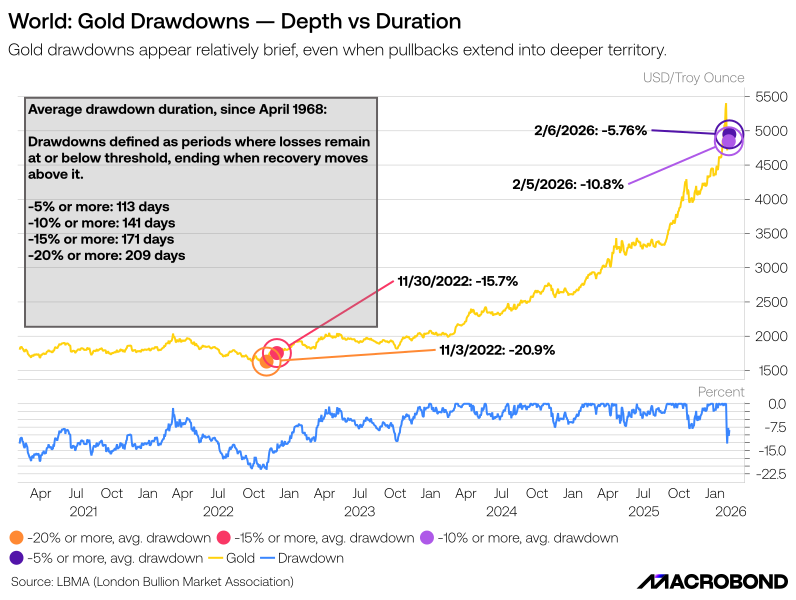
Against this volatility and tail-risk backdrop, it is useful to examine how gold pullbacks typically behave. Gold drawdowns — defined here as declines that drops below a drawdown threshold, and persist there until prices recover back above the threshold — have often been relatively brief even when they extend into deeper territory, suggesting dips are frequently absorbed rather than prolonged. At the same time, larger corrections still occur episodically, implying trend strength can coexist with meaningful path risk.
Insights
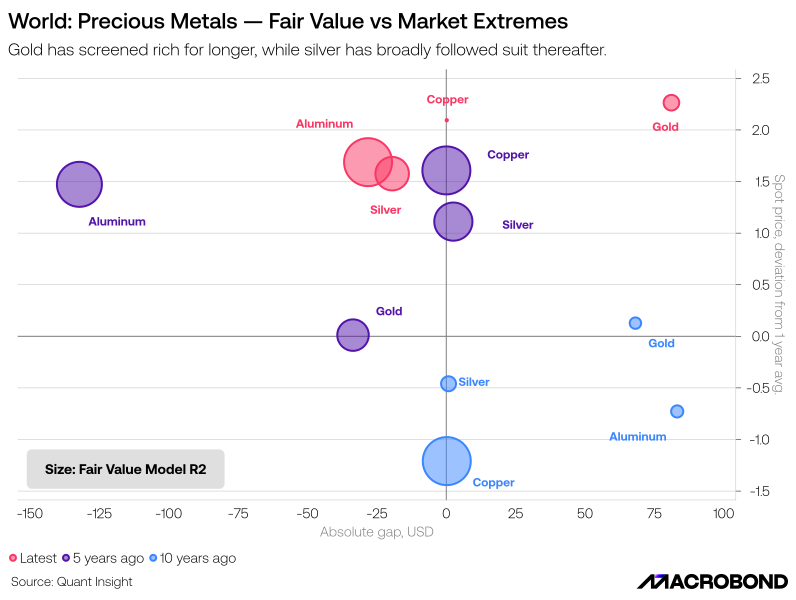
Against the sharp price action and more volatile backdrop, it seems that gold has remained persistently rich, while silver has broadly followed suit there after. This pattern, as stated before, may be consistent with sustained ownership demand, even as price swings have become less orderly. At the same time, elevated volatility can reduce fair-value signal precision, suggesting the latest valuation gaps should be interpreted with more caution than usual.
Insights
With prices and volatility rising across commodities, a common framework is that metals can act as earlier “upstream” signals, while energy tends to deliver the more direct inflation pass-through. This chart is broadly consistent with that: crude oil shows a clearer and stronger historical transmission into U.S. producer prices, reflecting its role in transport and production costs.
That said, aluminium — a core input for autos, packaging, construction, and power infrastructure — may be a cleaner early gauge of emerging cost pressure. Its term structure tightness appears to move with producer inflation at a longer lag, suggesting base metals can flag reflationary dynamics before they become fully visible through the energy channel.

Insights
As previously stated, for copper and base metals more broadly, global demand has remained dispersed. This backdrop can be corroborated by China’s copper signal: the demand impulse is still present, but it appears to be transmitted mainly through the industrial economy rather than through property-linked construction.
That split is also visible in equities. Materials, energy, and industrials show the most consistent co-movement with copper. Yet real estate remains comparatively disconnected, reinforcing the view that China’s property downturn continues to suppress the construction channel even when industrial demand improves.