A bi-weekly look at the trends driving economies and investments worldwide.


U.S.-Centric Re-Engagement in Focus: With U.S. intervention reshaping Venezuela’s oil outlook, attention has shifted to how Venezuelan crude is produced, governed, and routed through U.S.-linked operational, licensing, and trade channels.
Bounded System Response: Despite Venezuela’s resource potential, re-entry would occur within a mature and capacity-constrained U.S. oil system, where elevated refinery utilisation and a lighter crude slate favour substitution and trade rebalancing over a step-change in import volumes.
Presumptive Beneficiaries Along the Value Chain: Likely beneficiaries include companies with direct exposure across the value chain, spanning upstream operators, oilfield service providers, and complex refiners of heavy and mid-grade crude.
Insights
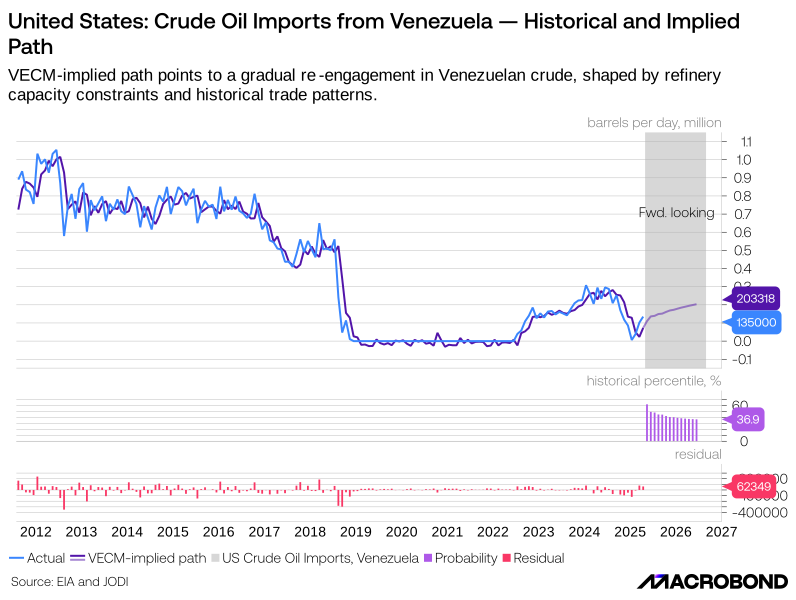
U.S. crude imports consolidated around Canada after Venezuelan supply collapsed under sanctions imposed in 2019. Limited licenses granted in 2023 enabled only a modest and tightly negotiated resumption, with volumes constrained by PDVSA’s operational deterioration and unresolved U.S.–Venezuela political frictions rather than refinery demand. As a result, Venezuelan imports never recovered beyond marginal levels.
Against this backdrop, any broader reintroduction of Venezuelan heavy crude would initially be expected to alter the composition of U.S. imports, testing whether incremental barrels displace other heavy grades within Gulf Coast refinery slates.

Insights
Venezuela holds the world’s largest proven oil reserves, yet production has collapsed toa level inconsistent with its resource base. Recent U.S. statements signalling an intention to rebuild Venezuela’s oil sector highlight the distinction between reserves on paper and operational capacity in practice.
Years of underinvestment, operational deterioration, and sanctions-related constraints have eroded the oil sector’s end-to-end operating system—from field operations and upgrading capacity to diluent supply and export logistics.

Insights
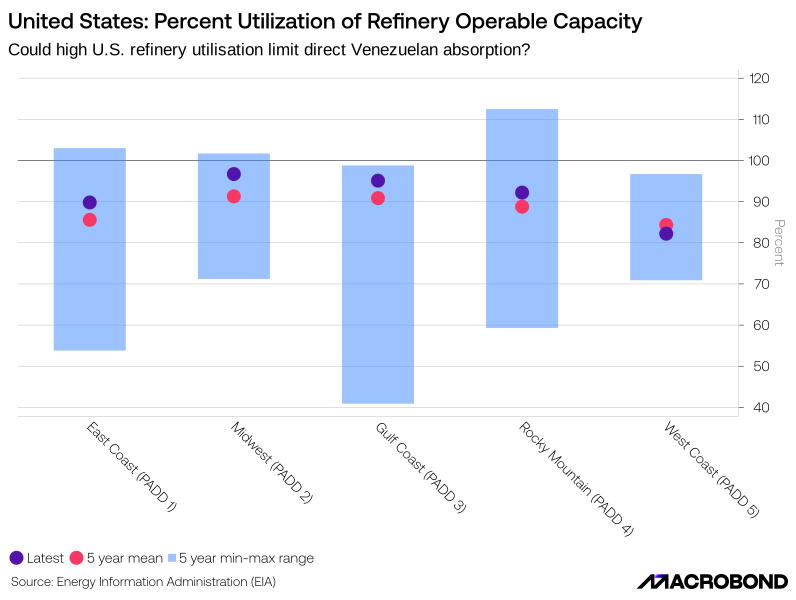
U.S. refinery utilisation remains elevated across key PADDs, particularly along the Gulf Coast, leaving limited slack outside scheduled maintenance periods. While Gulf Coast refineries retain the technical capability to process heavy and mid-grade crudes, persistently high utilisation suggests that any re-entry of Venezuelan barrels would more likely displace other heavy imports or alter trade composition than translate directly into higher aggregate crude intake.
Notably, there are periods when reported utilisation exceeds 100 percent, reflecting lags in operable capacity reporting and incremental efficiency gains that temporarily raise effective throughput. In this context, a re-entry of Venezuelan heavy crude could, at the margin, support slightly higher effective utilisation through feedstock optimisation or extended run-rates, but would likely not generate sustained overcapacity; instead, adjustments would tend to occur primarily within existing capacity constraints unless accompanied by new investment.
Insights
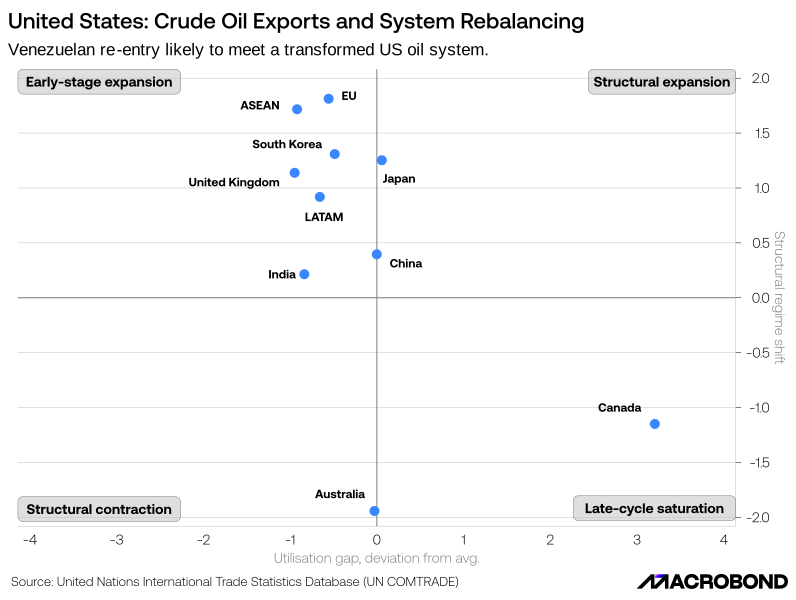
The prospective re-entry of Venezuelan crude would occur within a structurally different U.S. oil system, shaped by higher domestic production and expanded export capacity.
While U.S. refiners would still retain a structural need for heavy-grade barrels, refinery slates have gradually shifted lighter alongside rising shale output, which could limit the scope for a linear rebound in Venezuelan imports. In this setting, incremental Venezuelan supply would be more likely to influence trade composition—through partial displacement of other heavy grades, export optimisation of domestic light crude, or potential rerouting toward alternative markets—rather than drive a material increase in overall crude intake.
Insights
Building on the preceding constraints, with Venezuelan production and export capacity still below pre-sanctions levels, any re-engagement with U.S. crude markets would occur within an already mature Gulf Coast refining system. In this context, incremental Venezuelan barrels would continue to influence the composition of U.S. crude imports within PADD-3 rather than drive a material expansion in aggregate refinery throughput, consistent with elevated refinery utilisation.
The VECM-implied path places projected U.S. imports from Venezuela in the lower half of the historical distribution, below the second quintile, indicating outcomes that remain closer to episodes of constrained or partial market access than to periods of unrestricted pre-sanctions trade.
Insights
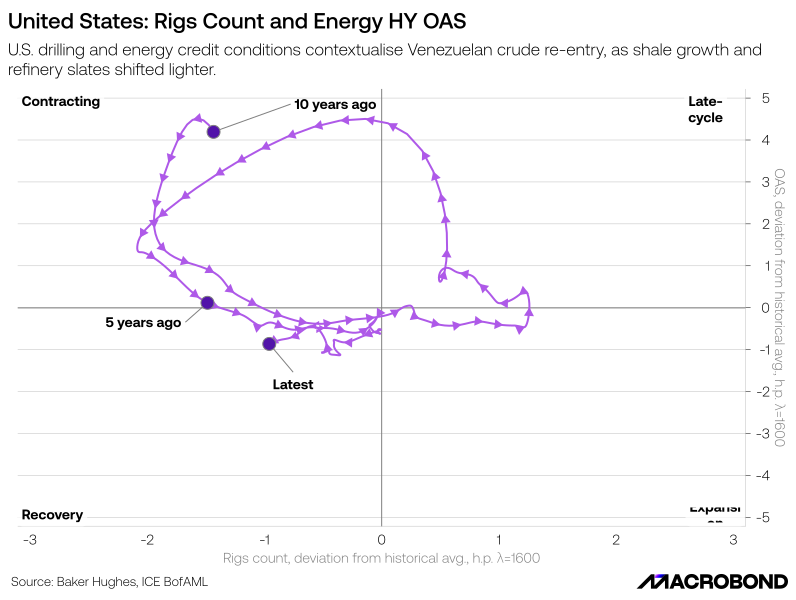
Over the past decade, the expansion of U.S. tight-oil production has reshaped crude market dynamics, increasing supply responsiveness and reducing reliance on imported barrels. While drilling activity has trended lower since the mid-2010s, production has remained comparatively resilient as operator shave improved efficiency and concentrated activity in core basins. This upstream evolution has occurred alongside the downstream adjustments described above, even as U.S. refinery crude slates have gradually shifted lighter.
Against this backdrop, any re-engagement of Venezuelan crude would be evaluated within a more mature U.S. investment and financing environment, where improved energy credit conditions coexist with restrained drilling intensity. In this setting, domestic supply dynamics frame the marginal role for imported heavy barrels.
Insights
A recovery in Venezuelan crude production, alongside higher U.S. imports, would be expected to transmit unevenly across industries, with potential effects concentrated in downstream and oil-flow intermediary segments. Any increase in exportable volumes would first test the capacity and economics of refining, transport, and trading, where heavy-crude processing capability, freight availability, and intermediation margins determine how incremental supply is absorbed and redistributed, potentially supporting higher utilisation of existing refining assets.
Financial intermediaries, including banks and insurers, could also become incrementally involved as higher volumes require trade finance, settlement, and risk coverage, subject to prevailing licensing and sanctions frameworks administered by OFAC, with any impact likely reflecting the scale of additional balance-sheet intermediation.

Insights
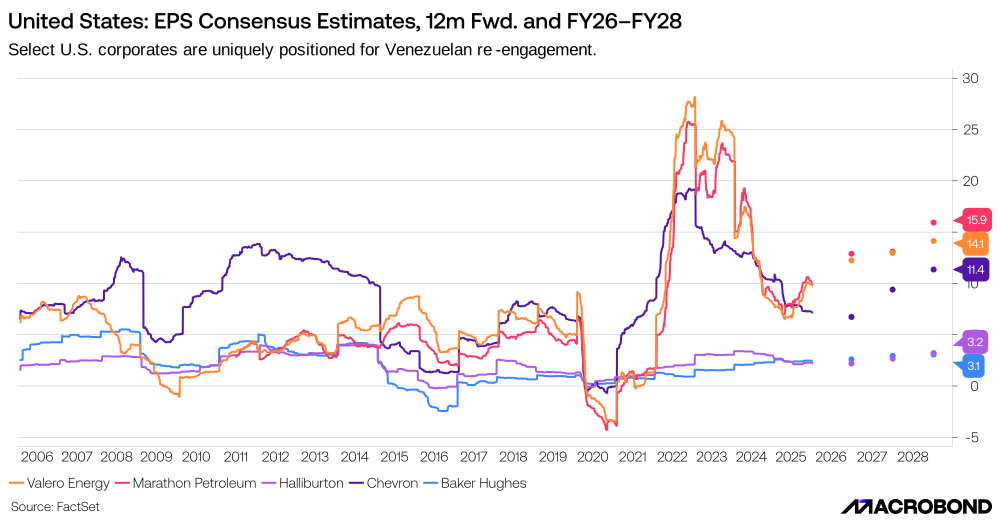
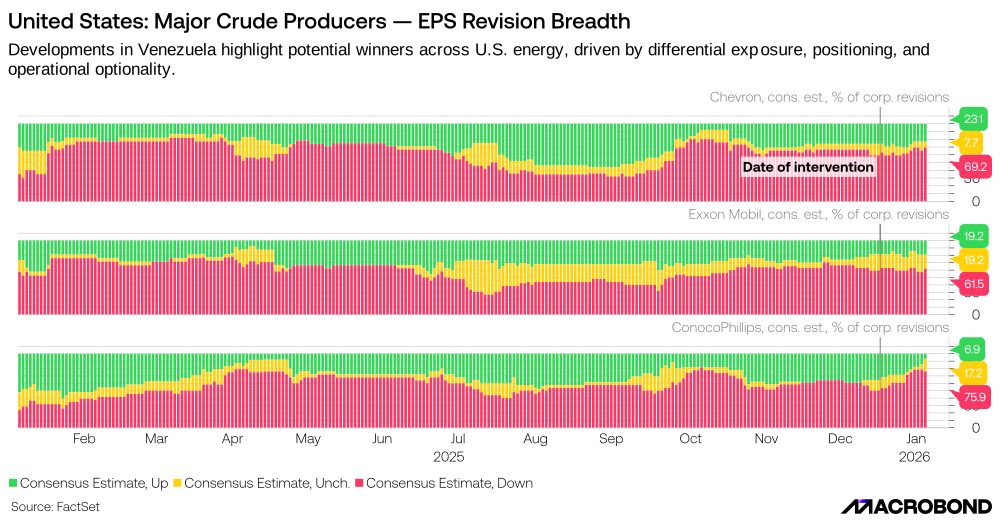
While Venezuelan oil is unlikely to materially influence U.S. energy sector earnings revisions in the near to mid term, exposure is highly concentrated, with Chevron remaining the most plausible beneficiary of recent geopolitical developments. This reflects Chevron’s unique operational position, as it is the only U.S. major still operating in Venezuela, maintaining production through PDVSA joint ventures under a specific license administered by OFAC, allowing limited output and exports despite broader sanctions. By contrast, Exxon Mobil and ConocoPhillips exited Venezuela following the 2007 nationalisation and restructuring of oil assets and do not currently have an operational presence in the country.
Insights
There are presumptive winners as Venezuelan crude potentially re-enters global markets through U.S.-linked channels. Chevron already operates in Venezuela under specific U.S. authorisations and is currently the only U.S. oil major exporting Venezuelan crude, giving it the clearest operational foothold should permitted activity expand. Along the supply chain, oilfield service providers such as Halliburton and Baker Hughes would plausibly benefit from incremental work tied to field rehabilitation, drilling efficiency, and surface equipment. Downstream exposure would be selective, with complex U.S. refiners including Valero Energy and Marathon Petroleum operating assets capable of processing heavy and mid-grade crudes.