A bi-weekly look at the trends driving economies and investments worldwide.


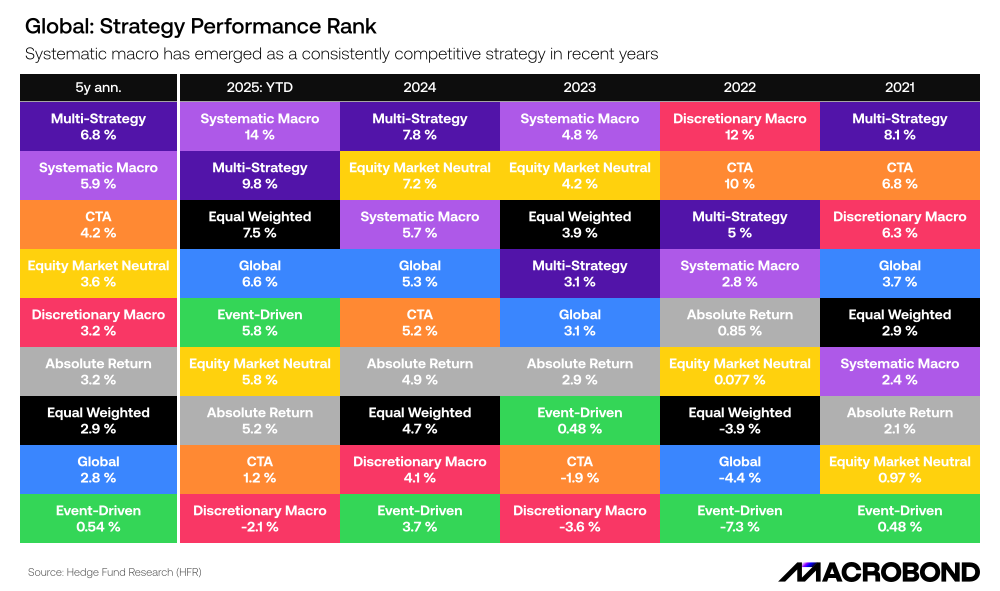
Macro as a Proven Return Framework: Macro-oriented strategies have demonstrated sustained competitive performance over time, underscoring their effectiveness as a systematic source of returns across market cycles.
Encouraging Signal Foundations: The constructed macro factors exhibit coherent and economically intuitive relationships with equity returns, with several signals showing promising alignment and persistence across horizons.
Broad Macro Influence, Limited Dispersion: Macro factors display consistent directional relevance for equities, but signals remain highly correlated across styles, limiting cross-sectional differentiation.
Insights
Macro is often treated primarily as a framework for explaining or managing broadmarket exposures, while discussions around explicit alpha generation have historically focused on fundamentals, styles, or security selection. However, macroeconomic regimes, policy shifts, and cross-country divergences have repeatedly given rise to persistent return opportunities across asset classes. More recently, the sustained success of macro-oriented strategies has reinforced the view that macro signals can, under appropriate conditions, be translated into differentiated returns.
Insights
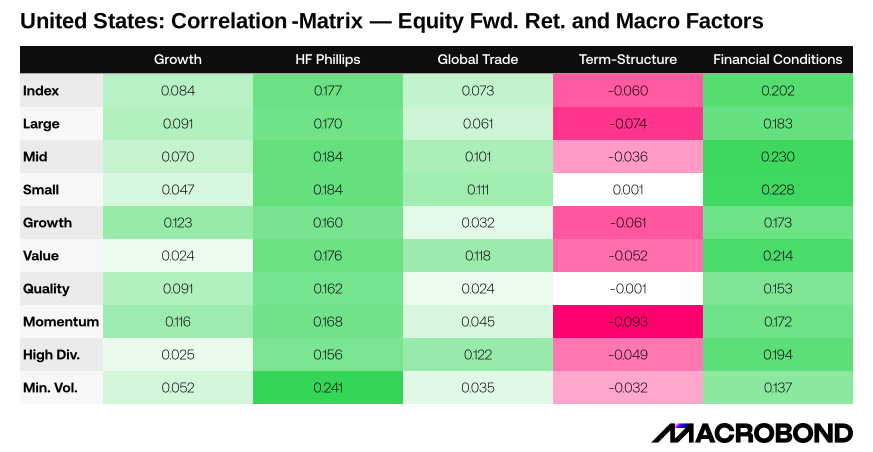
Using one-month forward equity returns, the correlation structure highlights a clear hierarchy in the near-term transmission of macro signals to equity performance. Financial conditions exhibit the strongest and most uniform positive associations across the index and style premia, underscoring the central role of liquidity and risk-appetite dynamics.
The high-frequency Phillips factor shows a consistently positive relationship with equity returns, reflecting the influence of labour–inflation dynamics on cyclical risk sentiment. Growth and global trade indicators display broadly similar, but comparatively weaker, positive correlations—suggesting that growth signals may largely be incorporated through rate and policy channels, while trade dynamics could primarily transmit through inventories and commodity markets. Term structure, albeit muted, is the only factor with predominantly negative transmission, which may reflect periods where curve flattening or inversion coincides with tighter policy expectations and weaker near-term equity performance.
Insights
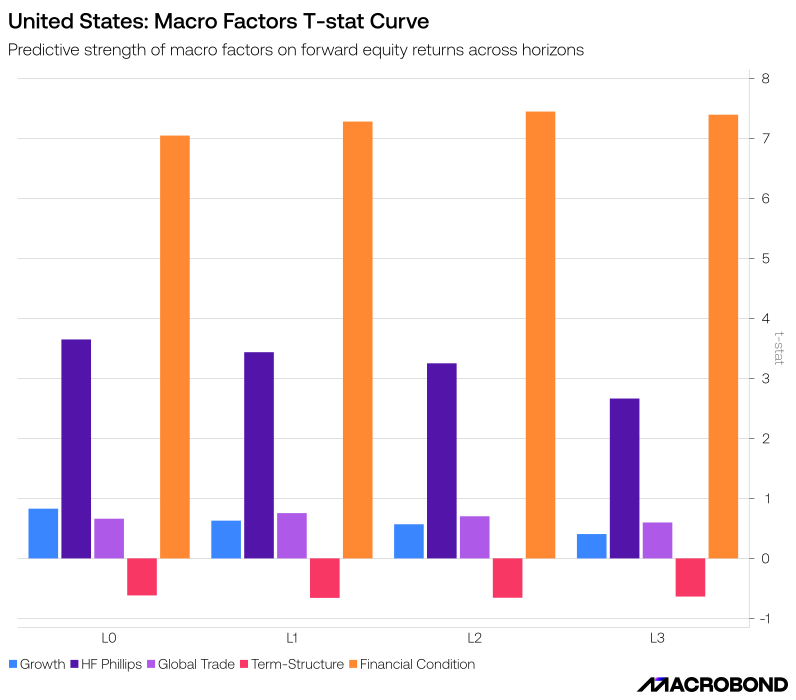
Using the broad U.S. equity index as a benchmark, several macro factors appear to exhibit meaningful and persistent explanatory power for forward equity returns, although the magnitude and stability of their influence vary across indicators and horizons. Financial conditions stand out with consistently strong and statistically significant effects, reinforcing the sensitivity of equities to shifts in liquidity and risk-premium dynamics.
The high-frequency Phillips factor also shows a robust and persistent relationship with equity returns across horizons, suggesting that labour–inflation dynamics may carry information content beyond the contemporaneous window. Conversely, growth, global trade, and term-structure indicators display comparatively limited explanatory power, with t-statistics clustering closer to neutral across horizons. This pattern suggests that real-activity and policy signals may influence equities more indirectly and with less consistent timing.
Insights
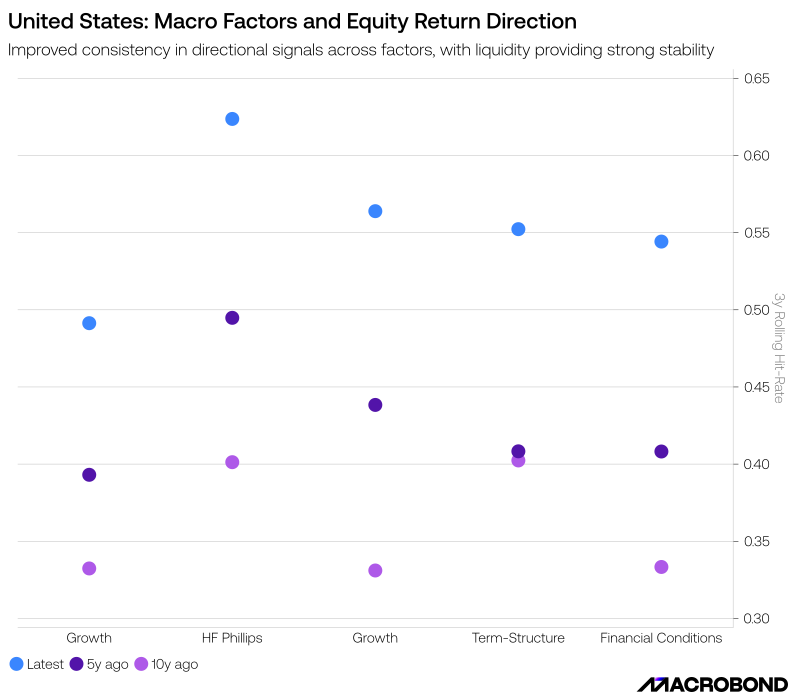
Directional alignment between macro signals and subsequent equity returns appears to have improved over time, with notable gains across several factors. The high-frequency Phillips signal stands out for exhibiting the highest and most stable hit rates in recent periods, suggesting that labour–inflation dynamics may provide a relatively reliable directional backdrop for equities. Even the growth factor is showing meaningful improvement in directional consistency.
The improvement in directional hit rates over time may reflect a more macro-driven market environment, in which inflation dynamics, monetary policy uncertainty, and financial-stability considerations play a larger role in shaping asset prices—an interpretation that is, to some extent, corroborated by the strong recent performance of macro-oriented strategies, as illustrated in Chart 1.
Insights
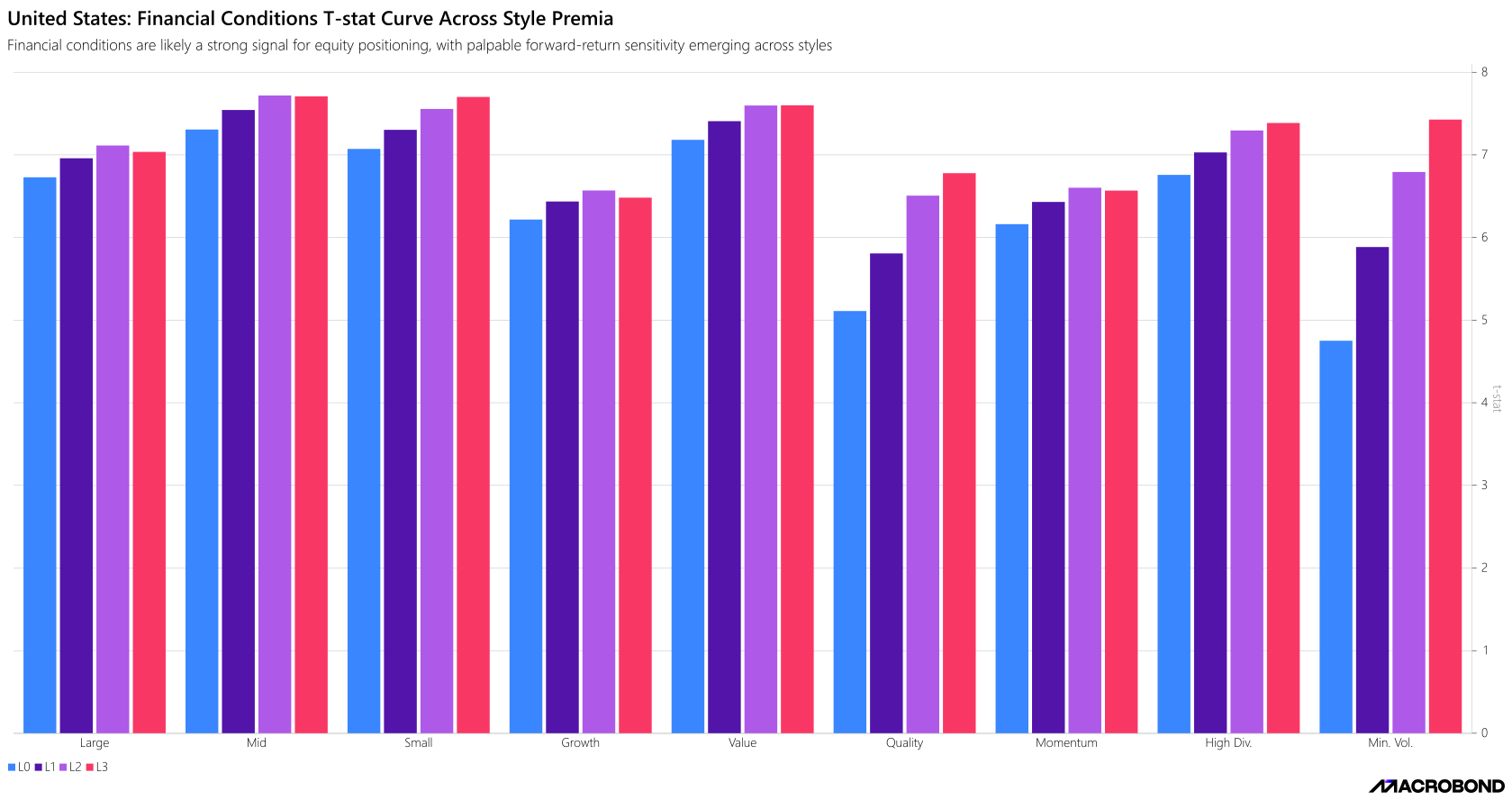
Financial conditions seem to exert a broadly consistent and materially negative influence across style premia, reinforcing the notion that shifts in risk-premium dynamics operate as market-wide return drivers. The limited dispersion across styles suggests that financial-conditions shocks tend to transmit uniformly rather than through distinct cyclical or defensive channels. While some premia appear marginally more sensitive at longer horizons, the overall structure indicates that financial conditions may serve as a pervasive source of equity return potential.
Insights
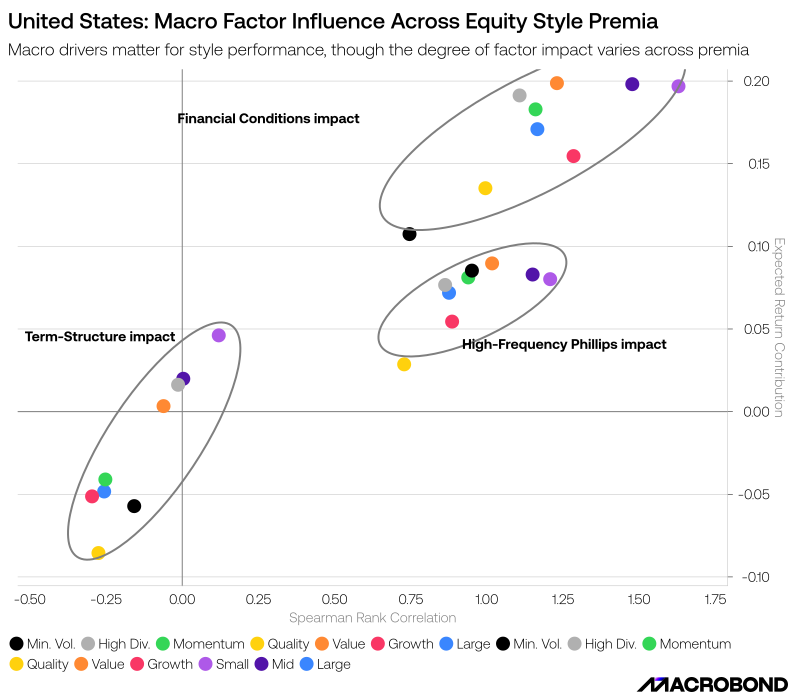
The uniformly positive rank–contribution profiles of the financial-conditions and high-frequency Phillips factors indicate that both signals align directionally with subsequent equity returns across styles, supporting their use in directional timing and exposure management. From an alpha-selection perspective, however, effectiveness depends on the joint behaviour of rank alignment and economic impact. In this regard, financial conditions stand outby exhibiting a wider dispersion in rank alignment across premia, along side more meaningful effects on asset performance, suggesting greater potential to differentiate relative style leadership.
The term-structure factor, meanwhile, displays more heterogeneous rank–contribution dynamics, consistent with curve movements affecting styles differently depending on their exposure to policy expectations, duration sensitivity, and growth cyclicality—indicating scope for selective differentiation, albeit with more modest economic impact.
Insights
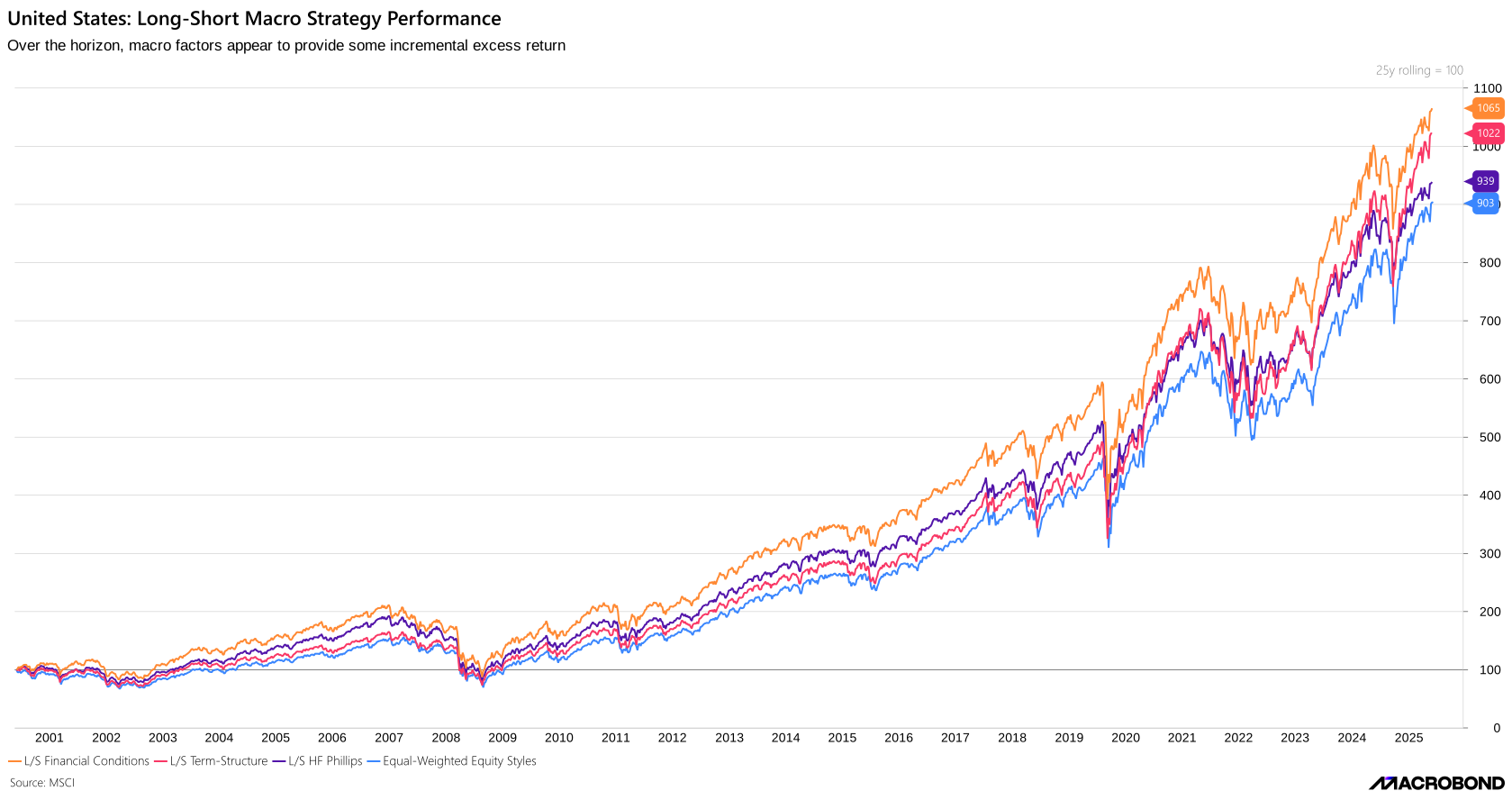
Non-optimized long–short strategies constructed from macro factors exhibit some capacity to generate excess returns. However, performance dispersion across signals remains limited, with return paths largely evolving in parallel and differentiation emerging only gradually through the cycle. This suggests that while macro inputs provide incremental directional guidance, their standalone contribution to cross-style return separation warrants caution and would likely benefit from further optimization and signal structuring.