

A bi-weekly look at the trends driving economies and investments worldwide.


AI Leadership Is Narrow:
The AI cycle remains highly concentrated, with a small cluster of hyperscalers and semiconductor leaders driving the bulk of earnings strength, valuation support, and market performance. Broader AI exposure delivers far more uneven fundamentals, reinforcing the narrowness of true AI leadership.
Macro Disconnect and Sector Reset:
AI equities trade well above long term trends despite mixed macro signals, underscoring a disconnect between economic conditions and market pricing. The recent pullback reflects valuation resets rather than softer demand, with semiconductors and hyperscale cloud retaining the strongest visibility. By contrast, several “AI narrative” names have corrected as markets increasingly distinguish true monetisers from thematic exposure.
Earnings Momentum Confirms the Real AI Winners:
Earnings momentum continues to cluster around core beneficiaries. Meta, Micron, Nvidia, and Microsoft dominate forward EPS contributions and upgrades, while Alphabet, Amazon, and Oracle screen more stretched. C3.ai, Palantir, Intel, and Cisco show limited or negative momentum, underscoring that AI branding has not yet translated into sustained earnings delivery.
Insights
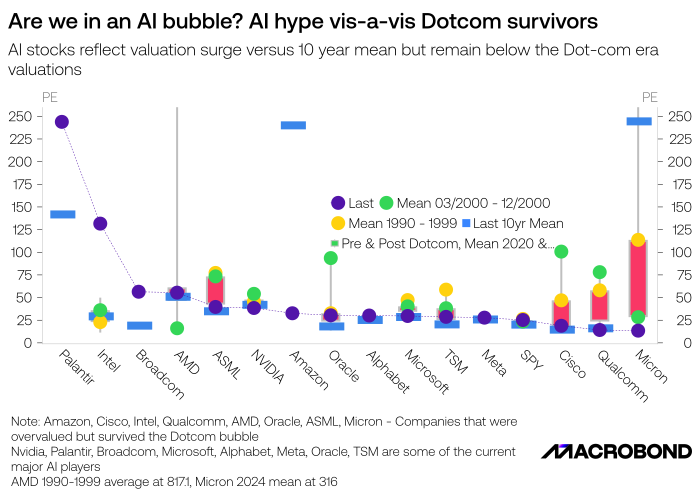
AI stocks are expensive, yet valuations remain below Dot-com era peaks for companies that endured that cycle.
Current P/Es exceed 10-year norms, signalling a meaningful AI-driven re-rating. For many names—particularly Nvidia, Microsoft, Oracle, TSMC, and Qualcomm—the green markers highlight expanded valuation ranges driven by:
Recent averages (2020–2024) indicate a pronounced upward shift, driven primarily by semiconductors and hyperscale-exposed firms.
Overall risk: current valuations depend on the continuation of the AI capex boom.
Supportive factor: unlike 2000, many of these companies now generate substantial real earnings.
Insights
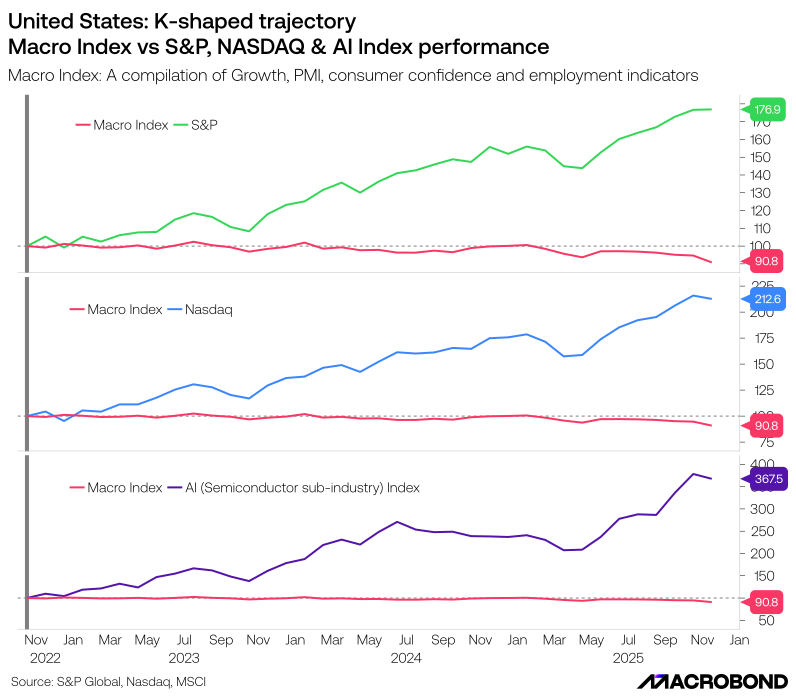
A clear K-shaped pattern emerges when comparing a Pseudo US Macro index with US equity performance across the broad S&P 500, the tech-heavy Nasdaq, and the AI-linked Semiconductor index.
Equity gains have been driven predominantly by AI-related stocks, as reflected in the wider divergence (378.3 to 87.9 for Semiconductor sub index vs 176.7 to 87.9 for S&P).
Note: The macro index constitutes indicators for economic activity, labour market and others.
Insights
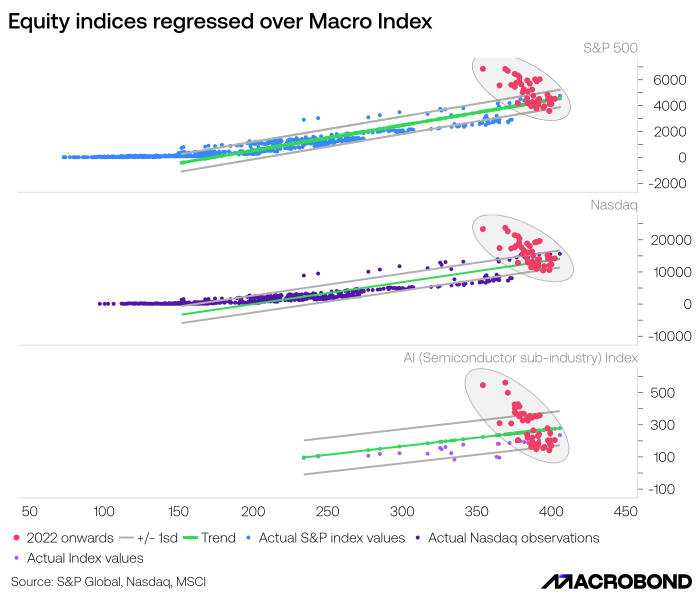
When regressed over a 30-year timeframe, both the S&P 500 and the Nasdaq exhibit strong correlations with the Pseudo Macro Index (high R² values), whereas over a 5-year horizon, the AI-linked Semiconductor index shows a much weaker correlation with the Macro Index. Despite these contrasting correlations, since 2022 all three equity indices—namely the S&P 500, the tech-heavy Nasdaq, and the Semiconductor index—have traded more than one standard deviation above their respective trend lines. This points to AI and

Insights
The US maintains a clear lead in the global AI landscape, with stronger earnings and higher valuation levels than major APAC peers. China’s AI profile remains more application-driven, but the broader balance continues to favour the US, while Europe remains a laggard with less accretive AI exposure.
US Growth, IT, and especially Semiconductors & Semiconductor Equipment combine premium valuations with materially stronger earnings relative to APAC, reflecting US leadership in GPUs, cloud infrastructure, and AI-enabled software. Software & Services also carries a firm earnings premium. Even so, the pattern is not uniform, as APAC outperforms in segments such as Quality and Momentum, where earnings strength remains competitive—likely reflecting the region’s sizeable industrial and hardware base, which continues to generate solid profits even outside AI-intensive segments.
Insights
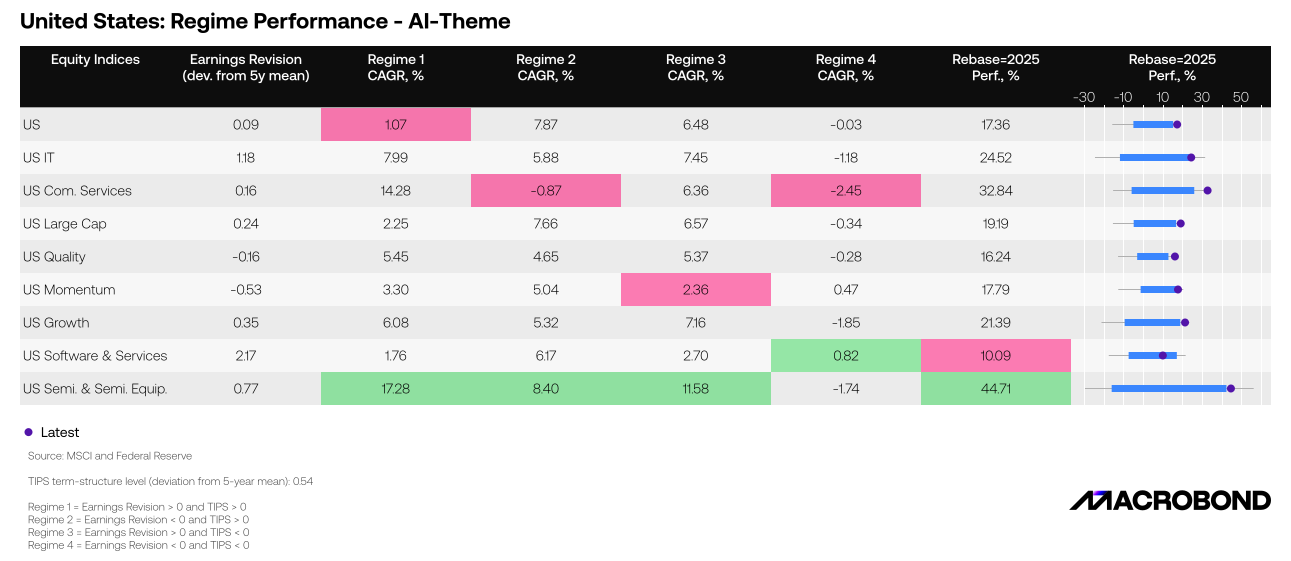
Across sectors and styles, the pattern is intuitive: cyclical and AI-linked groups—especially Semiconductors, Communication Services, and IT—show the strongest gains, reflecting the surge in AI capex and digital-infrastructure spending. Their regime profiles vary more than fundamentals alone would imply, as real-rate conditions meaningfully shape return dispersion. Momentum, Growth, and Quality display steadier behaviour, while broad US and Large-Cap benchmarks sit in the middle, reflecting diversified exposures.
Some segments perform best in regimes not associated with improving earnings revisions, underscoring the role of rate dynamics in shorter-term outcomes. Elevated regime readings in several AI-linked areas also point to episodes of index concentration.
Insights
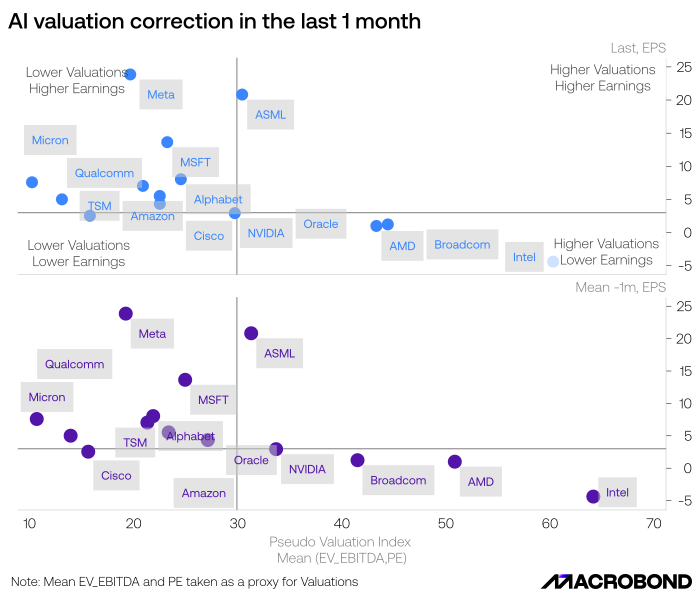
Some valuation-rich AI names such as Broadcom, AMD, Intel, and Nvidia have come under pressure recently, with valuation pullbacks emerging as earnings momentum softened for select names such as Broadcom. Despite this volatility, companies like Meta, ASML, and Micron show relatively strong earnings trends and remain comparatively well supported on fundamentals even after the correction. Big Tech (Microsoft, Alphabet, Amazon) cluster in the mid-valuation range, suggesting the “mega-cap AI ecosystem” appears more stable and less volatile than the semiconductor group.
Contrasting moves across Nvidia, AMD, Broadcom, Micron, Qualcomm, and TSMC indicate that the sector has undergone a degree of rotation, with leadership rotating away from the highest-multiple names toward companies showing firmer near-term earnings momentum.

Insights
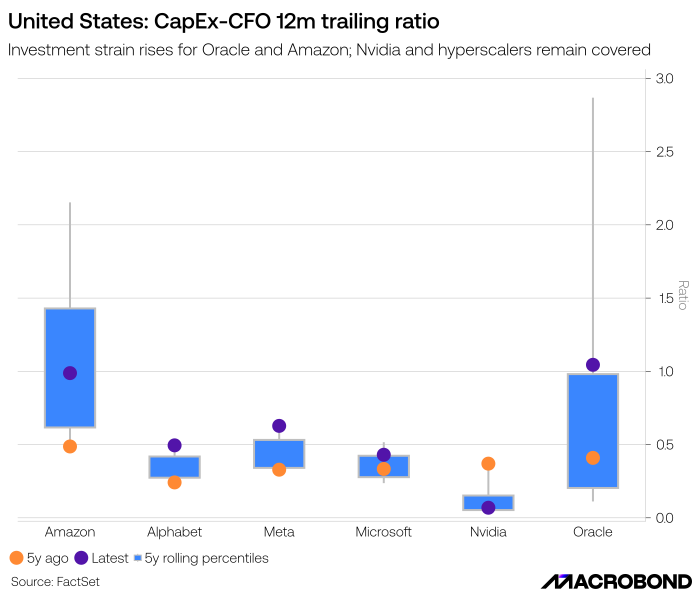
We aggregate free cash flow, debt, and capital expenditure for six hyperscalers (Amazon, Alphabet, Meta, Microsoft, Nvidia, and Oracle).
The analysis points to a structural shift in how hyperscalers finance their capital needs:
Insights
CapEx-to-CFO ratios have increased for most hyperscalers, indicating greater reliance on debt to fund AI and cloud expansion. This shift is evident in recent issuance: Alphabet, Meta, Amazon, and Oracle have all issued sizeable multi-tranche deals, with Amazon’s 40-year bond pricing only marginally above Treasuries, highlighting strong demand for high-grade hyperscaler credit despite heavier CapEx. Oracle follows the same overall pattern but at more elevated levels; its BBB rating and negative outlook show how higher CapEx-intensity and funding costs leave it with a weaker cash-flow buffer, consistent with the widening in its CDS.
Nvidia stands apart, with a declining CapEx-to-CFO ratio and limited recent issuance, indicating it continues to fund AI investment primarily through internal cash flow rather than new borrowing.
Insights
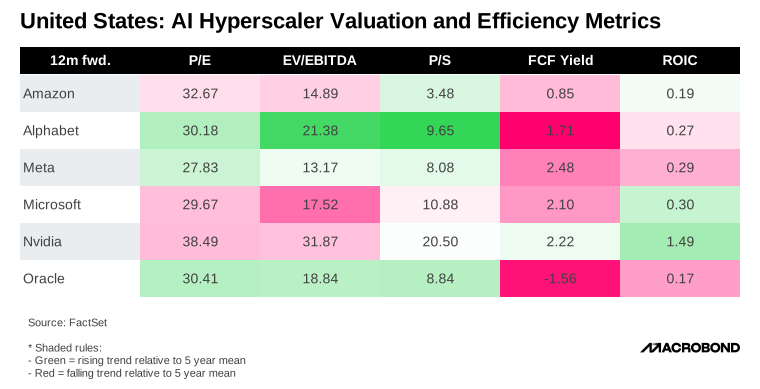
Across hyperscalers, valuations remain broadly elevated while profitability signals are more mixed. Nvidia continues to stand out, with high multiples supported by strong cash-flow metrics and exceptional ROIC, reflecting sustained AI-driven demand. Meta and Microsoft also combine premium valuations with comparatively solid returns, suggesting parts of their AI investment are beginning to translate into underlying performance.
Conversely, Alphabet, Amazon, and Oracle show valuations that appear stretched relative to softer cash-flow trends and more moderate ROIC, indicating that much of their pricing still reflects anticipated future AI monetization rather than profitability already delivered.
Insights
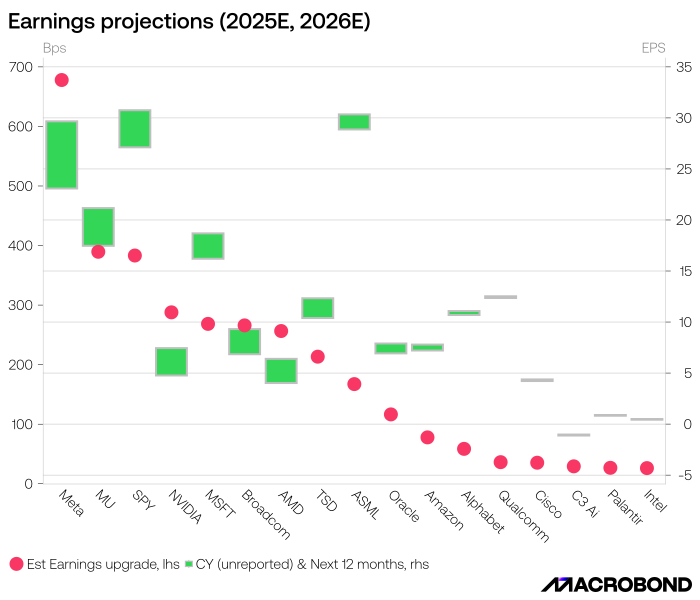
Strong earnings upgrades and a high concentration of forward EPS in Meta, Micron, Nvidia, and Microsoft suggest they are viewed as core drivers of AI-related revenue and margins in 2025–26.
Semiconductors and hyperscale cloud platforms continue to receive the bulk of upward revisions, as AI hardware demand is immediate, whereas software monetization follows a longer cycle.
Some “AI narrative” names—such as C3.ai, Palantir, Intel, and Cisco—show that AI hype does not yet translate into AI earnings.


