A bi-weekly look at the trends driving economies and investments worldwide.



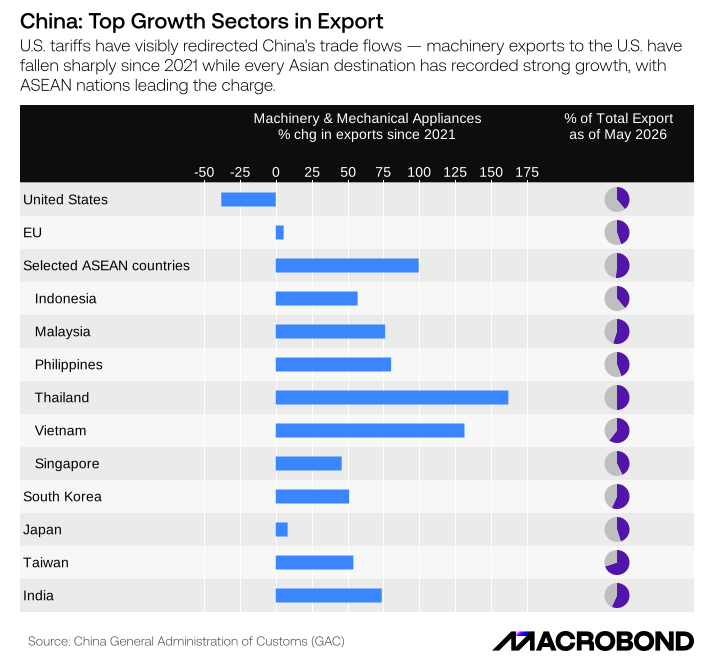
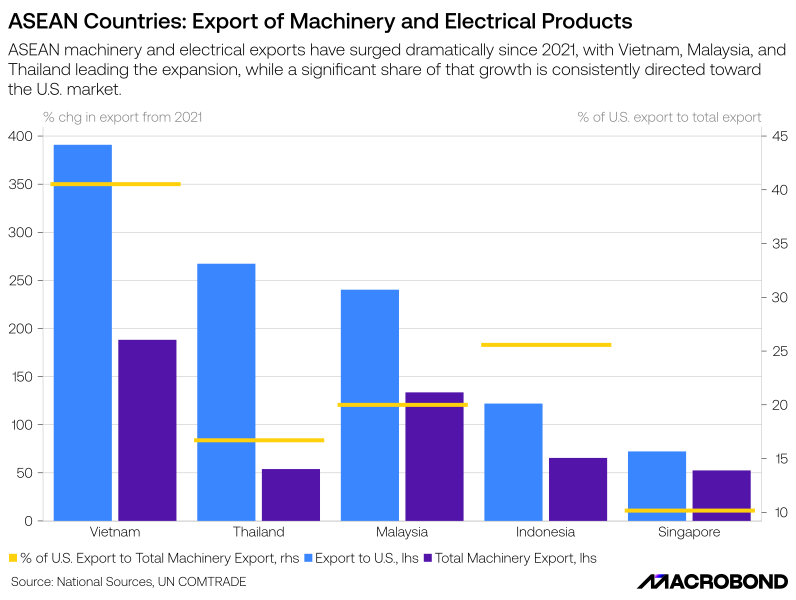
Trade Redirection via ASEAN Intermediaries: Triggered by U.S. tariffs, China's direct machinery exports to the U.S. fell sharply after 2021, while its exports to ASEAN nations (like Vietnam, Thailand, and Malaysia) surged. Simultaneously, these ASEAN countries experienced a massive spike in their own machinery and electrical exports to the U.S., cementing their roles as critical supply chain rerouting hubs.
Deepening Regional Investment & Semiconductor Boom: Driven by global AI hardware demand, China’s share of total FDI into ASEAN surged to nearly three-quarters from just 30% a decade ago. This regional capital integration aligns with an explosive, non-cyclical boom in integrated circuit and semiconductor exports across China and its neighboring tech hubs.
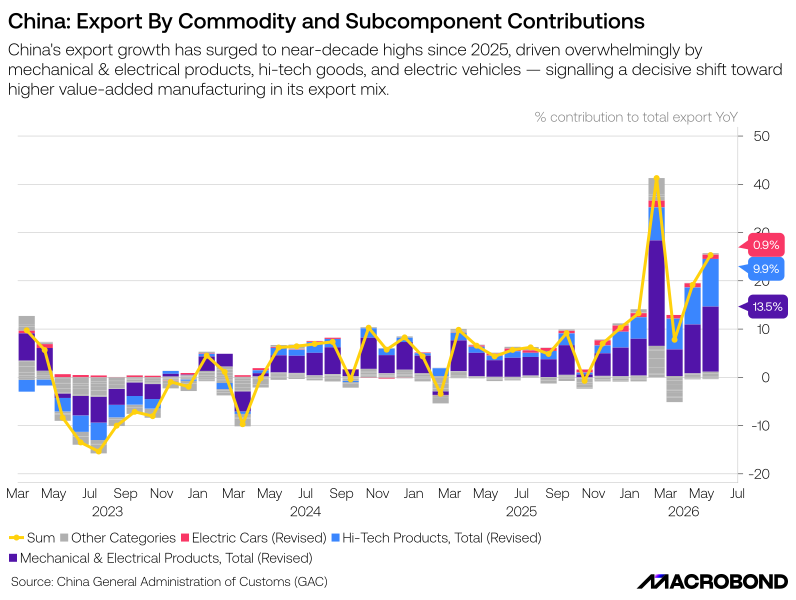
Structural Shift to High-Value Manufacturing: Over the past decade, low-value consumer goods entirely exited China's top ten exports, displaced by high-tech products like electronic integrated circuits and EVs. Driven heavily by these high-tech goods, mechanical products, and EVs, total export growth surged to near-decade highs starting in 2025.
Insights
China's Five-Year Plans dating back to the 12th plan period (2011 - 2015) identified seven strategic emerging industries — including new energy, robotics, cloud computing, and advanced communications equipment — as priority sectors for state investment and policy support. The successive 13th and 14th plans maintained and expanded that focus, directing capital and subsidies toward scaling production capacity in these targeted areas over more than a decade.
The export data now reflects the output of that investment cycle. Mechanical and electrical products combined with high-tech goods account for close to one-fifth of China's total exports in the latest reading, with electric vehicles contributing a further and growing share — categories that registered only marginally in earlier periods.
The March 2026 spike aside — likely driven by front-loaded shipments ahead of tariff deadline uncertainty — the underlying trend across the chart period shows a steady and broadening contribution from these higher-value categories. The data suggests that the policy-to-production pipeline in China's strategic industries has largely delivered on its intended output targets.
Insights
A decade-on-decade comparison of China's top export items by HS code provides the most granular confirmation of the structural shift documented earlier. Consumer-oriented goods have dropped out of the top ten entirely, replaced by technology and advanced manufacturing products across the board. Electronic integrated circuits alone have grown nearly sevenfold in export value over ten years.
Motor cars, electric accumulators, and cruise ships now feature prominently reflecting the maturation of production capacity in sectors that were at the early investment stage when the 12th and 13th Five-Year Plans were being implemented. The overall scale of the top ten has also expanded significantly, with the leading item today worth more than twice the entire top-ten combined value of a decade ago.
Looking ahead, the 15th Five-Year Plan (十五五规划), announced in 2026, is expected to further prioritize artificial intelligence, advanced semiconductors, and green technology — suggesting the composition of this list will continue to evolve. If the execution track record of prior plans holds, the next decade's top export table may look as different from today's as today's does from 2016.

Insights
Machinery and mechanical appliances is one of China's fastest-growing export categories and a reliable barometer of its broader trade trajectory. Its performance since 2021 captures, more clearly than most sectors, how China's export machine has responded to an increasingly hostile external environment.
Despite concerted post-COVID supply chain diversification efforts and successive rounds of U.S. tariffs, China's exports did not contract — they rerouted. The United States stands as the sole destination recording a decline, while every Asian market in the chart registers positive growth, in several cases dramatically so.
ASEAN has emerged as the anchor of this redirection, with Thailand's machinery imports from China surging over 150% since 2021 and Vietnam close behind. Far from being sidelined by Western trade policy, China has cemented a new and expanding network of regional trading partners that more than absorbs the loss of U.S. market access.
Insights
ASEAN nations are not traditionally industrial powerhouses in the mold of Germany or Japan, which makes the scale of their machinery export surge since 2021 all the more striking. Powered by a steady upstream supply of Chinese components and intermediate goods, these economies have rapidly scaled manufacturing capacity — with Vietnam, Malaysia, and Thailand each recording export growth well in excess of 100% in under five years.
The destination of those exports completes the picture. The U.S. consistently absorbs a significant share of ASEAN's expanded machinery output, with Vietnam directing roughly 40% of its total machinery exports northward and Indonesia maintaining a surprisingly elevated U.S. export share despite lower absolute volumes.
Insights
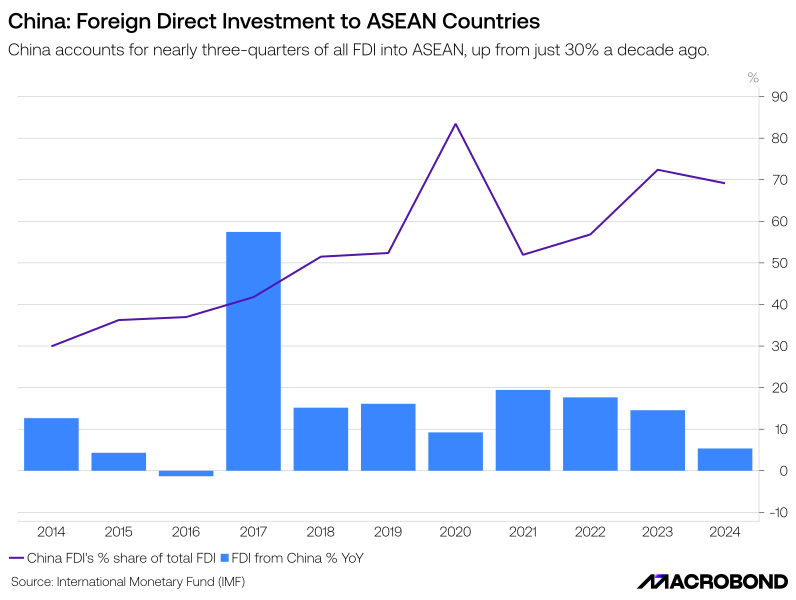
The trade rerouting documented in the previous charts did not happen by accident. China's share of total FDI into ASEAN has climbed steadily from around 30% in 2014 to nearly 75% today, reflecting a long-running and deliberate strategy to extend China's industrial footprint beyond its borders.
The COVID period marked a clear inflection point, with China's share of ASEAN FDI spiking to nearly 90% suggesting that far from retreating during the disruption, Chinese firms accelerated their regional investment precisely when supply chain vulnerability was most exposed.
With close to a decade of sustained investment behind it, ASEAN's emergence as a successful rerouting hub is less a coincidence than a constructed outcome. The FDI data makes clear that what looks like organic regional growth is in large part the return on a patient and strategic Chinese investment thesis.
Insights
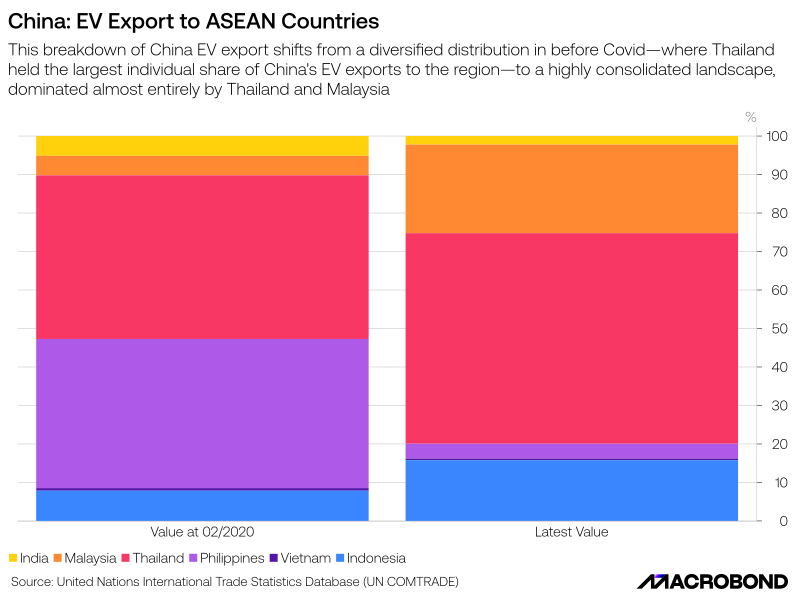
In February 2020, while Thailand held the largest individual share for China EV export amount, significant volumes were still distributed across the Philippines, Indonesia, and other regional markets. However, the latest value shows a stark reorientation: exports to the Philippines have contracted significantly, while Thailand and Malaysia have surged to capture the overwhelming majority of the market share. This high concentration highlights Thailand and Malaysia as China’s primary automotive hubs and consumer entry points within the ASEAN trading bloc, leaving other regional neighbors with a much smaller slice of direct EV import volumes.
Insights
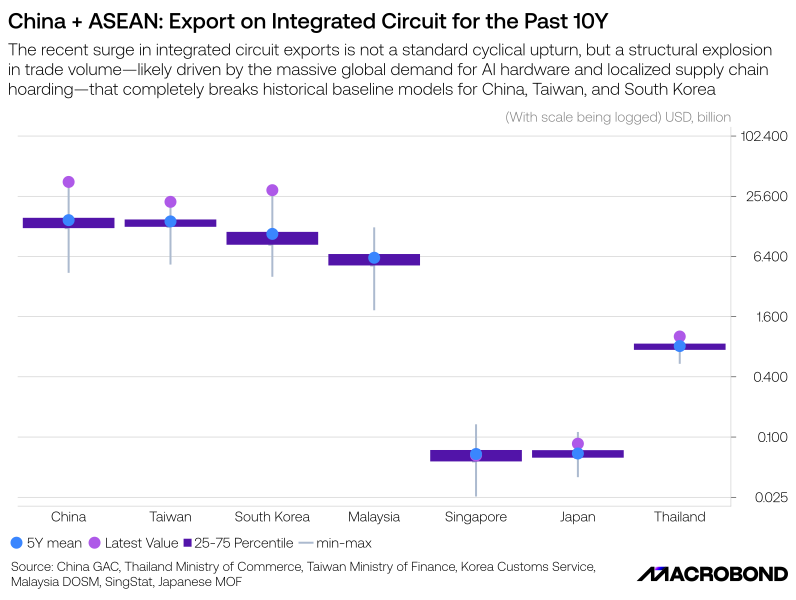
Smaller regional exporters like Singapore, Japan, and Thailand are actually operating tightly within or near their historical baselines. This structural difference highlights a highly uneven, bifurcated semiconductor landscape where the AI-driven trade boom is overwhelmingly concentrated in the major hub economies of China, Taiwan, and South Korea, rather than lifting all regional boats equally.
Insights
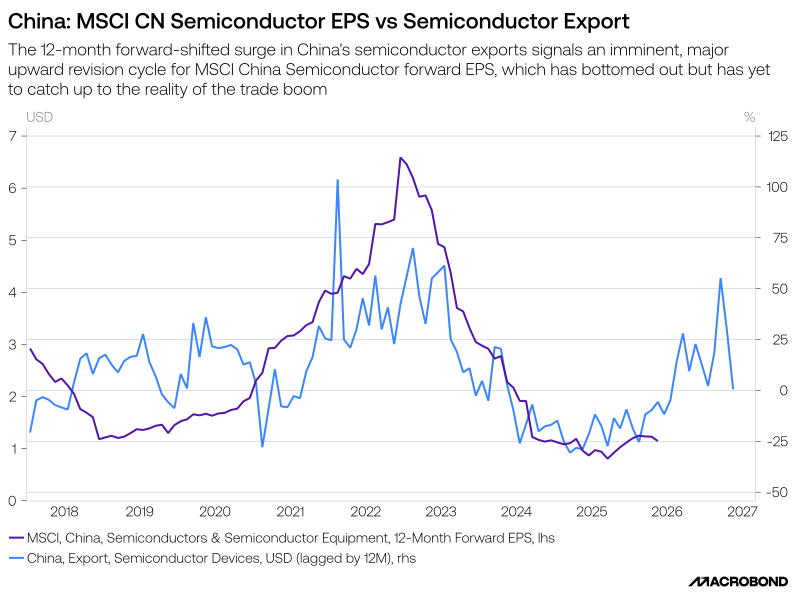
The 12-month leading relationship reveals that China's actual semiconductor export volumes act as a reliable leading indicator for corporate profitability, proving that physical trade demand shifts must materialize before equity analysts adjust their bottom-up earnings models. Consequently, the massive divergence at the right of the chart indicates that market consensus is currently underestimating a massive, impending earnings recovery for listed Chinese semiconductor firms.