A bi-weekly look at the trends driving economies and investments worldwide.


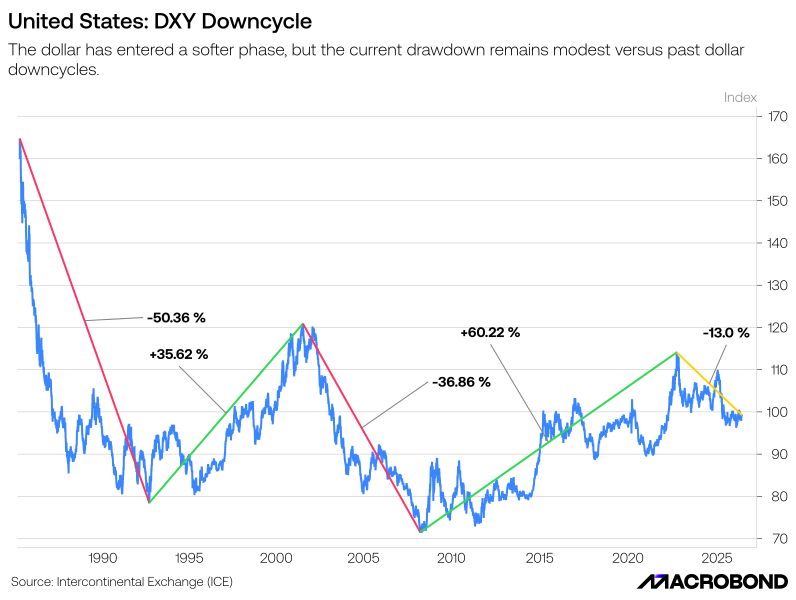
Dollar Down, Not Out: USD has moved into a softer phase, but the drawdown remains modest versus past dollar downcycles. Fair-value signals also argue against a one-way decline: the dollar has absorbed a non-rate discount from fiscal, policy and reserve-risk premia, but rate support still limits the downside.
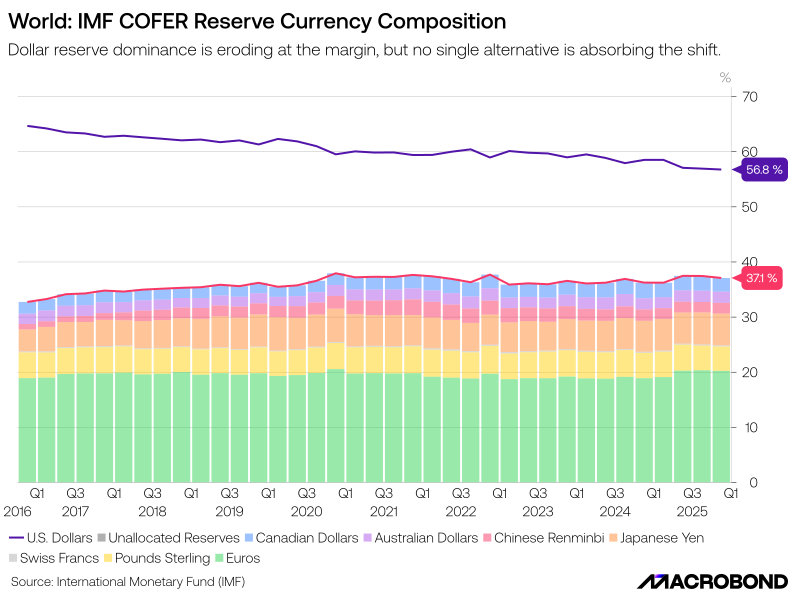
No Clean Successor: Reserve data reinforce the de-dollarization narrative, but not a clean handover to another currency bloc. The dollar share is drifting lower, yet the offset remains fragmented across reserve alternatives rather than concentrated in one clear challenger.
Credibility Over Carry: The pressure is broader than USD. Taylor gaps show G3 policy still short of rule-implied levels, while positioning has rotated back toward USD and selective carry rather than broad dollar rejection. In Europe, NOK and CEE still offer positive carry compensation versus EUR, but the quality of support depends on real-rate credibility.
Insights
DXY has corrected from its 2022 peak, but the drawdown is still small compared with earlier multi-year dollar declines. The historical comparison matters: this is not yet a disorderly dollar adjustment, but an early-stage depreciation phase.
The implication is that the dollar-bearish narrative has room to extend, but the evidence is not yet conclusive. A deeper move would require the current softness to broaden beyond positioning and valuation into a more persistent shift in policy credibility, reserve allocation and relative growth expectations.
Insights
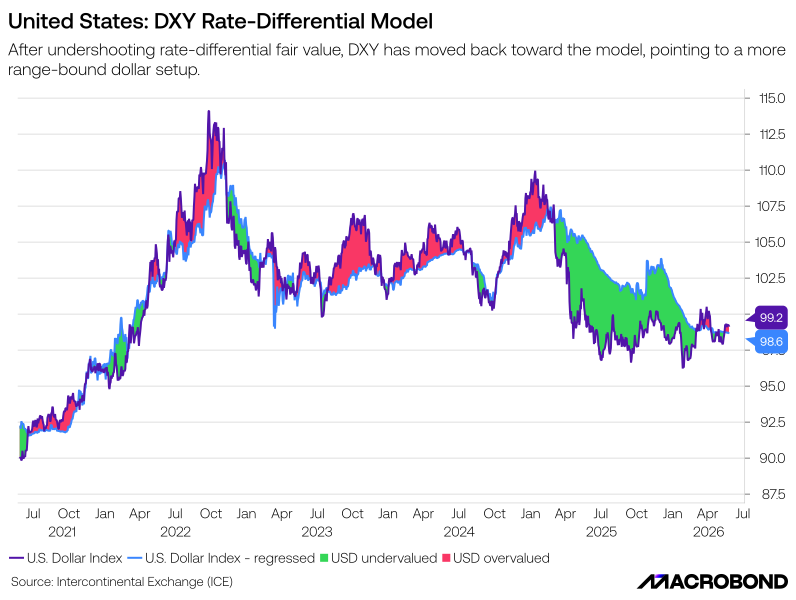
The dollar weakened sharply relative to what short-rate differentials implied, suggesting that fiscal risk, policy uncertainty and reserve-diversification concerns had created a non-rate discount. That gap has now largely closed, with spot trading close to — or slightly above — model-implied fair value. The signal is therefore less dollar-undervaluation and more tactical balance: downside is less obvious, but the broader dollar narrative still caps a clean upside break.
Insights
IMF COFER data keep the de-dollarization debate alive: the dollar’s share of allocated reserves has continued to drift lower, reaching 56.8% by Q4 2025. The move is meaningful, but still gradual rather than disorderly.
The important point is where the shift is going. The euro remains the main alternative, but the broader rotation is spread across several reserve currencies rather than concentrated in one clear challenger.
For FX, this argues for dollar pressure, not dollar replacement. Reserve diversification weakens the automatic dollar-support story at the margin, but fragmentation among alternatives remains a key reason why the dollar system is not being displaced.
Insights
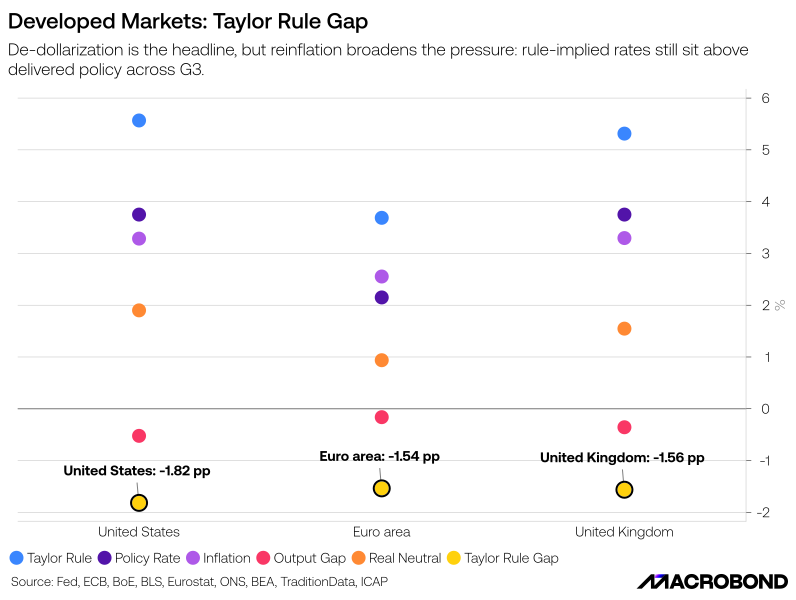
De-dollarization remains the visible FX debate, but the policy backdrop makes the issue wider than USD. Across the US, euro area and UK, delivered policy still sits below simple rule-implied rates, leaving major reserve currencies exposed to questions around real-rate support.
That matters as energy-led inflation revives rate-hike risk while growth remains fragile. Higher nominal rates can support FX, but if inflation is supply-driven and growth-negative, markets will focus on whether central banks can defend credibility without deepening the slowdown.
The implication is less a clean rotation away from USD and more a broader G3 credibility test. Currencies are most vulnerable where investors doubt policy can restore real-rate support without creating a larger growth problem.
Insights
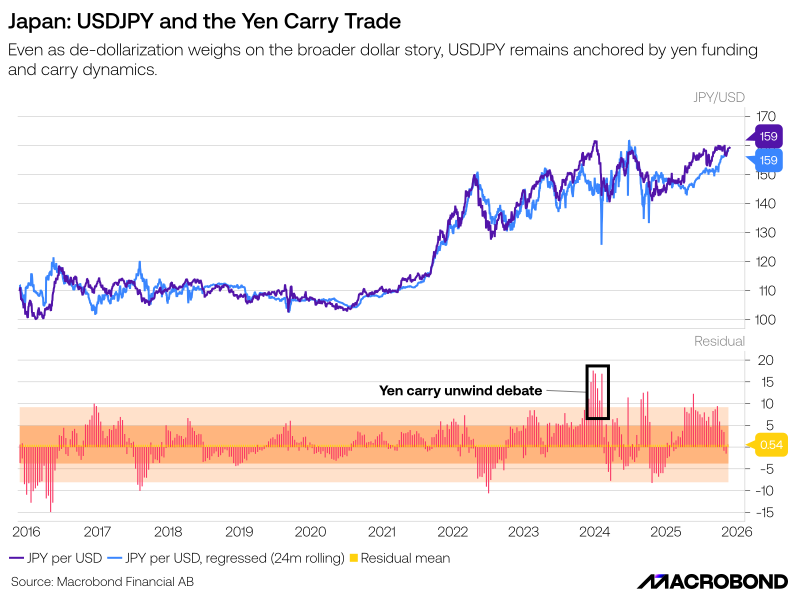
The fitted model tracks USDJPY closely, suggesting yen weakness has largely been explained by carry fundamentals: wide US–Japan rate differentials, relatively calm volatility and speculative short-yen positioning. In other words, USDJPY appears to have been less about broad dollar sentiment and more about Japan’s role as the funding leg of global carry.
Thus, the de-dollarization argument needs some qualification. Even when broader dollar pressure is building, the USDJPY carry channel may remain intact if rate compensation is large enough and volatility stays contained. Structural dollar pressure may cap upside, but it does not necessarily invalidate the trade by itself.
Insights
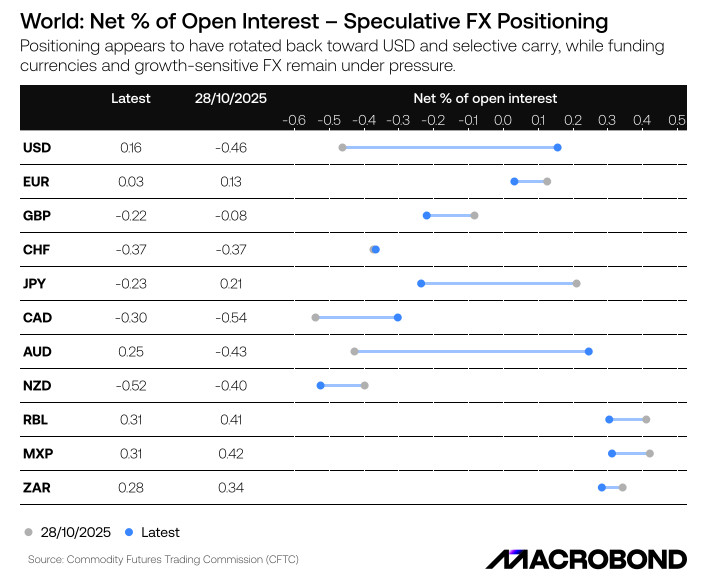
Speculative positioning does not support a clean anti-dollar story. USD exposure has moved from net short to net long, suggesting investors are no longer treating dollar weakness as the default expression of de-dollarization.
The funding-currency signal is still clear. JPY has moved back into net short territory after the 2024 carry unwind, while CHF remains heavily short. AUD stands out as the clearest positive rotation, but GBP, CAD and NZD remain under pressure.
EM still screens better, with BRL, MXN and ZAR net long, but those positions have been trimmed as USD exposure has rebuilt. The message is selective carry, not broad dollar rejection.
Insights
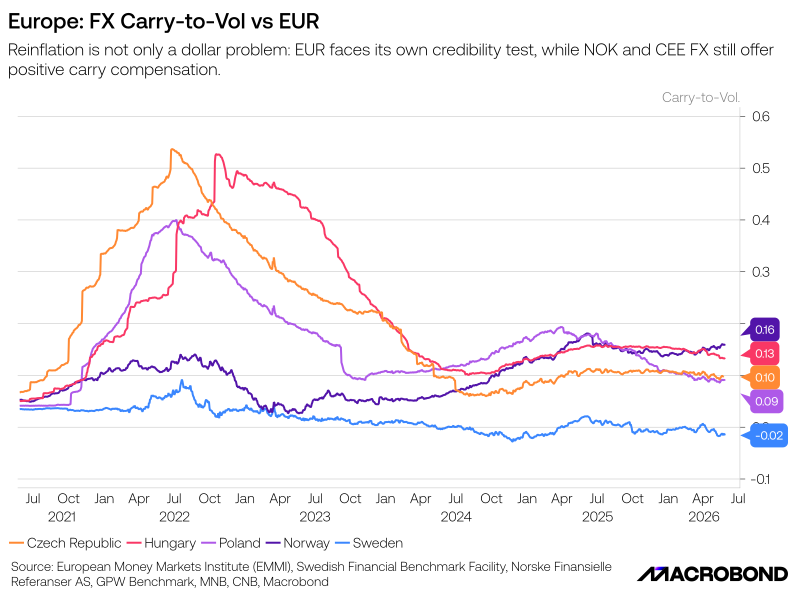
De-dollarization is usually framed as a dollar story, but the next question is where reserve and FX demand can realistically go. EUR is the obvious alternative, yet energy-led inflation complicates the case: higher ECB rate risk may support the currency, but it also comes with a weaker euro-area growth backdrop.
That makes European FX less about simply buying the euro and more about relative compensation. Carry-to-vol helps show which currencies still pay investors for the risk they take. NOK screens better because Norway retains a stronger rate path and an energy-linked external buffer, while SEK remains weak as softer activity and low domestic inflation pressure leave less support versus EUR.
CEE carry has normalised from the 2022 extremes, but remains relevant. PLN, CZK and HUF still offer positive risk-adjusted compensation, with Hungary paying the highest premium but also carrying more country-risk content.
Insights
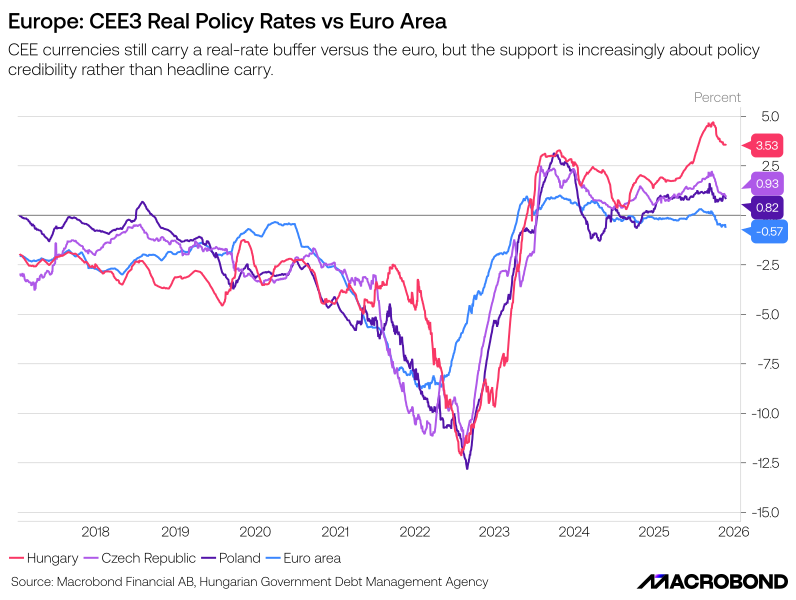
The CEE3 real-rate cushion remains materially stronger than the euro area’s, giving PLN, CZK and HUF a defensive yield buffer while EUR real-rate support remains thin. This helps explain why the region can still screen well on risk-adjusted FX compensation.
The support is not uniform. Hungary offers the thickest real-rate shield, making HUF expensive to short, but that premium also reflects higher country-specific risk. Poland and Czechia offer less carry, but the support looks cleaner because it relies less on elevated risk compensation.