A bi-weekly look at the trends driving economies and investments worldwide.


Since the Fed recently made their first hike of this tightening cycle, this release provides a historical review of the impact of tightening cycles on different assets. It examines how stubborn inflation and economic resilience have pushed major central banks back into rate-hiking mode, ending the recent easing phase.
The publication analyzes key market dynamics during tightening regimes, including the flattening and eventual inversion of the yield curve, the durability of the labor market, and historical sector performance where groups like Energy and Tech outpace lagging defensive areas. The core takeaway is that rate hikes are rarely fatal for equities; while initial pullbacks and yield curve shifts are common, underlying growth has historically allowed the S&P 500 to absorb higher rates and trend upward over time.
Insights
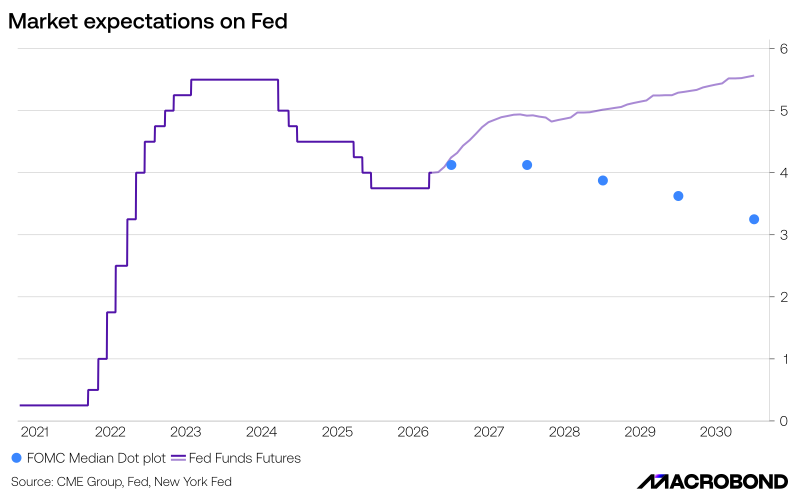
Asynchronized shift toward a renewed tightening cycle has firmly taken hold across major central banks, marking a definitive end to the easing regime that characterized late 2024 and 2025. Driven by persistent inflation pressures and economic resilience, bond markets across London, Frankfurt, and Washington are all pointing in the same direction: global central banks are being forced back onto the offensive.
Insights
A synchronized shift toward a renewed tightening cycle has firmly taken hold across major central banks, marking a definitive end to the easing regime that characterized late 2024 and 2025. Driven by persistent inflation pressures and economic resilience, bond markets across London, Frankfurt, and Washington are all pointing in the same direction: global central banks are being forced back onto the offensive.
Insights
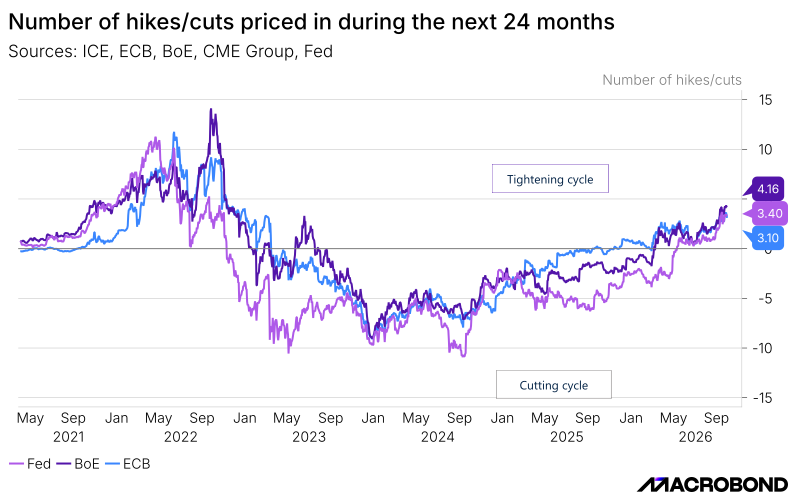
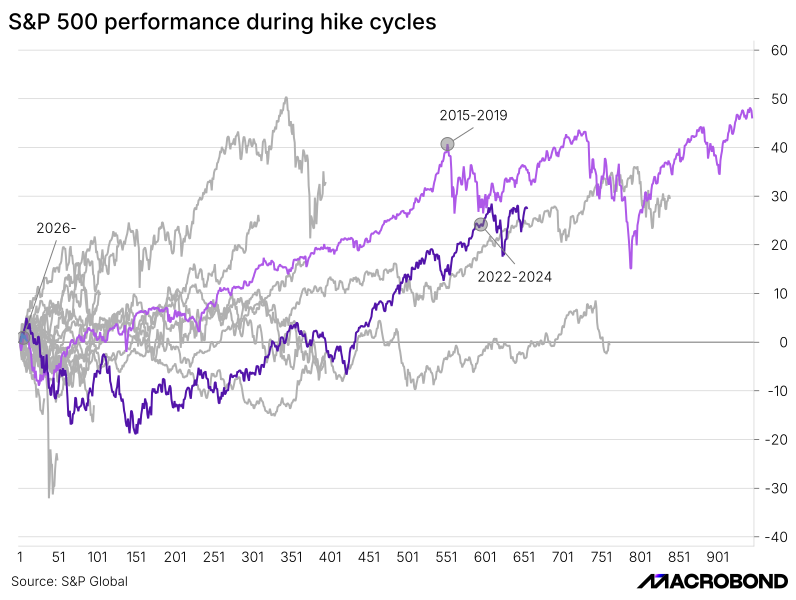
A new hiking cycle is rarely an automatic death knell for equities. Despite short-term volatility or early pull backs, history shows the S&P 500 often climbs the wall of higher rates, frequently posting 20% to nearly 50% gains over extended cycles powered by resilient economic growth.
Insights
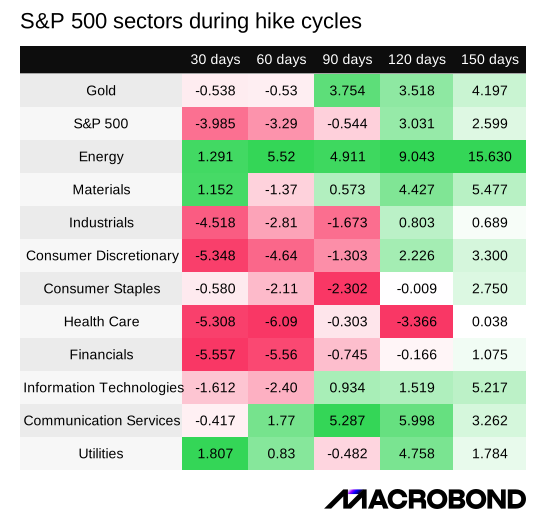
During the onset of a rate hike cycle, most sectors face an initial pullback, with the S&P 500 typically staying in the red for the first 90 days before rebounding into positive territory by day 120 to 150. Energy emerges as the standout winner, gaining over 15% after 150 days, while Materials, Tech, and Gold also stage robust recoveries. Conversely, sectors like Health Care and Financials struggle through the early stages, barely breaking even after five months.
Insights
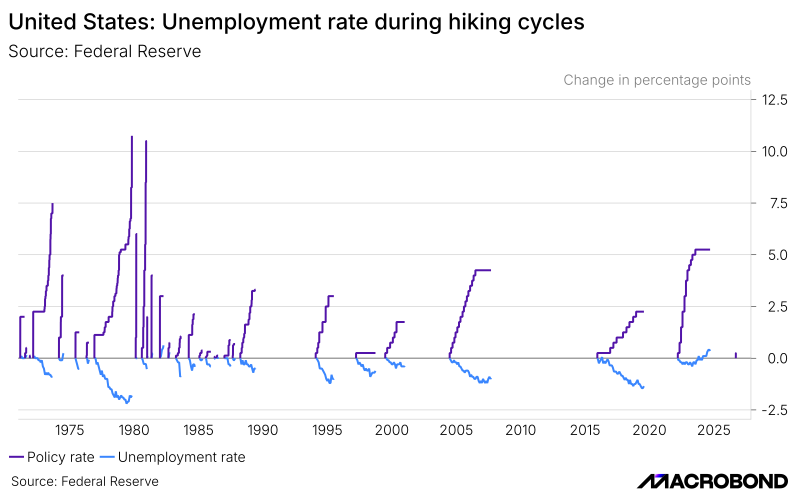
Historically, U.S. unemployment rarely rises during an active Federal Reserve hiking cycle; instead, it typically continues to fall as robust labor demand prompts the central bank to tighten policy. Any notable uptick in joblessness generally arrives only toward the very tail end of the cycle or well after the peak—as seen near the close of the 2022–2024 tightening. The Fed’s latest rate hike kicks off from this familiar precedent, where labor market resilience precedes any delayed cooling from higher borrowing costs.
Insights
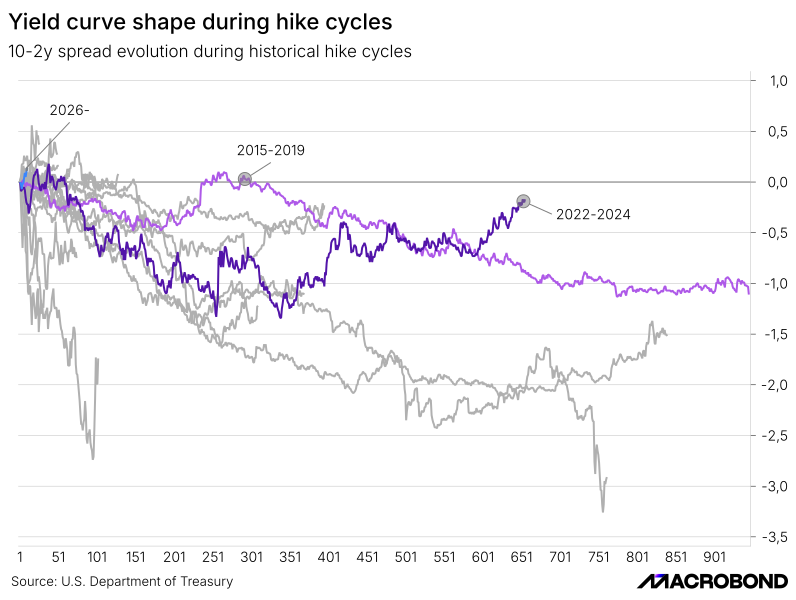
Historical tightening cycles almost inevitably drive the yield curve to flatten and eventually invert, as policy-sensitive short-term yields surge much faster than long-term rates. Across historical cycles, the 10-2 year spread consistently trends downward, frequently pushing deep into negative territory - often reaching between -1.0 and -2.5 percentage points as tightening deepens. While the pace and severity vary from cycle to cycle, an inverted curve remains a classic hallmark of tightening regimes as markets price in restrictive monetary policy and slowing long-run growth.