Oil Risk Premia, Futures Curves, and Market Expectations

Oil prices showed limited movement following recent developments in a major producing economy. Reduced effective production, ample global supply, and a negative oil risk premium contributed to subdued market responses.
This edition of Macro Moves examines what distinguishes the current environment by analyzing production trends, futures curve dynamics, and changes in oil price sensitivity—addressing a central question: why oil prices now respond differently to shocks than in previous market regimes.
In early January, markets faced unexpected developments in a major oil-producing economy. These developments were initially viewed as potentially increasing perceived supply risk and upward price pressure. However, subsequent trading sessions showed limited price movement. Crude benchmarks rose modestly or traded broadly flat, remaining well below levels typically associated with large supply-driven repricing. Market volatility remained contained. This raises the question of whether oil price sensitivity to external events has structurally declined, or whether the muted response reflects producer-specific supply constraints.
Historically, supply disruptions in major producing regions have been associated with elevated volatility and upward price adjustments. In contrast, recent price action showed both Brent and WTI trading within narrow ranges, well below the magnitude of price responses observed during earlier periods of sustained supply disruption.

Analysts point to two key factors behind the limited response, reflecting both structural issues in Venezuela’s oil sector and the way global markets have already priced in risk.
1. Venezuela’s output is now far below its historical levels
Despite boasting the world’s largest oil reserves - a claim increasingly questioned by both markets and researchers - Venezuela’s actual production has dropped to roughly 1 percent of global crude supply. Decades of under-investment, sanctions and crumbling infrastructure have left the country’s oil sector deeply impaired.

Examining Venezuela’s oil sector over time highlights the scale of its production decline. Earlier production regimes saw crude output generally in the range of 2.5 to 3.0 million barrels per day. In more recent years, output has fallen to below 1 million barrels per day, significantly reducing Venezuela’s role as a marginal or swing contributor to global oil supply.

2. Political risk was already priced in
The developments appear to have been largely anticipated by market participants, limiting the scope for repricing. With effective global oil supply ample and inventories elevated, near-term price impacts were constrained and largely discounted in forward markets.
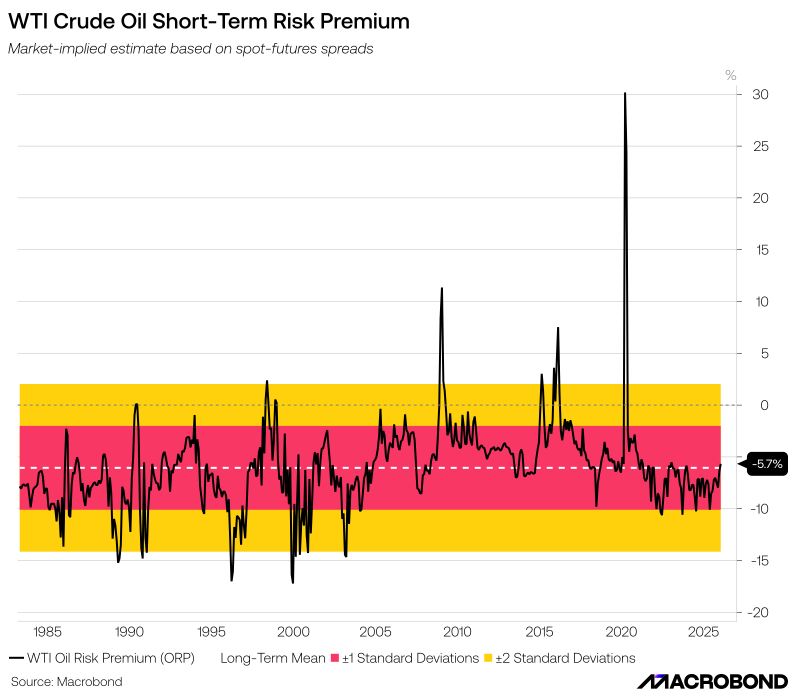
A simplified calculation of the oil risk premium (ORP) is consistent with this assessment. The estimated premium remains negative, indicating market-implied downside risk, though slightly above its long-term historical average. This suggests that current pricing reflects a baseline of relative supply comfort rather than heightened stress.
To understand why oil prices barely reacted to the latest geopolitical shock, it helps to view oil’s history as a sequence of distinct geopolitical regimes. The table summarizes these regimes, while the chart traces oil prices across them, with markers highlighting key inflection points.
.svg)
These episodes highlight a key truth: oil’s sensitivity to geopolitics has never been constant. Instead, prices have moved through distinct regimes, shaped alternately by supply shocks, wars and demand collapses. But recent experience suggests that this sensitivity has diminished - particularly when events fail to threaten actual supply.
%20-%20FILL.svg)
Several structural factors help explain the limited price response observed in oil markets:
Taken together, these factors suggest that traditional shock - based pricing frameworks are less aligned with current oil market structure. Historical evidence indicates that WTI prices have exhibited greater sensitivity to supply - related shocks than Brent, particularly during periods of elevated volatility such as the Global Financial Crisis - a pattern that remains observable in recent data.
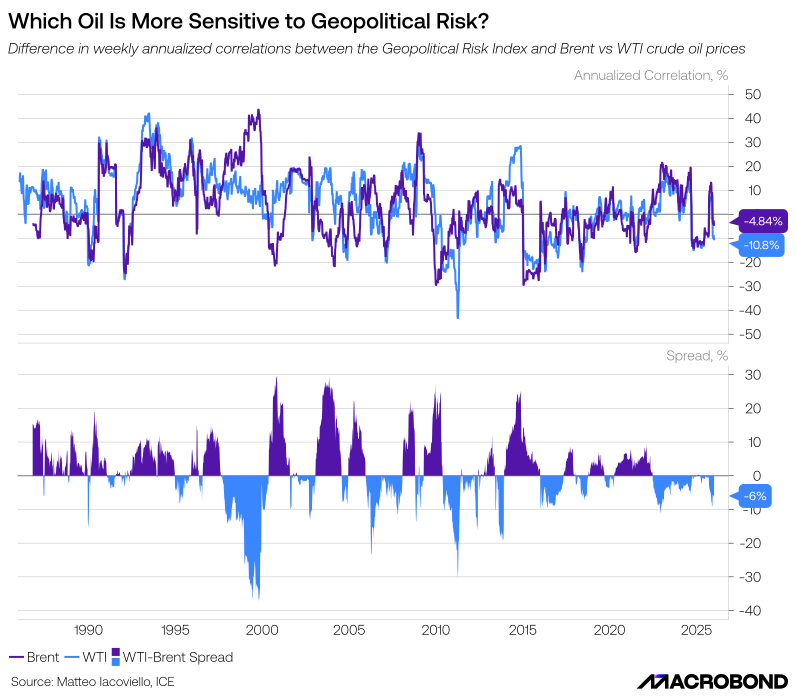
Some market participants interpret the limited price response as evidence of a structural change in oil price dynamics, whereby external developments influence prices primarily when they result in material supply disruption. Others view the recent behavior as potentially transitory, noting that sufficiently large supply shocks or coordinated production changes could still alter market expectations.
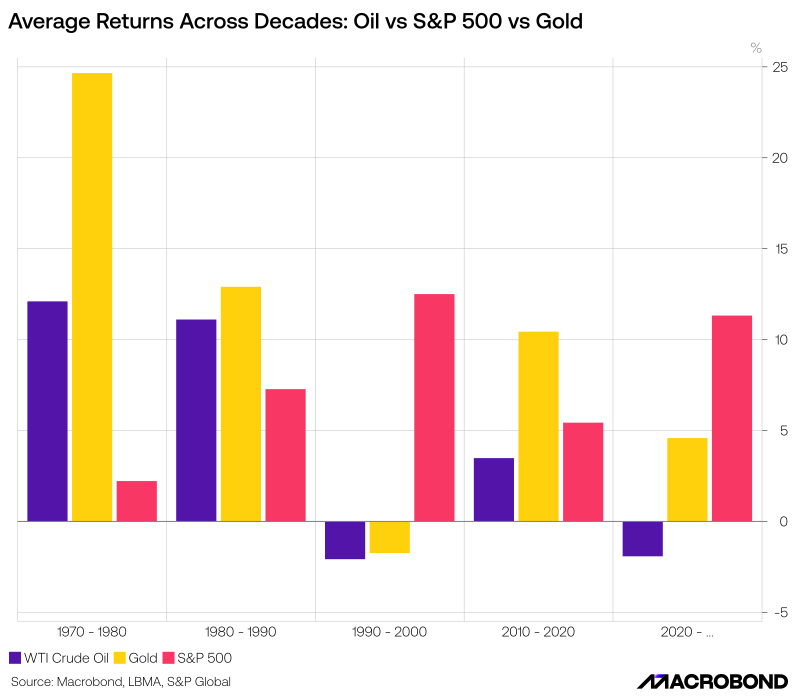
At present, pricing behavior suggests that abundant supply conditions and moderate long-term demand expectations have reduced oil’s sensitivity to external developments. As a result, oil’s characteristics as a volatility-driven or crisis-responsive asset appear less pronounced than in earlier market regimes, relative to other traditional asset classes.
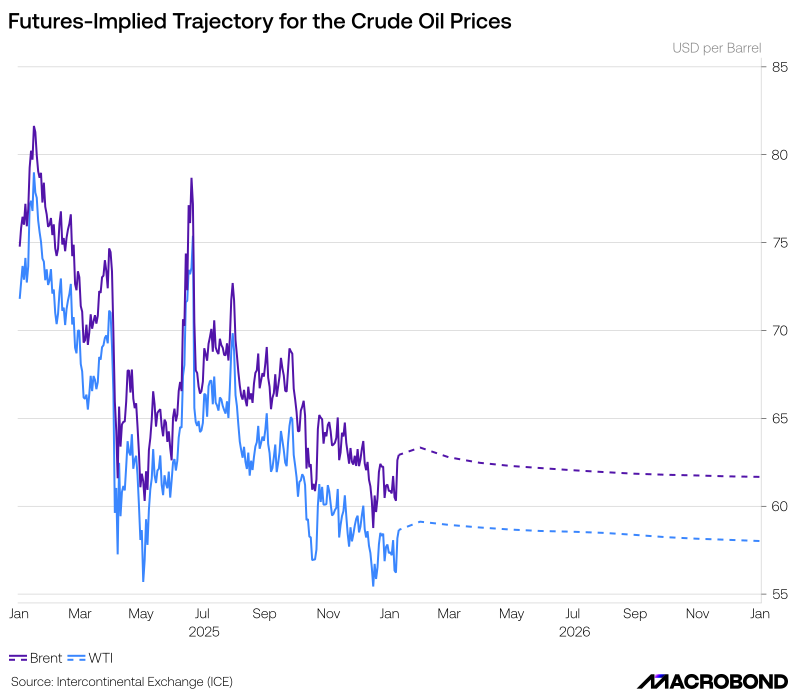
But speaking more broadly, futures curves for both Brent and WTI remain flat to slightly downward into 2026, reflecting persistent skepticism toward any lasting geopolitical risk premium. In effect, traders appear unwilling to price in sustained supply disruption, instead assuming that geopolitical shocks will be short-lived and manageable within the current supply framework. With spare capacity available and demand growth expected to remain moderate, the futures market continues to signal stability rather than stress.