A special edition of the forces that shaped global markets in 2025.

As 2025 draws to a close, global markets can feel as if they existed in a state of superposition. Just as, in quantum mechanics, a particle’s state is undefined until observed, the story of 2025 remains uncertain until it is measured. Gains and losses overlapped, leadership shifted repeatedly and market signals often pointed in different directions.
This special edition of Macro Moves turns that “superposition” into clarity by featuring a comprehensive view of the year’s performance across ten dimensions of global markets.
What this visualization shows:
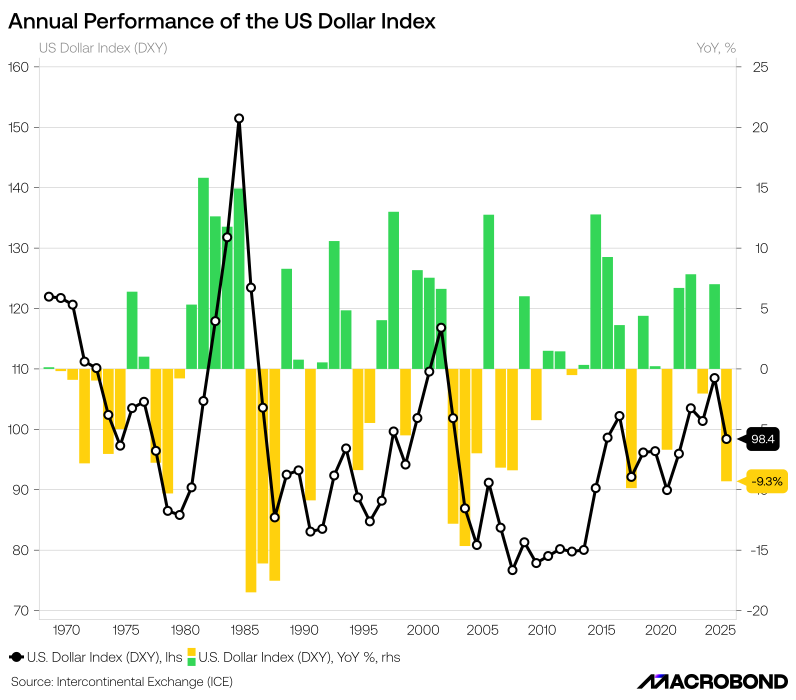
This classic annual performance ranking compares 10 major asset classes: equities, Treasuries, gold, oil, the US dollar and Bitcoin. Covering the period since the onset of the COVID-19 pandemic in 2019, it shows how each asset class performed year by year, providing a clear view of relative trends and highlighting which markets have led or lagged over time.
What this visualization reveals about 2025:
One of the consistent leaders in recent years, Bitcoin, lost its crown in 2025 to gold, which surged more than 65% – one of the strongest rallies in decades, if not ever. Meanwhile, as the US market faltered amid tariffs and geopolitical tensions, other regions – Europe, emerging markets, and Japan – stepped into the spotlight, delivering returns not seen in years.
What this visualization shows:
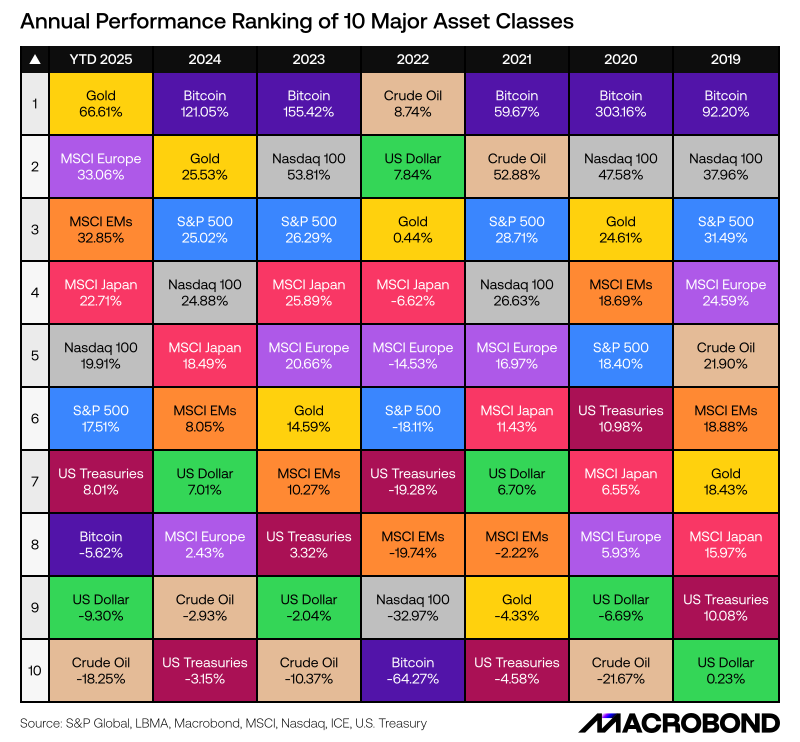
2025 was a year of records, with many assets breaking through historic thresholds. This chart counts the cumulative number of all-time highs recorded each year since the 1980s for five major assets: the S&P 500, gold, oil, the US dollar and Bitcoin.
What this visualization reveals about 2025:
Gold stands out as the groundbreaking asset of the year, setting more than 90 new all-time highs. The S&P 500, despite a relatively unstable narrative, delivered 50 new highs – fewer than last year but still a solid performance. Finally, Bitcoin recorded 14 new highs, though it now remains in a weaker position heading into the next year.
What this visualization shows:
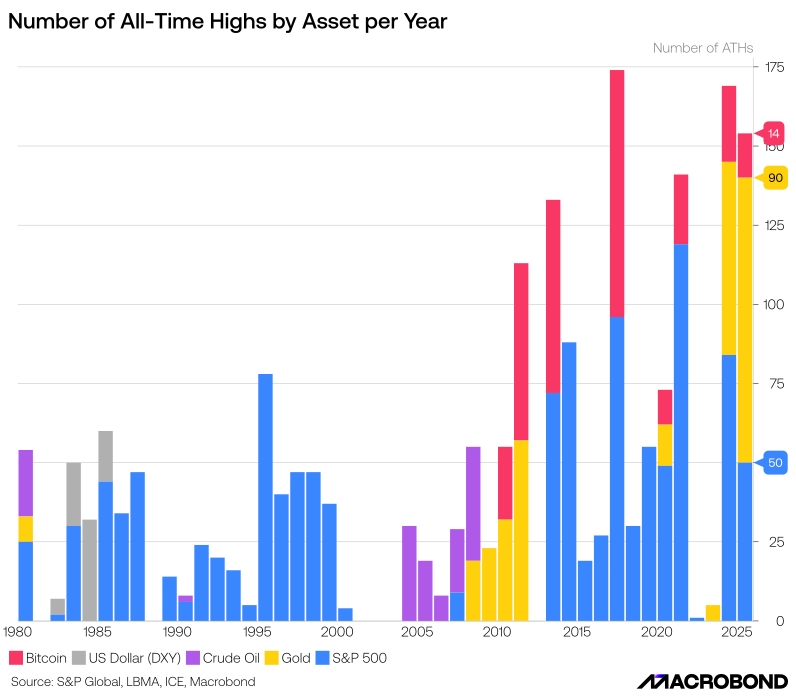
Uneven moves across commodity markets defined much of 2025. This ranking brings those moves together by sorting up 30 strategically important industrial commodities according to their year-to-date performance. Using daily spot prices or front-month futures across metals, chemicals and energy, it offers a clear snapshot of where price momentum has built up – and where it has faded.
What this visualization reveals about 2025:
Gold may have out performed many traditional financial assets, but within the industrial commodity space, even stronger winners emerged. A powerful late-year rally lifted silver to the top of the performance ranking in 2025, with other precious metals also dominating the upper half of the table. Cobalt – a metal crucial for EV batteries – follows closely, suggesting that the energy-transition narrative remains firmly intact.
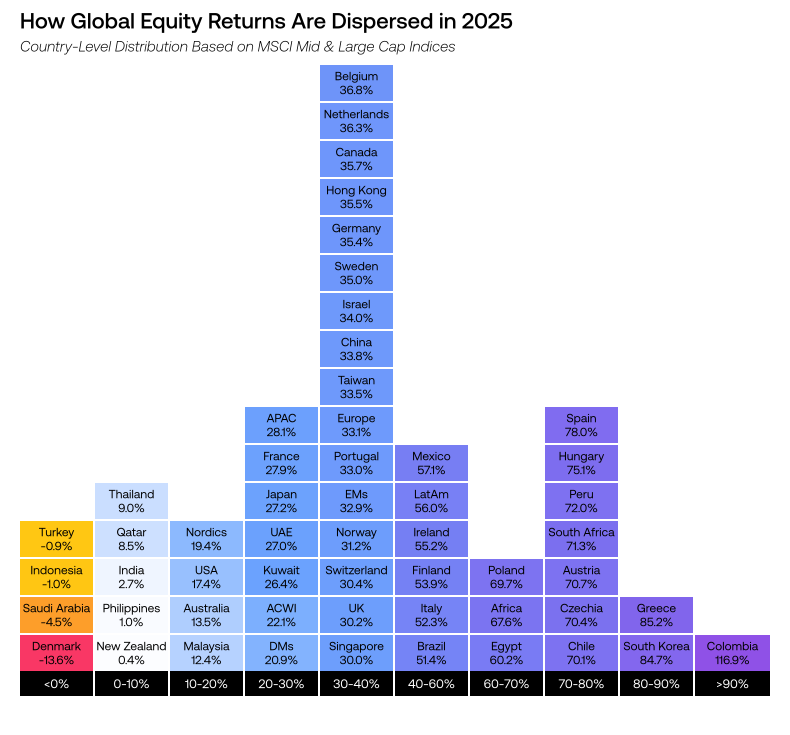
What this visualization shows:
This atypically styled distribution ranks 55 country-level equity indices from the MSCI universe by their total performance in 2025, offering a clear view of individual markets while revealing the bigger picture of global equity trends.
What this visualization reveals about 2025:
The distribution of 2025 returns roughly resembles a bell curve, with most markets landing in the 30-40% range. At the edges, however, the picture is more striking. Several markets – including the Philippines, New Zealand and Turkey – hover near zero, while Denmark and Saudi Arabia stand out as clear underperformers.
On the positive side, Europe and Latin America produced multiple surprises. Austria, Spain, Poland, Czechia and Greece all led the way in the EU, while Colombia topped the LatAm. Even South Korea recorded one of its strongest annual performances in years, highlighting how significant was the regional divergences in 2025.
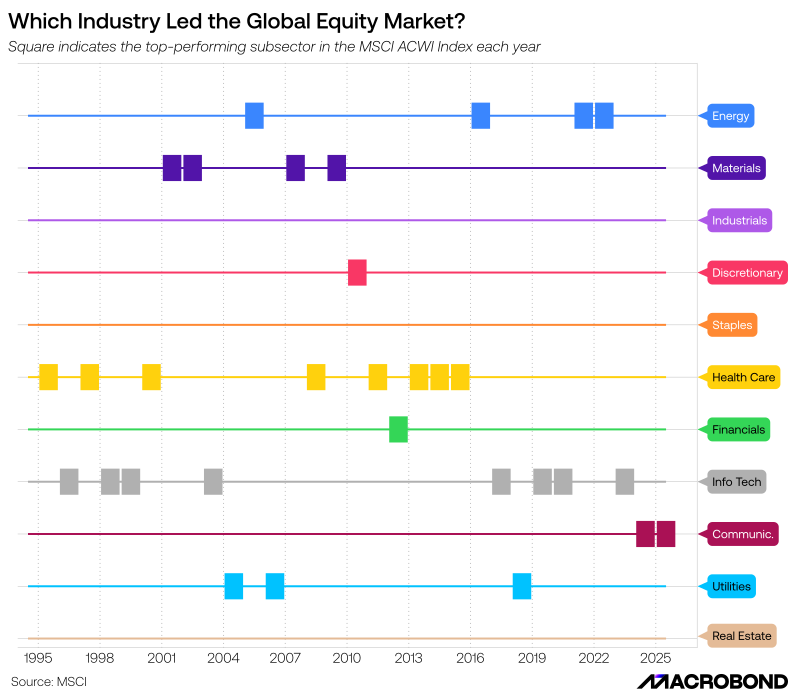
What this visualization shows:
This chart tracks sector performance within the global MSCI ACWI universe over more than 30 years, making it easy to identify the best-performing industries each year. Each sector is represented by a line, with a square marking the top-performing sector for that year.
What this visualization reveals about 2025:
Communications remains the leading sector globally, as AI continues to drive the narrative. In recent years, leadership has alternated between communications and information technology, reflecting the strong influence of tech-driven innovation on market performance.
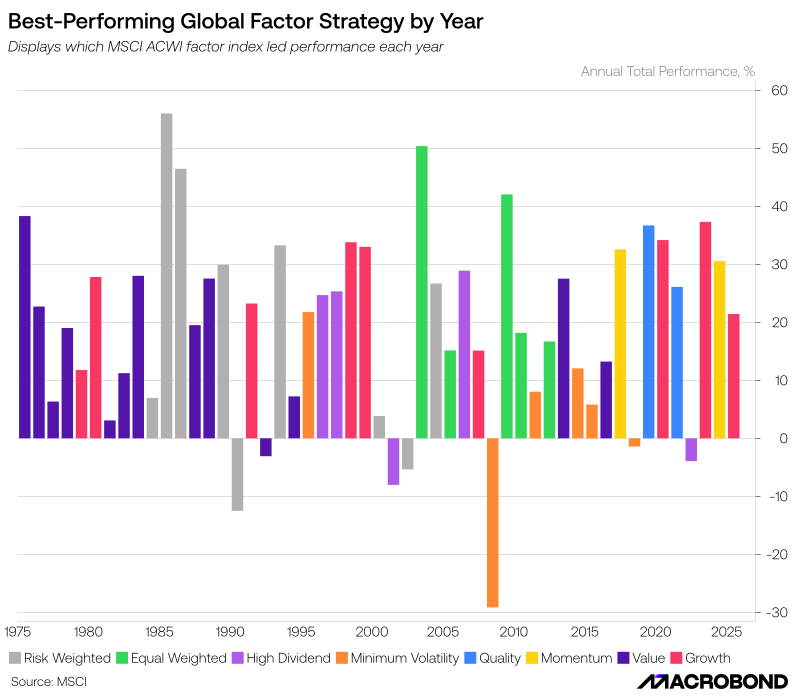
What this visualization shows:
Factor investing is at the heart of many modern investment strategies. This bar chart shows the top-performing factor index within the MSCI World universe for each year over the past 50+ years, providing a clear view of which factors have led globally and helping identify long-term patterns in factor performance.
What this visualization reveals about 2025:
Even amid fading optimism and ongoing investor concerns, growth and momentum stocks have remained at the top in recent years. At the same time, historical trends indicate that value and equal-weighted strategies have lost ground, with quality stocks emerging as a more persistent and stable alternative.
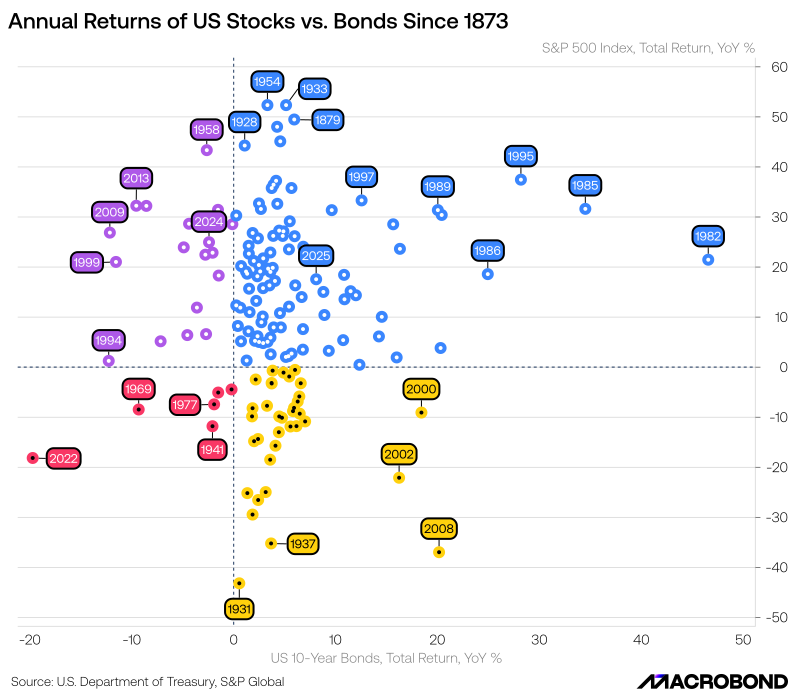
What this visualization shows:
This scatter chart tracks the annual total performance of US 10-year Treasuries and stocks over more than 150 years, dating back to 1873. Each year is categorized into a performance regime – for example, both stocks and bonds positive, or one positive and the other negative – with regimes distinguished by color, highlighting historical patterns across different market conditions.
What this visualization reveals about 2025:
Despite a volatile environment throughout 2025, with tariffs and AI developments shaping market expectations, the year ended up being surprisingly “average”, with stocks and bonds delivering returns typical of historical norms.
What this visualization shows:
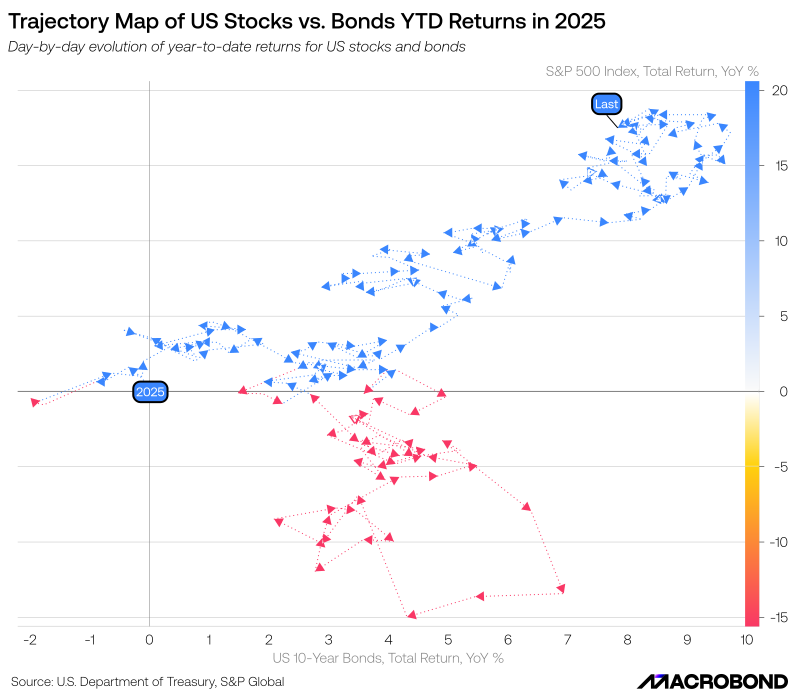
This scatter chart tracks the day-by-day year-to-date performance of US equities and bonds throughout 2025, allowing a detailed view of how both markets evolve dover the course of the year.
What this visualization reveals about 2025:
Even though the year-end results for the S&P 500 and US Treasuries fell within historical norms, the path to get there was anything but normal. Liberation Day tariffs and the subsequent market reaction caused US equities to plunge more than 15% year-to-date at one point. The recovery since then has been notable, but concerns are reemerging as market participants now look to 2026, with much depending on the development of AI.
What this visualization shows:
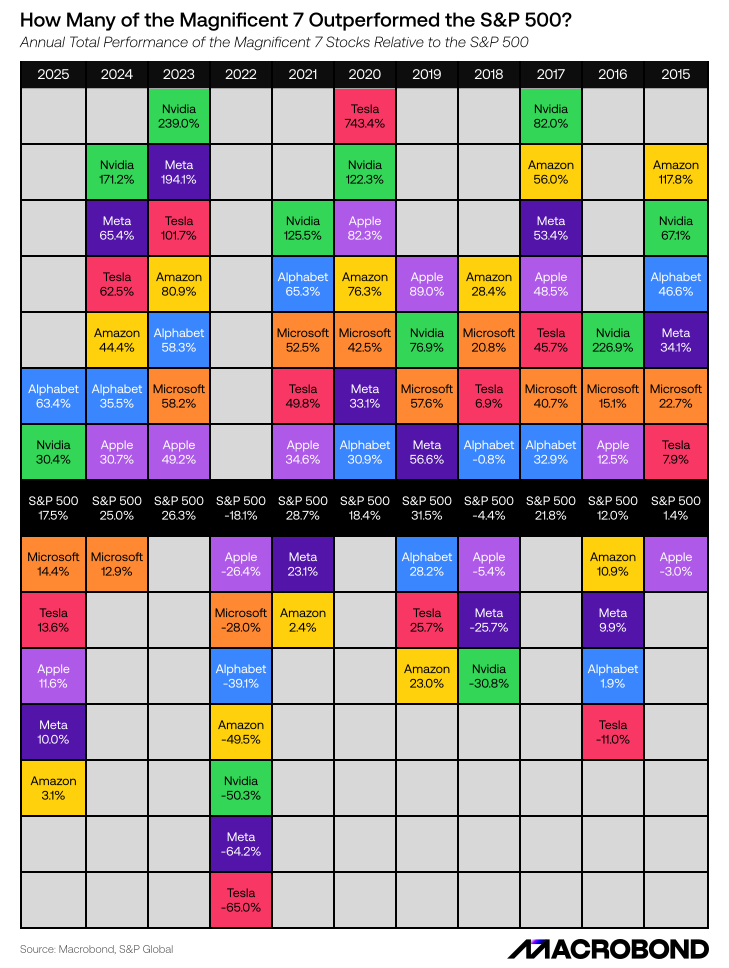
With the total performance of the S&P 500 marked by a black line at the center, this chart tracks how each of the “Magnificent 7” stocks have performed relative to the broad market benchmark over the past 10 years. Stocks are positioned above the line if they outperformed the index, and below if they underperformed, making it easy to see which companies led the market over time.
What this visualization reveals about 2025:
The “Magnificent 7” remain central to market narratives, but signs of weakening are becoming apparent. The core narrative is increasingly shifting toward companies actively engaged in AI. In 2025, only two – Nvidia and Alphabet – managed to outperform the benchmark, marking the weakest collective showing for this group in years.
What this visualization shows:
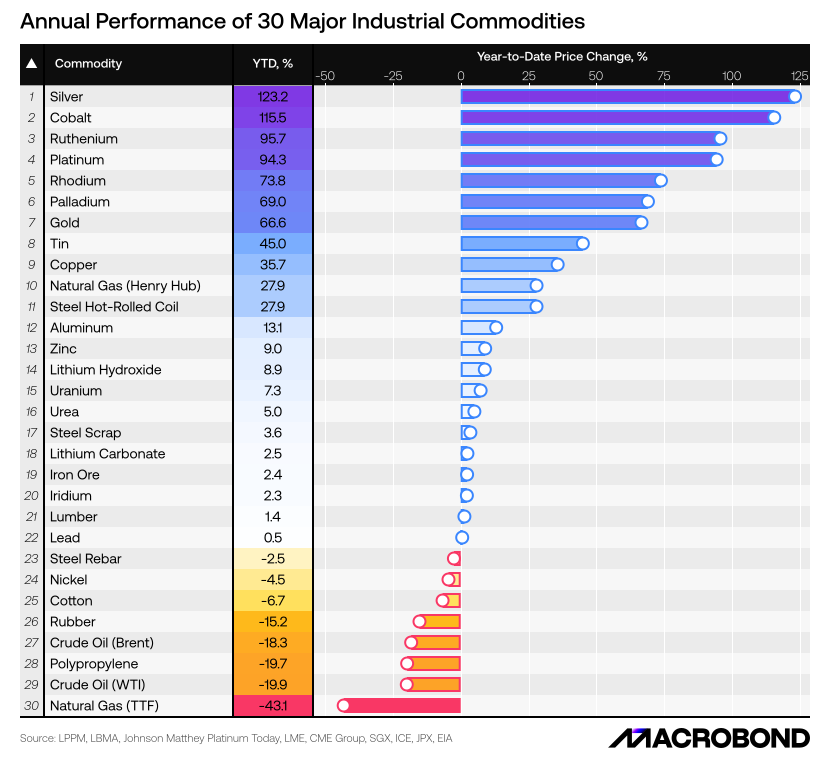
This two‑side chart tracks the level of the US Dollar Index (DXY) alongside its annual growth rate from the early 1970s to the present.
What this visualization reveals about 2025:
Tariffs, geopolitical tensions and market developments made 2025 one of the weakest years for the dollar, with the DXY falling nearly 10% – a decline comparable to its annual drop in 2017.