

Digitalization, Economic Freedom & Innovation - Everything That Moves Global Economy and Your Portfolio

AI turbulence, dollar mechanics, transatlantic rivalry and crypto stress - this edition connects the dots between market leadership, structural dominance and the shifting balance of global innovation.
From the software sell-off to the scale gap between US and European corporates, this edition of Macro Moves explores whether today’s volatility signals rotation - or something much bigger.
▶ Can the S&P 500 Keep Climbing Without IT?
IT drove half of the S&P 500’s gains since the AI rally – can the market survive without it?
▶ Why Some DXY Contribution Charts Miss the Point?
Not all dollar charts are the same – some may miss the math behind the index.
▶ Is Bitcoin on the Verge of a Bear Market?
Bitcoin is down 40-45% – is it just volatility, or the start of something bigger?
▶ The Challenge of Digital Independence in France
France aims to ditch US tech for domestic solutions – but could lagging infrastructure be an advantage
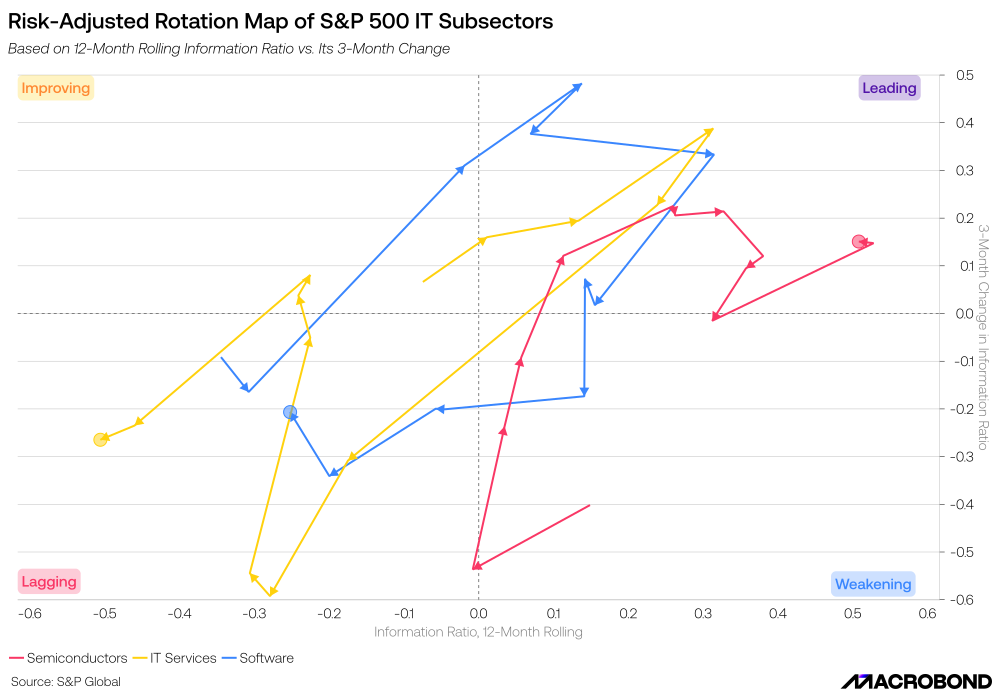
Software and SaaS stocks plunged earlier this month after Anthropic unveiled its latest AI tool, Claude Cowork. The launch reignited fears that AI could start replacing traditional software tasks - from legal services to analytics, compliance, and broader knowledge work. Investors reacted quickly: valuations dropped, and volatility spiked.
The 12-month rolling Information Ratio, which tracks risk-adjusted leadership versus the broader market, paints a clear picture: software and IT services remain deep in lagging territory. Momentum is fading, and these segments continue to underperform.
Semiconductors - often treated as the main proxy for AI exposure - still show structural strength, despite briefly brushing against weakening territory last month. Leadership in AI-linked segments isn’t slowing just yet, though signals suggest even the hottest AI plays aren’t immune to rotation.
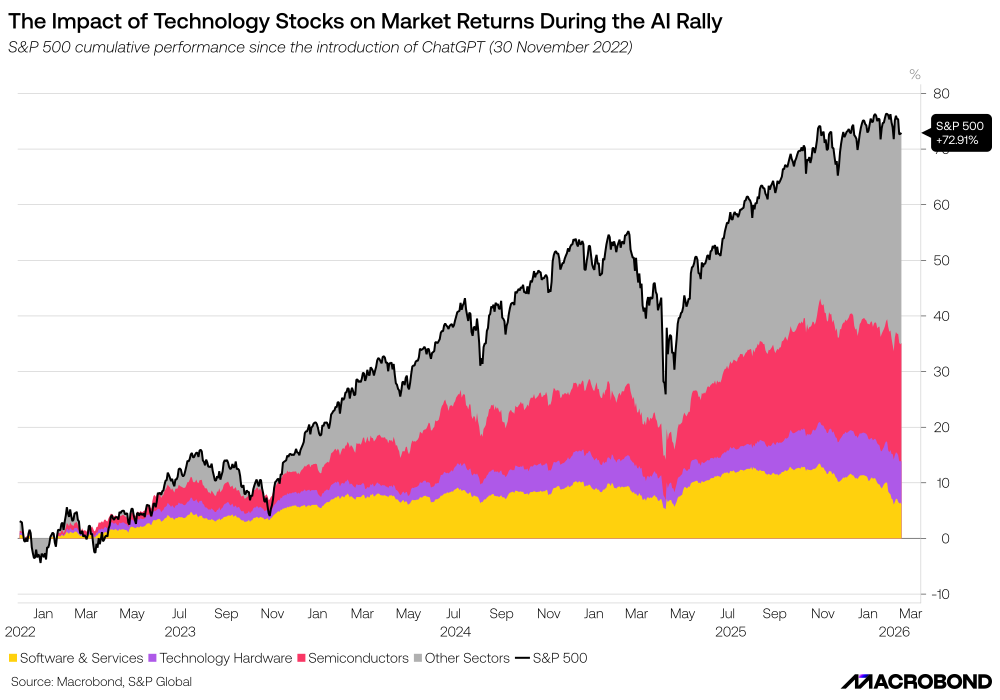
After such a sharp contraction, the question naturally arises: should investors reduce exposure to traditional SaaS stocks? Or perhaps trim semiconductors instead? And what would the S&P 500 look like without them?
Taking a longer view - since the start of the AI rally in November 2022, when ChatGPT went public - the answer becomes rather clear. Removing either software or semiconductors would have materially reduced the index’s returns, as both remain central to the AI-driven narrative. In fact, the IT sector alone accounts for roughly half of the S&P 500’s 75% cumulative gains over this period, underscoring its outsized role in the market.
But the implications go beyond simple contribution math. The S&P 500 is a market-cap weighted index, meaning leadership matters disproportionately. When a handful of mega-cap technology names outperform, they do not just add to returns - they shape the direction of the entire benchmark.
So can the S&P 500 keep climbing without IT? In theory, yes - if leadership rotates decisively into other sectors such as industrials, energy or financials. But in practice, as long as AI remains the dominant investment theme and capital continues to gravitate toward scalable, high-margin growth, technology remains the engine. Remove the engine, and the vehicle may still roll - but it is unlikely to accelerate.
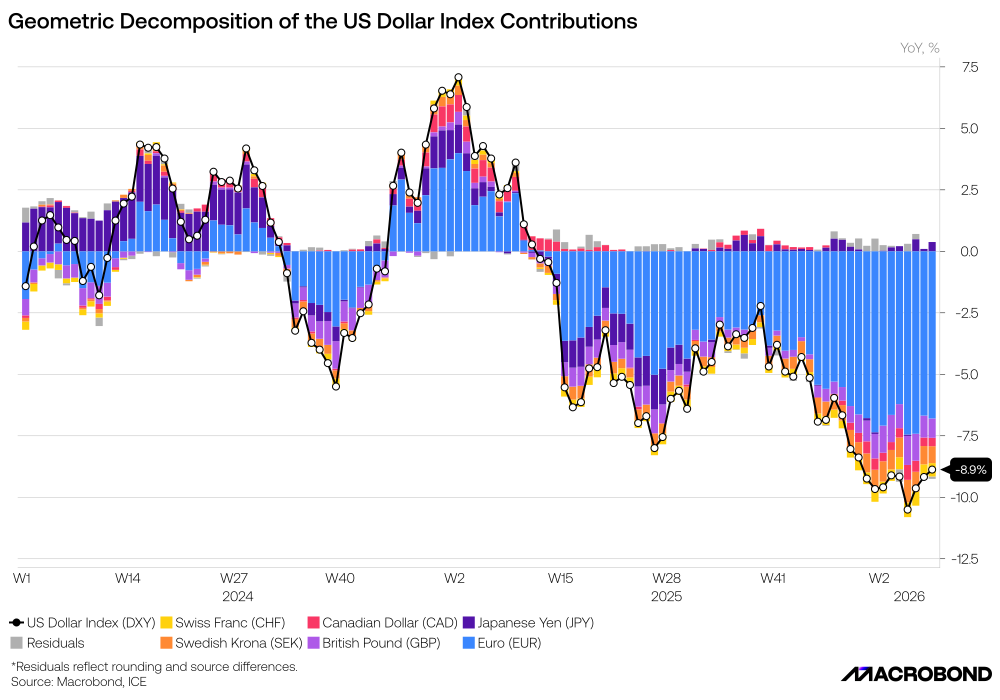
Many charts showing the “contribution to growth” of the DXY may be misleading if they rely on an additive framework, in which the dollar index is treated as a simple weighted sum of underlying currency movements. While this approach is intuitive and easy to communicate, it is ultimately only an approximation.
The key issue is that the DXY is constructed as a geometrically weighted index. In practice, this means dealing with exponents - including negative ones - rather than straightforward addition and multiplication. Doing this properly is not trivial: returns must first be converted back into index levels (or log returns), aggregated in that space, and only then transformed back into returns to produce a decomposition that is both accurate and visually intuitive.
The reassuring part is that additive and geometric decompositions often look very similar, and the differences may go unnoticed at first glance. From a methodological perspective, however, the geometric approach is clearly superior. One practical advantage is that the resulting residuals are far smaller, largely reflecting rounding effects or minor data discrepancies rather than genuine approximation error.

The US Dollar Index is composed of six underlying currencies, and tracking movements across all of them simultaneously can quickly become challenging, depending on the chart layout. Traditional line charts often struggle to convey cross-currency dynamics without becoming cluttered or visually overwhelming.
An alternative approach is to express daily volatility using bubbles - or “balloons” - distributed along a horizontal axis. This format offers not only an unconventional way of monitoring currency moves, but also a more intuitive sense of relative intensity and dispersion. The result resembles what could be described as an “FX carnival,” where shifts in volatility, dominance, and market attention become immediately visible. Rather than focusing solely on direction, this visualization highlights the rhythm of currency markets, allowing periods of calm and stress to stand out at a glance.
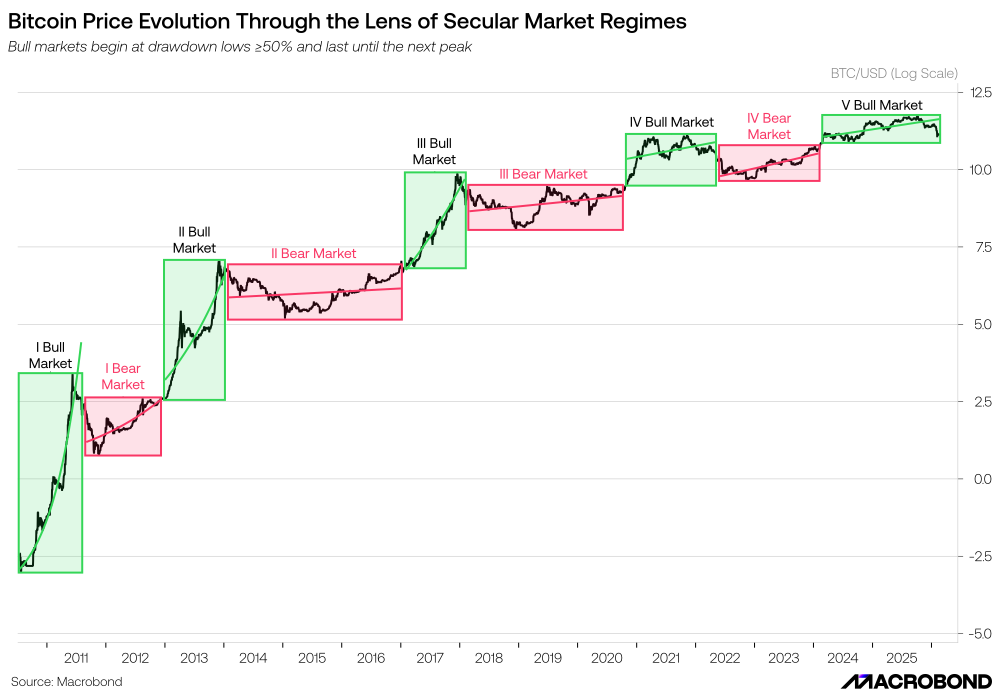
The traditional definition of a bear market - drop of 20% or more from the peak - doesn’t really apply to Bitcoin. In crypto, a 20% decline is often just normal volatility. The real question is: when does a prolonged, or secular, bull market in Bitcoin actually begin?
A 30% drawdown is far too common to signal a regime shift. Even 40% corrections occur regularly within broader uptrends. That’s why many analysts rely on a 50% (or even 60%) threshold to distinguish ordinary swings from a true secular bear market.
Looking at current data, Bitcoin’s recent decline has hovered around 40-45%, approaching that critical 50% mark. If it were breached, it would effectively mark the end of the fifth bull market - which began in early 2024 - and the start of a new bear phase.

The global innovation landscape is strikingly diverse, with countries spread across different stages of technological and corporate development. Using the Global Innovation Index alongside a custom 5-step scoring system, economies can be mapped from “nascent innovators” - where science and corporate innovation are only beginning to take root - to the very frontier of innovation, currently represented solely by Switzerland.
The United States continues to dominate among leaders, closely followed by Sweden and South Korea, showcasing strong performance across research, technology adoption, and corporate innovation.
What stands out is the growing gap between the innovation frontier and the rest of the world. While a handful of countries push the boundaries of science and technology, many others remain in earlier stages, struggling to transform research capabilities into global competitiveness.
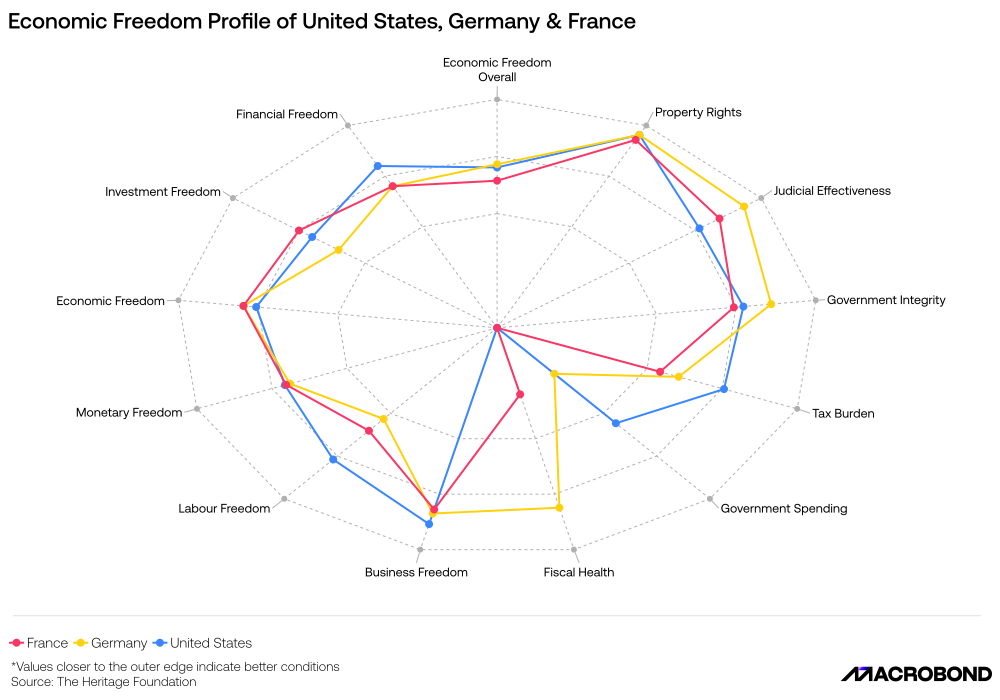
One of the most frequently discussed arguments for Europe’s lag in the global innovation race is its perceived overregulation and compliance burden. Looking through the lens of economic freedom, using the Heritage Foundation’s 12-aspect framework, we can compare the US with two leading European economies: Germany and France.
Overall, the three countries display similar levels of economic freedom, though key differences emerge in specific areas. On the tax front, the US outperforms, reflecting the heavier corporate tax burdens in
European economies that may hinder innovation. Similar patterns are observed in financial, business and labor freedom, where the US maintains an edge. However, France stands out in investment freedom, while Germany leads in government integrity and the quality of its legal system.
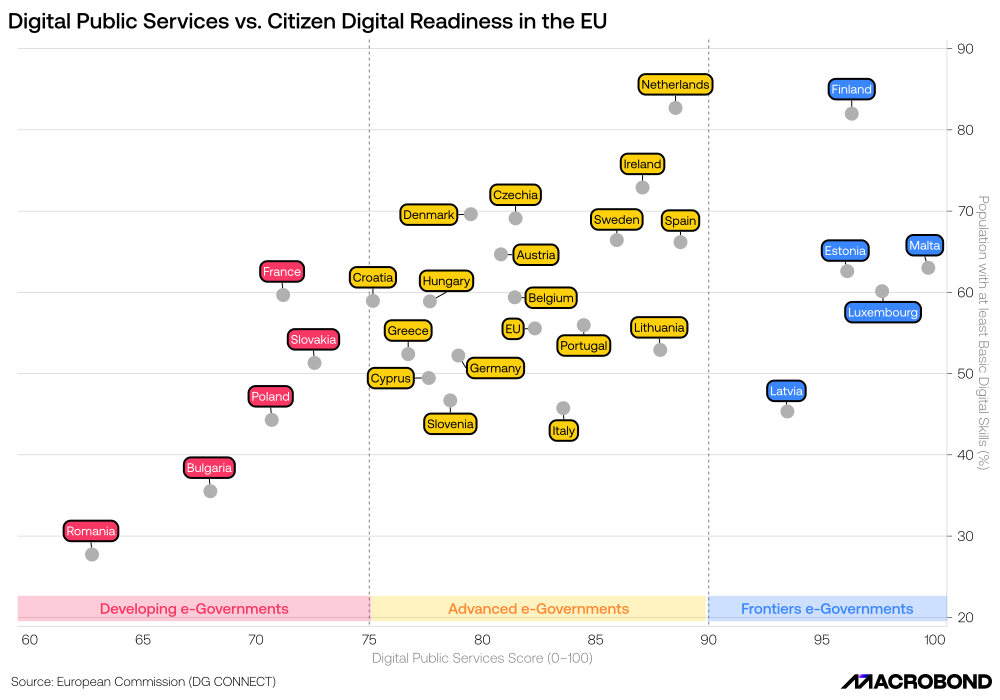
France has announced plans to reduce the use of US-based technologies in the public sector - including platforms such as Microsoft Teams and Zoom - in favor of domestic solutions. The key question is how quickly and effectively this transition can be implemented.
Reliable data on the usage of Teams and Zoom at the country level are difficult to obtain. However, proxy indicators can offer useful insights. One such measure is the European Commission’s Digital Public Services Score, which can be compared with the share of the population possessing at least basic digital skills.
While France does not rank among the weakest countries in terms of citizens’ digital skills, its e-government infrastructure still lags behind several core EU economies. At first glance, this gap could appear to complicate the transition toward digital sovereignty. However, the opposite may also be true. A less entrenched digital ecosystem may mean lower switching costs and fewer legacy constraints. If public institutions are not deeply locked into existing foreign platforms, the shift toward domestic alternatives could, in fact, be easier to implement.

The discussion around the size of the US market compared to The top five US giants alone exceed the economic output of nearly every country. In contrast, European corporate leaders remain well below 100% of the size of even the largest national economies, highlighting a stark contrast in scale and influence between the two regions.
This gap in corporate scale may also have broader implications for innovation. Large companies often act as ecosystem builders, creating the networks, talent pipelines and supply chains that support smaller firms and startups. Without players of similar size, Europe may struggle to foster these innovation ecosystems at scale, potentially limiting its capacity to generate breakthrough technologies and compete globally.


