



See end of article for full disclaimer notice.
Australia is my home and we are a hugely fortunate people: long hot summers, short mild winters, a great quality of life (and award winning wine!) and enviable standard of living. Overseas, we are known for our collaboration, strong work ethic, innovation in STEM and general resourcefulness. For these reasons and myriad more, we have earned the long-standing title of ‘the lucky country’.
We also happen to have an abundance of natural resources that most countries can only dream of. For example, it’s estimated Australia has the largest iron ore reserves in the world at 58 billion metric tonnes, making up nearly 30% of the world’s reserves and 37% of global annual production.
Australia has enormous energy resources, with 105,000 petajoules of natural gas reserves. Making us the third largest producer of LNG behind Qatar and the U.S. We have 150 billion tonnes of coal and are the world's largest exporter of metallurgical coal. Add to this to enormous reserves of uranium, lithium, copper, gold, mineral sands.
Yet with all this mineral wealth, a hard working population and enviable lifestyle, why then is the Australian economy going backwards?
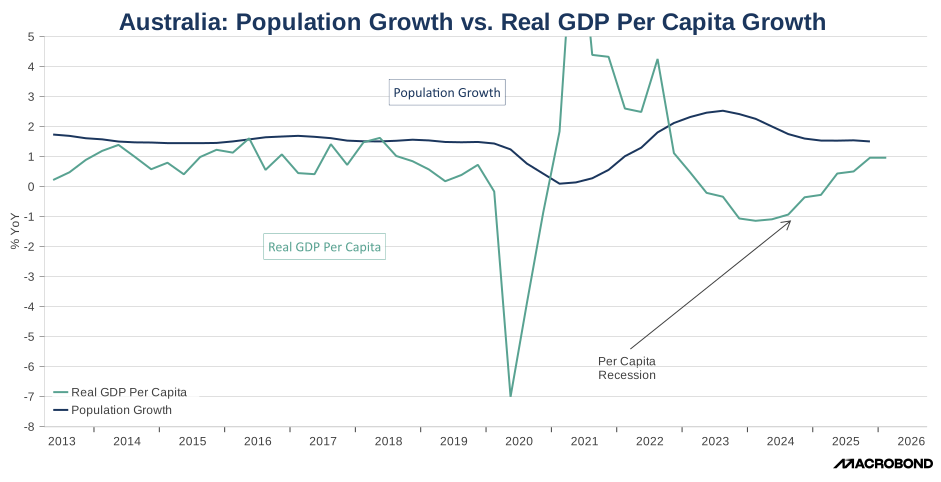
Australia’s annual GDP growth is now at 2.5%. When compared to the EU or UK at around 1.4% ours is not too shabby. However, when viewed in the long term, this growth marker is well below optimal growth averages of 3.25%pa and a peak of 4.4%pa. More cause for concern is a GDP per capita growth slower against population growth, hence a per capita growth recession.
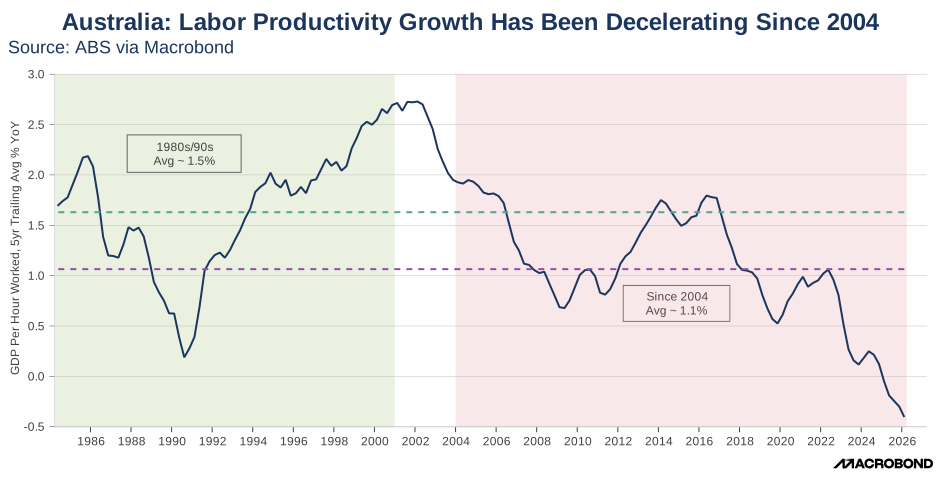
Long term productivity growth has been decelerating since 2004 and now stands at 0.8% to 1.2% as compared to 1.6% to 2.4% in the 1980’s and 90’s.
These key productivity and economic health statistics are the result of successive governments concentrating on a short term policy agenda at the expense of longer term vision and meaningful structural reform.
So, two questions: Can this decline be arrested? And, is Australia still an attractive investment destination?
The simple answer: yes, to both. But it’s complicated!
The current Government’s policies in industrial relations, energy, immigration, tax, and housing seem to be working against economic expansion and are dampening business and consumer confidence. This lack of confidence undermines investment and economic productivity. What all economists and investors will hope to see is political pressure to soften the impact of these short term policy agendas, rebuilding confidence and stabilising the decline of productivity growth. As the Australian electoral cycle is three years with the current cycle maturing in early 2028, watch this space.
In response to my second question, North American, European, British and Asian sovereign wealth and pension funds continue to see the attraction of investing in Australia. Understandably so: we’re a safe, triple A rated investment destination with transparent accounting and legal and governance frameworks. Plus, proximity to Asian growth markets and a pension pool of some $3.9 trillion and stable bond markets.
Significant long term returns in infrastructure such as roads, ports, electricity, airports, distribution centres and data centres to name a few, have been the main focus for these investors. Short term economic cycles are unlikely to alter foreign investment inflows. Although the moniker may be bruised, Australian’s resilience, perseverance and determination will see Australia once again ranked as “the lucky country”
Disclaimer: My written and spoken views are provided for general information only and do not constitute financial, investment, legal or other professional advice, nor should they be relied upon as such. I do not consider any person’s individual circumstances, objectives or needs. No liability is accepted for any loss arising from reliance on my work. Readers and listeners should obtain independent professional advice appropriate to their circumstances before making any financial decision.
Martin Lakos is now an independent commentator having finished a 31-year career at Macquarie Bank in October 2025.


